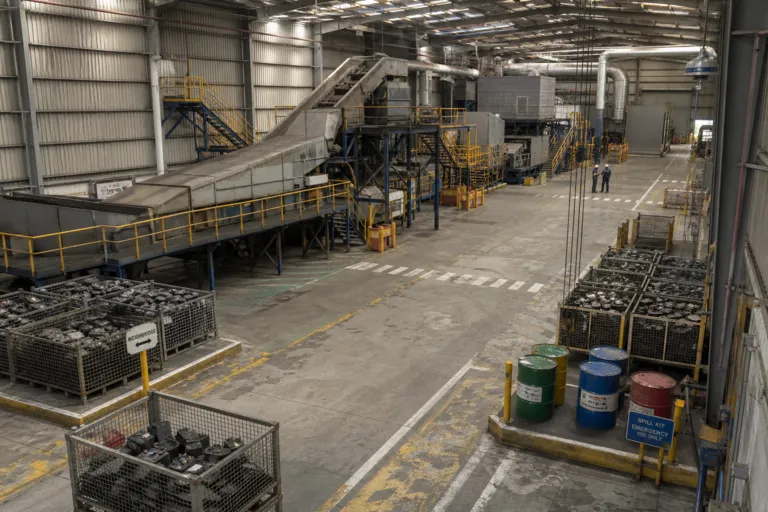
Lead does not have to be a one-way material story. In Saudi Arabia, the “second life” of lead is increasingly tied to used lead-acid batteries (ULABs), which Ken Research describes as the leading source of recycled lead. The same source highlights how refined recycled lead dominates because it is high purity and suited to battery manufacturing. That matters because lead-acid batteries are widely used in automotive starter batteries, industrial UPS systems, telecom backup, and renewable energy storage applications. As deployments expand across solar-plus-storage projects, data centers, and backup power systems, a tighter recycling loop can help stabilize supply and keep end-of-life batteries in controlled channels.
The policy direction is also clear. IndexBox notes that Saudi Arabia’s National Environmental Strategy (2021) mandates 90% battery collection and recycling by 2030, with producers and importers responsible for end-of-life management. In the Middle East stationary lead-acid battery storage context, IndexBox also points to regulatory pressure and economic incentives that are driving investment in collection and recycling networks across the Gulf, with the UAE and Saudi Arabia targeting 90%+ recycling rates by 2030. For businesses, that shifts recycling from a “nice to have” into a compliance-and-supply-chain issue that rewards formal systems and reliable documentation.
From ULAB Collection to Secondary Smelting: Building a Saudi Circular Loop
A strong circular loop starts with feedstock quality and traceability. Ken Research breaks recycled-lead sources into ULABs, industrial lead scrap, post-consumer scrap, and imported secondary lead sources, and underscores ULABs as the dominant feedstock in line with global trends. It also points to established collection channels through workshops, dealers, and organized recyclers, plus a growing formal battery recycling industry and licensed hazardous waste management operators in Saudi Arabia. On the supply side, the same report describes a mix of local and regional players, naming National Metal Recycling Co. (NMRC), Ma’aden’s metals and recycling affiliates, Global Environmental Management Services (GEMS), Lead and Battery Recycling Co., Al Qaryan Group – Metals Recycling, and Metal Recycling Company (MRC) among market participants.
Demand signals for lead-acid applications provide additional momentum. IndexBox describes lead-acid as a backbone chemistry for critical power backup and off-grid energy systems across the region, including telecom towers, data centers, hospital backup, and small-to-medium off-grid solar installations. It also notes that Saudi Arabia and the UAE are incentivizing local battery assembly and recycling to reduce import dependence, and references several new facilities announced for 2026–2028 targeting 2–4 GWh annual capacity each (regional context). Mobility Foresights adds a Saudi Arabia-specific lens, stating that high recycling rates and established smelting infrastructure reduce the need for primary lead and lower lifecycle emissions, while also warning that lead handling demands strict controls and that leakage into informal recycling poses health and reputational risks.
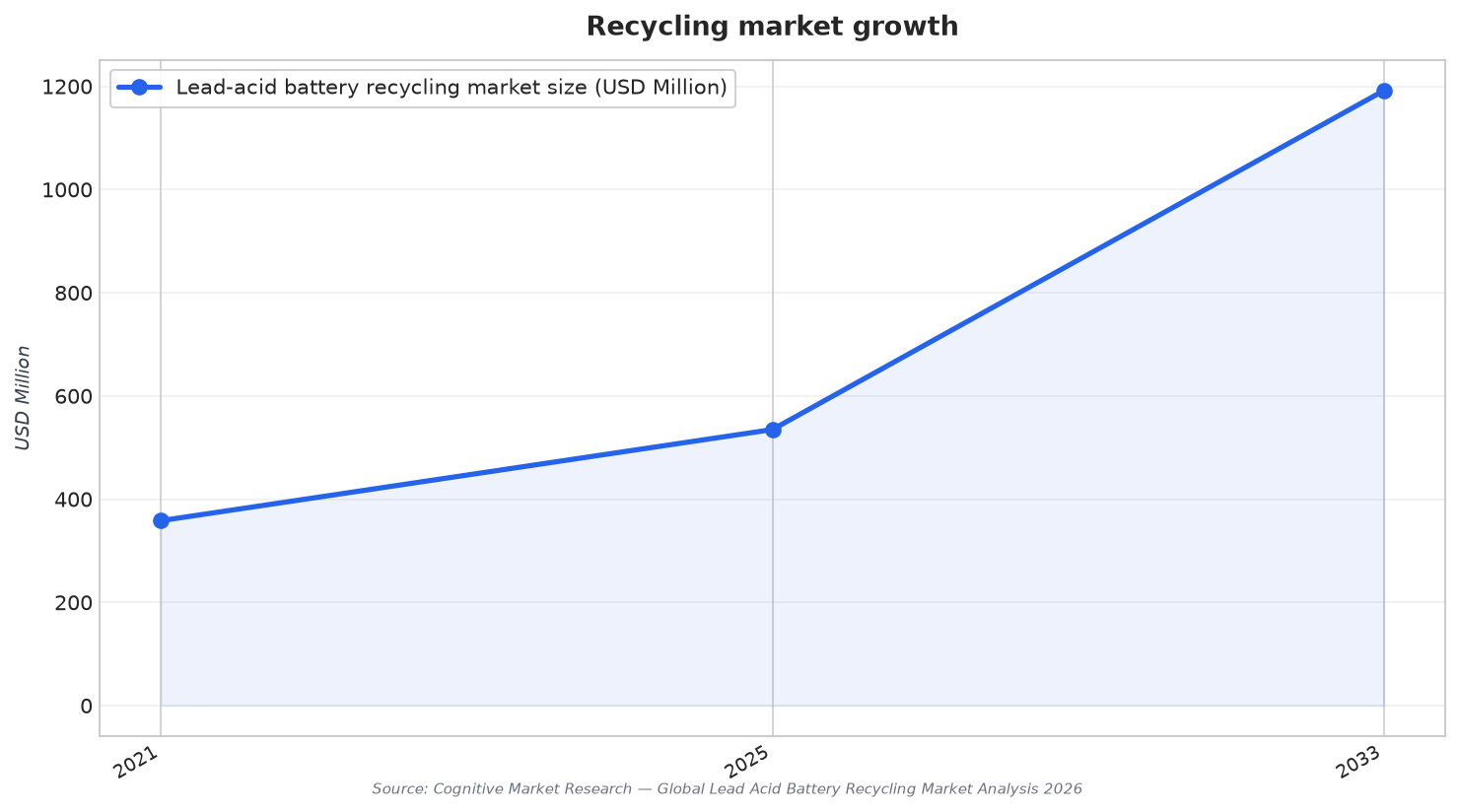
Globally, investment and technology narratives are aligning with that direction. Verified Market Reports values the global lead recycling market at USD 19.08 Billion in 2025 and projects USD 22.98 Billion by 2032, a 3.15% CAGR from 2025–2032, while emphasizing tighter regulations and the integration of AI, machine learning, and computer vision to optimize sorting, smelting, and refining. Cognitive Market Research, focused on lead-acid battery recycling, says the Middle East holds about 4.03% of the global market and that Saudi Arabia is the largest regional market, comprising 1.21% of the global share in 2025. Put together, the opportunity for lead smelter battery recycling Saudi Arabia stakeholders is to pair mandated collection outcomes with safer industrial processing, so circular supply growth does not come with informal recycling liabilities.
What does Saudi Arabia require for battery collection and recycling by 2030?
Why are used lead-acid batteries so important for recycling feedstock?
Which Saudi market players are cited in recycled lead and battery recycling?
How does stationary backup demand connect to lead recycling and smelting capacity?
What is the global outlook for lead recycling, and how is the Middle East positioned?