Mining projects are built on more than geology. They also depend on who controls access to land on top of the ore, and on how a project earns the right to cross, disturb, and use that surface for roads, waste handling, water systems, and equipment yards. In Saudi Arabia, the legislative framework for the mineral sector is provided by the Mining Investment Law, approved in June 2020 and effective in January 2021, replacing the 2004 Mining Investment Law. That framework sits alongside the practical reality that suppliers and investors must screen each opportunity asset by asset, starting with the precise right, mineral, area, licence holder, and project stage.
One reason surface control matters is that modern operations can be land-intensive. A surface mining market analysis notes that open-pit and strip mines require extensive land disturbance, water management systems, and waste handling infrastructure, and that these needs can drive lengthy permitting timelines and higher compliance costs. It also flags growing investor scrutiny tied to carbon emissions, water use intensity, and biodiversity impact disclosures, plus community opposition to land-use expansion in some regions where approvals depend on local consultation frameworks. For Saudi project planning, this means right-of-way and surface access are not “paperwork at the end.” They shape the schedule, capex profile, and even contractor selection earlier in the project.
Surface Rights, Split Estates, and the Practical Meaning of Access
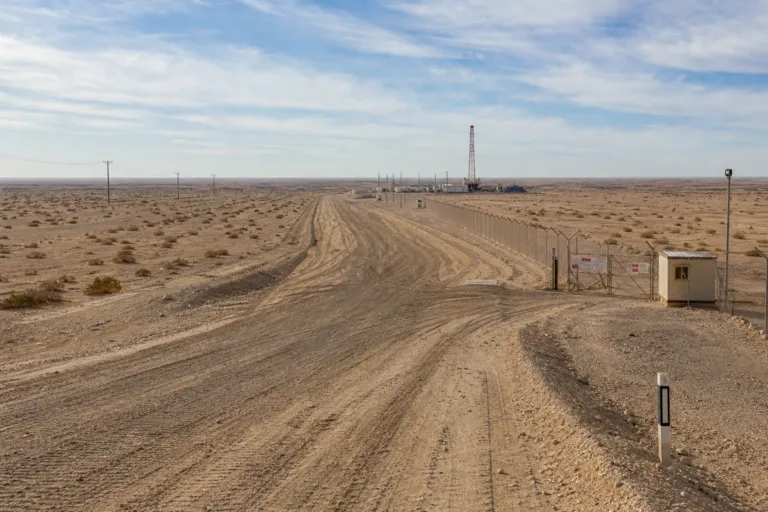
A useful way to understand surface rights risk is the “split estate” concept described in a surface-rights explainer: surface and mineral rights can be separated, creating conflicts between surface owners and mineral developers. The source describes a principle that mineral owners and the companies they hire have the right to use the surface in a reasonable way to access underground resources, and that the surface owner generally cannot stop extraction if the use is not unreasonable. It also highlights how access and road construction disputes can arise when companies need to cross land to reach drilling or mining sites, especially if routes interfere with farming or residential use.
In Saudi Arabia, activity levels and project scale make these surface considerations more than theoretical. USGS reports that mined gold output increased by 21% to 16,293 kilograms in 2024 compared with 2023, owing to full operation of the Mansourah-Massarah Mine. International Mining describes how surface contract miners support Ma’aden and others, naming active contractor roles at sites including the Al-Khabra phosphate mine and the Sukhaybarat gold mine, and noting that EPSA entered the Middle East market, including Saudi Arabia, in 2011. It also reports that Phosphate 3 will increase Saudi Arabia’s total phosphate production capacity to 9 Mt annually. Each of these operations depends on workable on-the-ground access for fleets, haul roads, and ancillary infrastructure.
For a practical screening checklist, Horizon GCC Intelligence stresses that a concession round or policy target is not the same as a financed mine. The commercial case begins with the precise right and project stage, and then tests technical evidence, sponsor and financing, and environmental and community obligations, plus logistics such as port, road, and rail. Market signals underline why this diligence is active now. Mordor Intelligence says the Saudi Arabia mining equipment market was valued at USD 7.32 billion in 2025 and estimates growth from USD 7.75 billion in 2026 to USD 10.28 billion by 2031, at a 5.83% CAGR for 2026–2031. It also cites issuance of 61 exploration licenses in 2025, linking licensing to future fleet procurement timing. Together, these trends reinforce a single point for mining land access, surface rights, and right-of-way in Saudi Arabia: the surface can be the constraint that turns a promising licence into a delayed project, or into a well-executed mine.
Why do surface rights and right-of-way matter for Saudi mining projects?
What does “reasonable use of the surface” mean in surface-rights disputes?
What recent Saudi production and capacity figures show the scale of surface operations?
How should companies screen mining land access, surface rights, and right-of-way in Saudi Arabia?
What indicators suggest increasing activity that can raise surface-access needs?