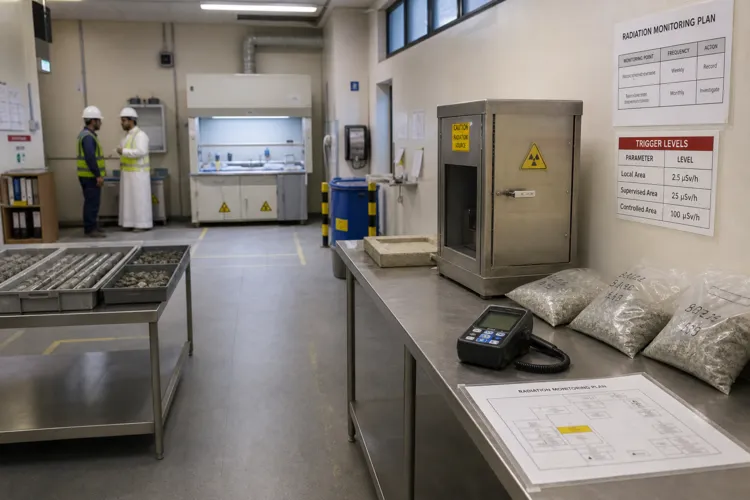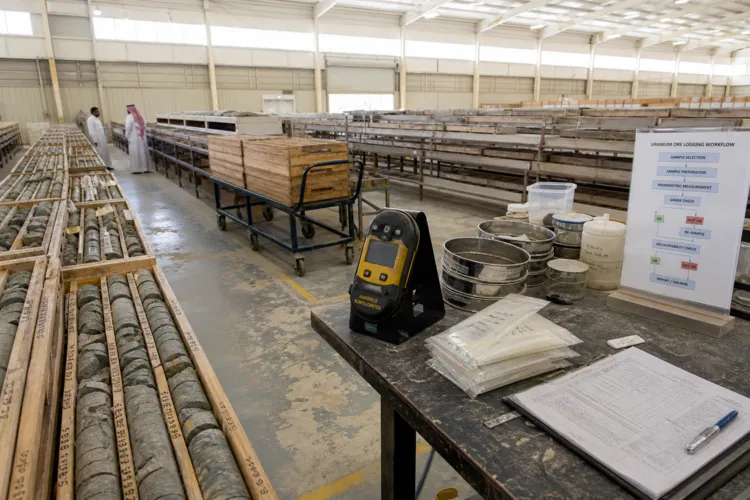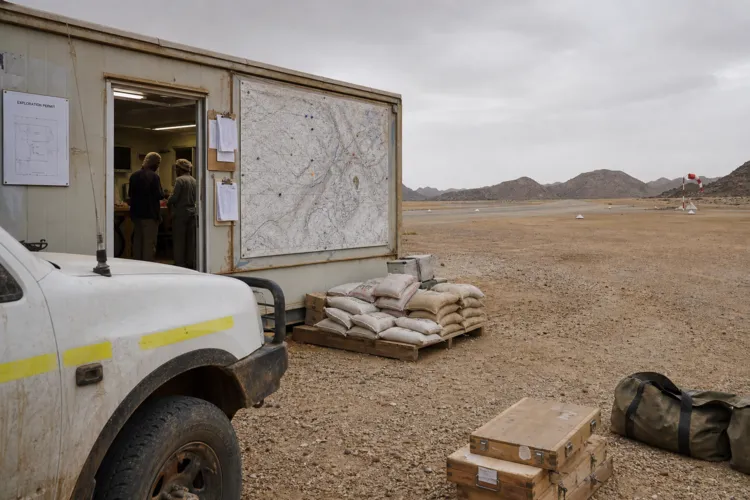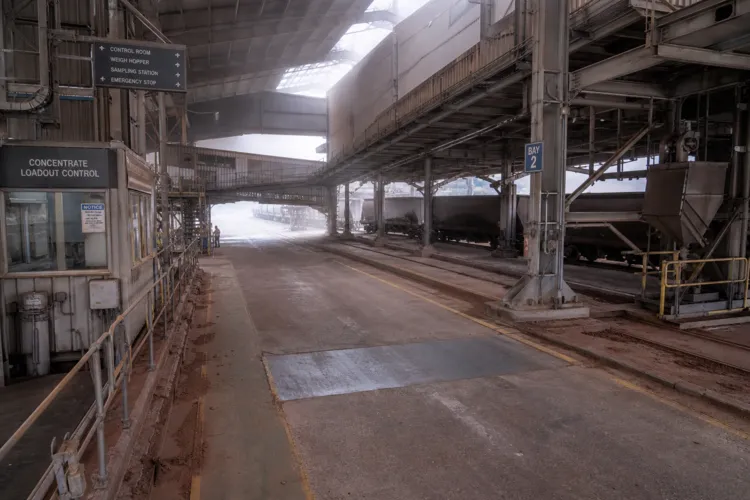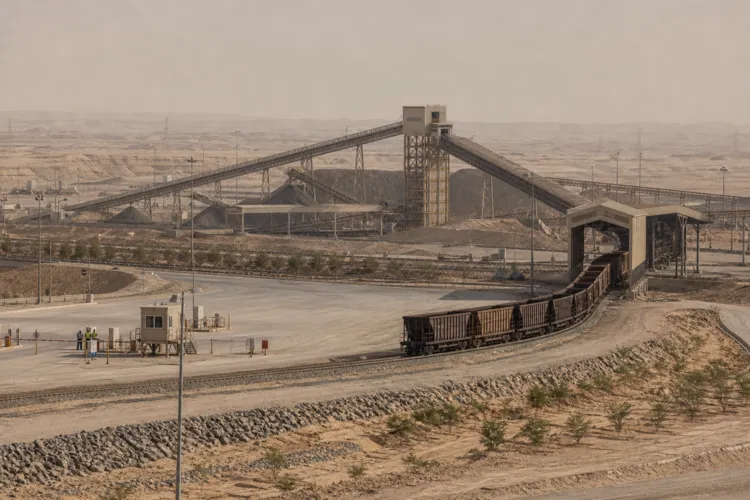
Critical-minerals diplomacy is shifting from oil-focused deals to minerals tied to electric vehicles, wind turbines, grid-scale batteries, and defence electronics. In this context, Saudi Arabia–France mining cooperation is described as more than a trade arrangement, because it links a resource-rich jurisdiction with an industrial economy that can support technology and downstream capability. Saudi Arabia’s geology is central to that appeal. The Arabian Shield, a Precambrian basement complex across western and central parts of the country, hosts gold, copper, zinc, phosphate, bauxite, and other strategic minerals that are increasingly relevant to clean-energy supply chains.
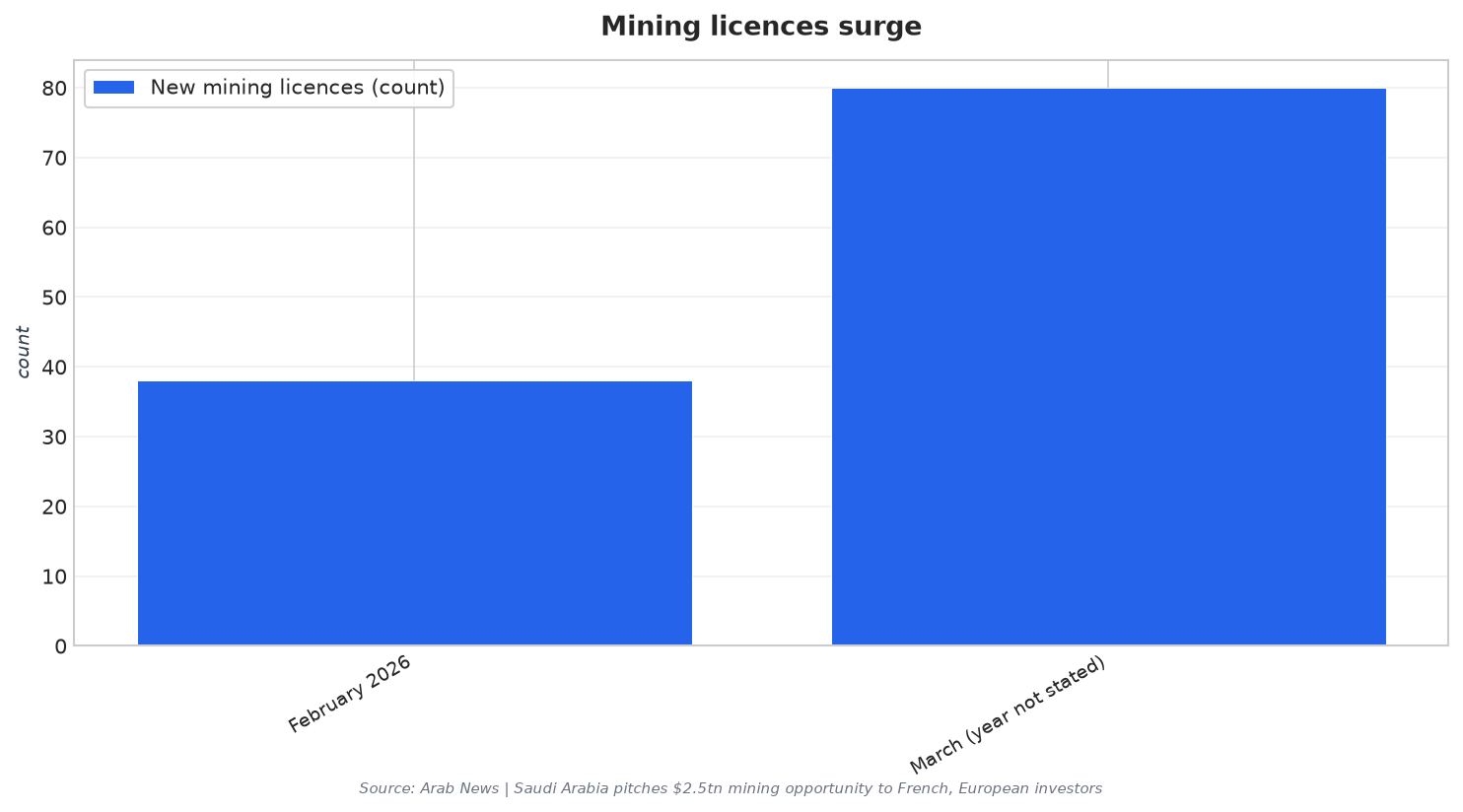
Policy momentum is turning that geological potential into a faster-moving pipeline of projects. Under Vision 2030, mining has been elevated alongside oil and petrochemicals as a foundational pillar of the national economy. Licensing data illustrates the acceleration. The Saudi Ministry of Industry and Mineral Resources issued 38 new mining licences in February 2026, and later reported 80 new mining licenses in March compared to 38 in February. Industrial indicators also point to a broader push. Saudi industrial output expanded 8.9% in February 2026, with mining and manufacturing identified as primary contributors, while the broader economy grew 2.8% in the first quarter of 2026, driven predominantly by non-oil sector expansion.
From Paris Forums to Project Pipelines: What Europe Can Plug Into
Saudi Arabia has presented its mining pitch directly to French and European stakeholders. At the Gulf Vision 2026 Forum in Paris, Saudi Arabia showcased investment opportunities across its $2.5 trillion mineral resource base and downstream industrial sectors to French and European partners. According to Arab News, Khalid Al-Mudaifer, vice minister of industry and mineral resources for mining affairs, emphasized a favorable investment environment supported by modern legislation and incentives. He also held meetings with French officials and representatives of major French companies in mining and related industries, focusing on mining investment, technology transfer, joint ventures, mineral exploration, sustainable mining practices, and expanding the mineral value chain.
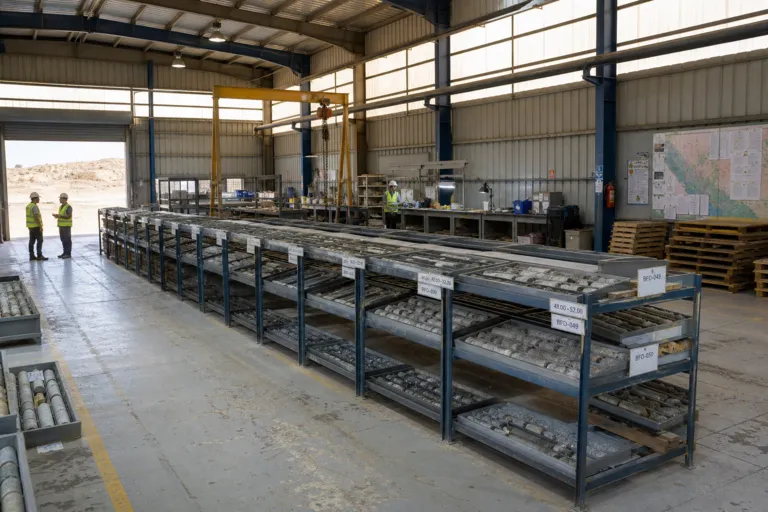
For European exploration groups, the “door” is not only about acreage access but also about a geological knowledge gap that can reward early, technically strong entrants. Arabian Shield exploration is described as dramatically under-explored relative to comparable terrains, and exploration intensity measured in metres drilled per square kilometre is said to be a fraction of what similar geological terrains in Australia or Canada have received over the past five decades. That under-exploration creates both risk and upside, and it reinforces why partners with advanced exploration workflows, drilling services, and geoscience capability may find demand as Saudi Arabia seeks to improve its geological knowledge and upgrade operational capability.
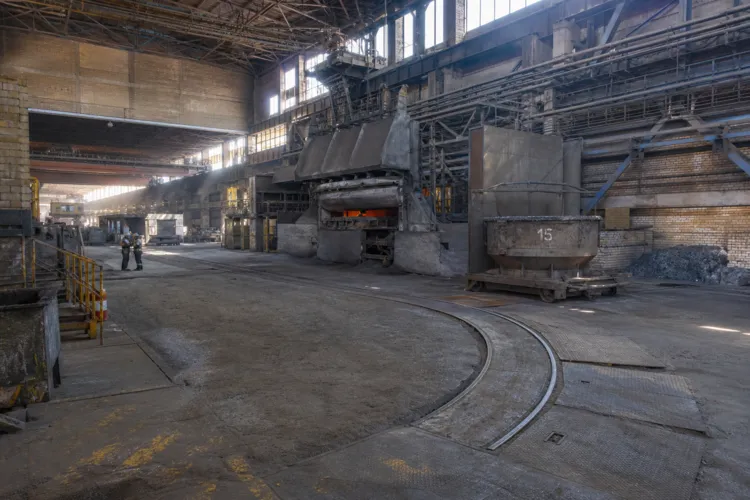
For engineering and industrial service firms, the opportunity broadens beyond extraction into integrated value creation. European business groups note that Saudi policy increasingly centres on exploration, processing, refining, logistics, and industrial localisation. This matters because it expands the addressable market into engineering, technology, equipment, environmental performance, skills partnerships, and downstream cooperation. Practical areas highlighted for project-level engagement include process engineering, digitalisation, mine safety, low-impact technologies, automation, remote operations, mineral processing, environmental monitoring, energy efficiency, logistics, and capability-building. As Saudi Arabia aims to refine minerals and expand the mineral value chain, European firms that can meet compliance and traceability requirements may find long-run partnership opportunities.
What is driving Saudi Arabia’s push into mining under Vision 2030?
How does Saudi Arabia–France mining cooperation create openings for European firms?
What did Saudi Arabia present to French and European investors in Paris?
Why does Arabian Shield geology matter for explorers and service providers?