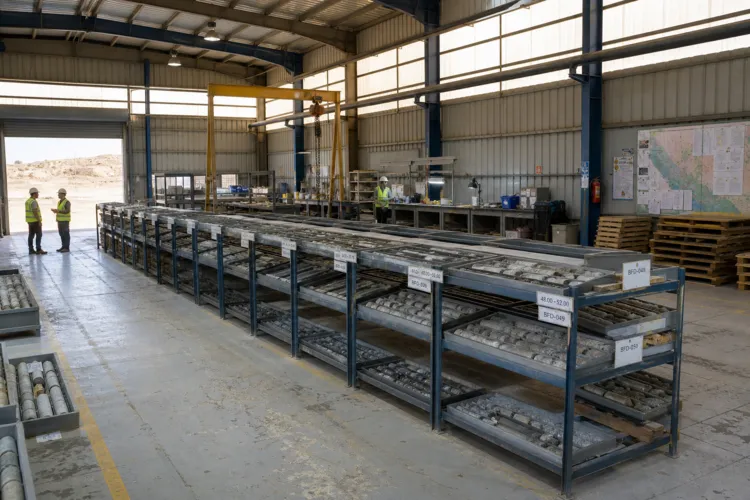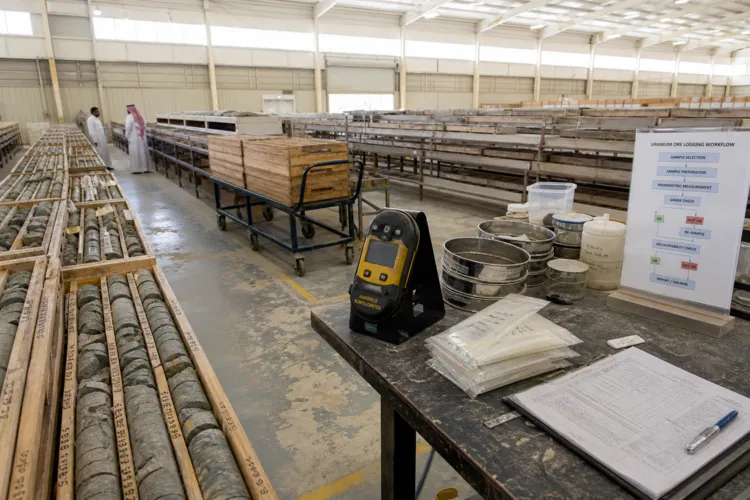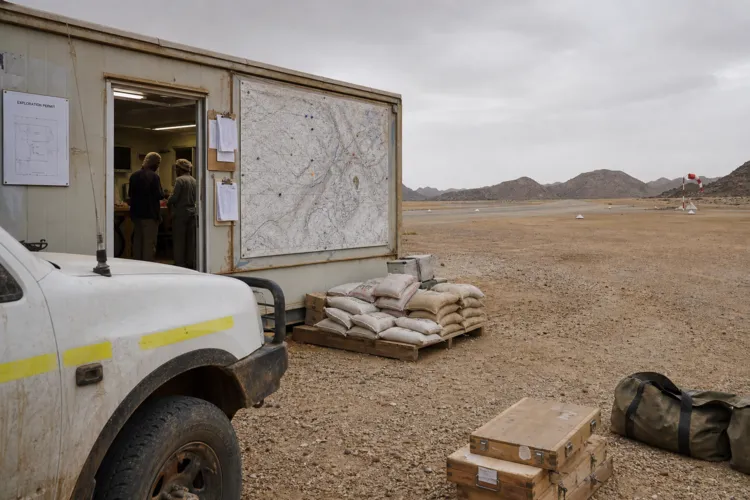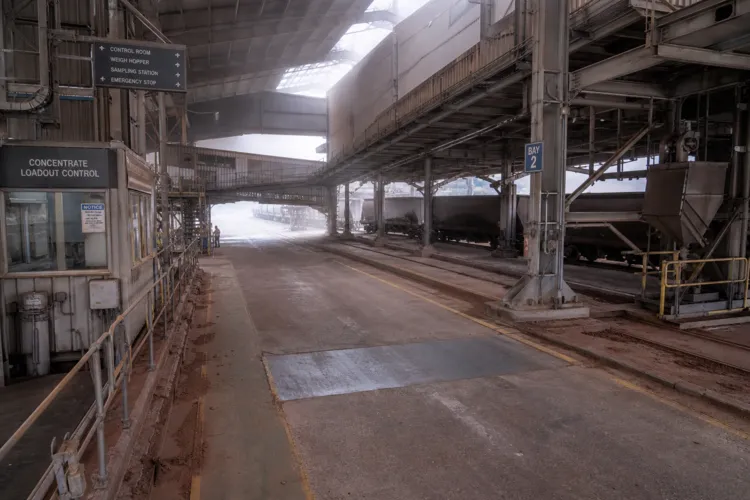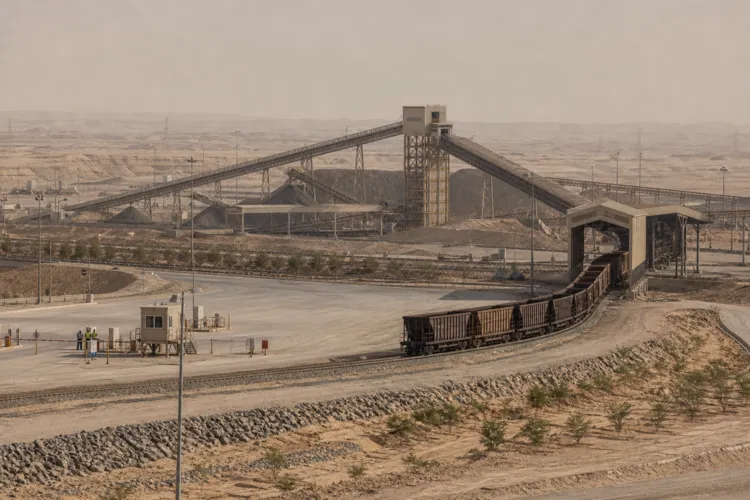
Saudi Arabia’s new rare earth and uranium exploration headlines make NORM management a practical mine-planning issue, not a back-office checkbox. Public reporting tied to a 14 September speech carried by the Saudi Press Agency described approximately 114 million tonnes of ore at Jabal Sayid with rare-earth minerals and promising uranium concentrations, while some English coverage rounded this to 110 million tonnes. The key operational point is that this figure is mineralised material in the ground, not tonnes of uranium or rare-earth oxides, and it is not accompanied by grades, recovery data, or a code-compliant technical resource statement in the cited public remarks. That uncertainty matters because waste volumes, residue classification, and closure planning depend on grades, flowsheets, and how processing changes radioactive material concentrations.
Why the controls tighten is also clear in the wider rare-earth literature. Uranium and thorium commonly co-occur with rare earth element (REE) mineralisation, and mining, beneficiation, weathering, and tailings management can mobilize and concentrate actinide-series radionuclides in soils and wastes. A summary analysis notes that REE extraction and processing often involve NORM, including predominant radionuclides such as uranium-238 (238U), thorium-232 (232Th), and potassium-40 (40K), with decay products like radium-226 (226Ra). Global regulatory discussions further warn that processing can amplify natural uranium and thorium concentrations by 10 to 100 times, converting NORM into technologically enhanced naturally occurring radioactive materials (TENORM) and changing the compliance posture for dust, water, and tailings pathways.
Rules and Trigger Points: When “Natural” Becomes Regulated
Even when some finished products may be exempt from strict radioactive material controls, the exemption logic often does not extend to incoming ore or waste. In the U.S., the Nuclear Regulatory Commission sets an exemption limit of 0.25% by weight uranium or thorium for certain finished rare earth products under 10 CFR Part 40, but this explicitly excludes waste streams and processing residues. High-level regulatory orientation pieces underline the same nuance: “low thorium” messaging does not remove regulatory friction once residue volumes, residue classification, and closure are modeled. Some processing routes can generate concentrated residues far above exemption-style thresholds; for example, monazite processing is described as producing thorium-bearing residues containing 5–15% thorium oxide. For Saudi operators, the transferable lesson is to define local licensing triggers around characterisation, residue pathways, and long-term storage performance rather than relying on product-side exemptions.
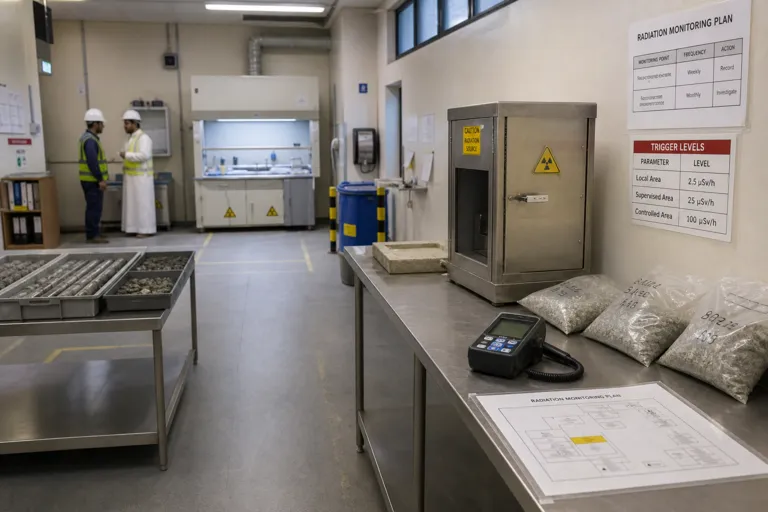
Monitoring and control systems typically follow a staged pathway from baseline to closure. A five-stage framework described for rare-earth operations starts with characterisation using baseline radiological surveys with gamma and alpha spectrometry, then moves through licensing assessment of processing impacts, operational controls such as dust control and water management, engineered storage using lined repositories, and long-term stewardship with monitoring and institutional control over decades to centuries. The International Atomic Energy Agency’s “contain and control” principle is presented as a global baseline for radioactive waste management, emphasizing isolation of enhanced radioactive materials from the biosphere for timeframes matching hazard persistence. In parallel, statutory approaches elsewhere show what regulators can require: China’s law on prevention and control of radioactive pollution is described as requiring tailings repositories for tailings from exploitation of uranium/thorium and associated radioactive minerals, with monitoring and reporting obligations.
Waste handling decisions also connect to market capacity and the availability of specialist vendors, even if project-specific solutions remain site-dependent. A NORM disposal and waste management market report values the global market at $2.48 billion in 2025 and projects $4.29 billion by 2034, a 6.2% compound annual growth rate. It segments material types including radon, uranium, and thorium, and lists mining among end-users, framing NORM as a cross-sector disposal challenge. The same report says North America holds 38.2% of global revenues and cites a U.S. Energy Information Administration estimate of over 50,000 active oil and gas wells generating scale-related NORM waste annually—figures that are not Saudi-specific, but illustrate how waste volume drivers can shape disposal ecosystems. For Saudi rare earth and uranium ore projects, the practical takeaway is to build monitoring, residue characterization, engineered storage, and disposal pathways into the early project narrative, because commercial development depends not only on extraction and processing costs but also on waste management, infrastructure, environmental controls, and regulatory oversight.
What has Saudi Arabia publicly reported at Jabal Sayid, and what does it not prove?
Why can rare earth processing turn NORM into a bigger compliance issue?
Which radionuclides are commonly discussed as NORM in REE operations?
How do rules treat exemptions versus wastes in rare-earth projects?
In practice, how should NORM radioactive materials mining in Saudi Arabia be monitored and managed?