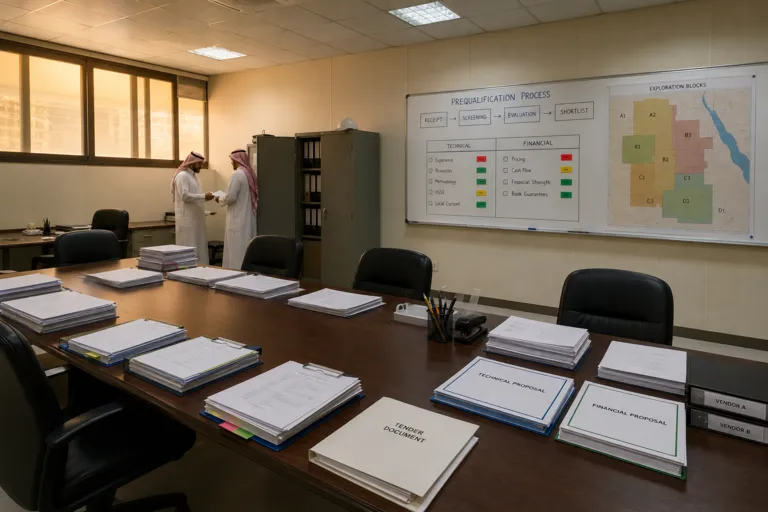
Saudi Arabia’s Ministry of Industry and Mineral Resources (MIM) runs exploration license competitions through a process it describes as fully automated, transparent, and fair for all investors. The system is structured in three main phases. First comes prequalification, where companies must demonstrate technical capability and financial solvency. Next is site selection through the Taadeen electronic competition platform, using a grid-based GIS system. The final phase is a multi-round live auction, where companies compete for contested sites based on exploration spending commitments for the first two years. This framework is the practical backbone of how bidders move from interest to eligibility and then into the bidding stage.
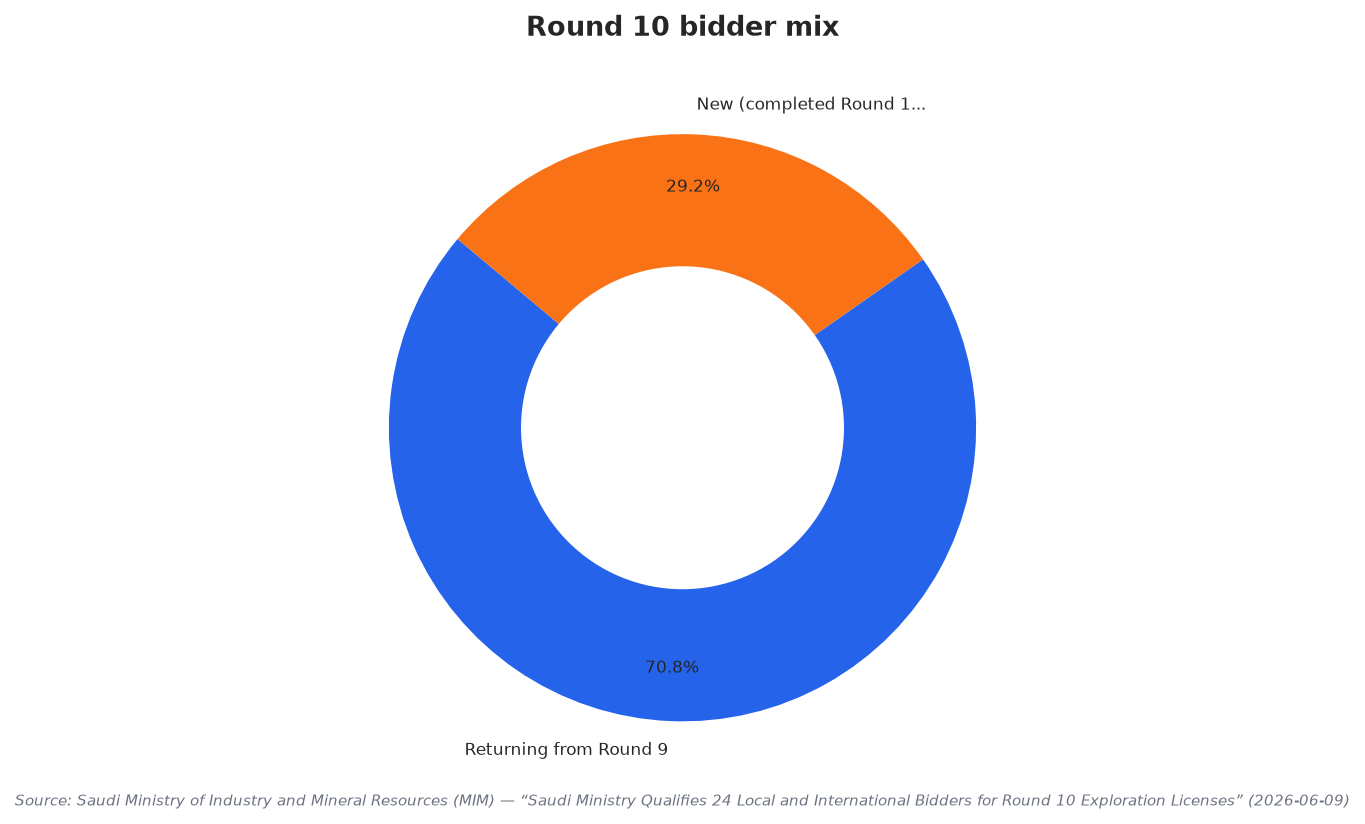
Round 10 offers a recent reference point for how exploration license prequalification in Saudi Arabia is applied in practice. MIM announced the qualification of 24 local and international bidders, including companies and consortiums, to participate in Round 10, marking the start of the bidding phase after technical and financial evaluations were completed. Of these 24 qualified bidders, 17 were previously pre-qualified under Round 9. Seven additional companies and consortia successfully completed the Round 10 pre-qualification questionnaire (PQQ). Under the exploration licensing competition guidelines, MIM noted that pre-qualification remains valid for one calendar year, enabling eligible bidders to participate in subsequent rounds during that validity period.
What Bidders See on Taadeen—and What the Round Covers
MIM stated that all geological and technical data for Round 10 sites are available on the Taadeen digital platform. The published materials include previous license reports and survey data, intended to ensure investors have access to the necessary information. The 10th round spans three mineralized belts with a total area of 13,000 km2. A separate 2026 guide described the round as covering three belts spanning 13,000 sq km and noted that the next phase has qualified bidders selecting available exploration sites through Taadeen. The licenses target gold, silver, copper, nickel, and zinc, and coverage referenced belts such as Al-Nuqrah and the Sukhaybarat-Al-Safra belt as part of the round’s multi-commodity character.
The prequalification window and the PQQ step are also time-bound and actively managed. When announcing the 10th round, MIM said the prequalification stage would remain open until December 15, 2025. For the next tender, MIM extended the PQQ for companies interested in the 11th exploration tender license, which it said offers eight mineral-rich exploration sites covering more than 1,878 km². That same announcement reiterated the three-phase process and clarified how competition plays out once bidders are qualified: site selection happens first, and only then does a multi-round live auction determine outcomes for contested areas based on two-year exploration spending commitments.
Round 10 also shows how bidder continuity and new entry can coexist within the same ruleset. Officials described the mix of 17 returning participants from Round 9 and seven first-time qualifiers as reflecting growing attractiveness for mining investment in the Kingdom. MIM’s spokesperson linked rising participation to regulatory reform, enhanced geological data, transparent licensing mechanisms, and an expanding portfolio of high-potential exploration opportunities across Saudi Arabia. For prospective applicants, the key takeaway is that the shortlist is built through documented technical and financial evaluation, and then translated into action through Taadeen site selection and an auction model that rewards committed early-stage exploration spend.
What is the main process for exploration license prequalification in Saudi Arabia?
How many bidders were qualified for Round 10 exploration licenses?
How many Round 10 qualified bidders were returning from Round 9 versus first-time qualifiers?
How long does prequalification remain valid under the exploration licensing competition guidelines?
What area does Round 10 cover, and what minerals are targeted?