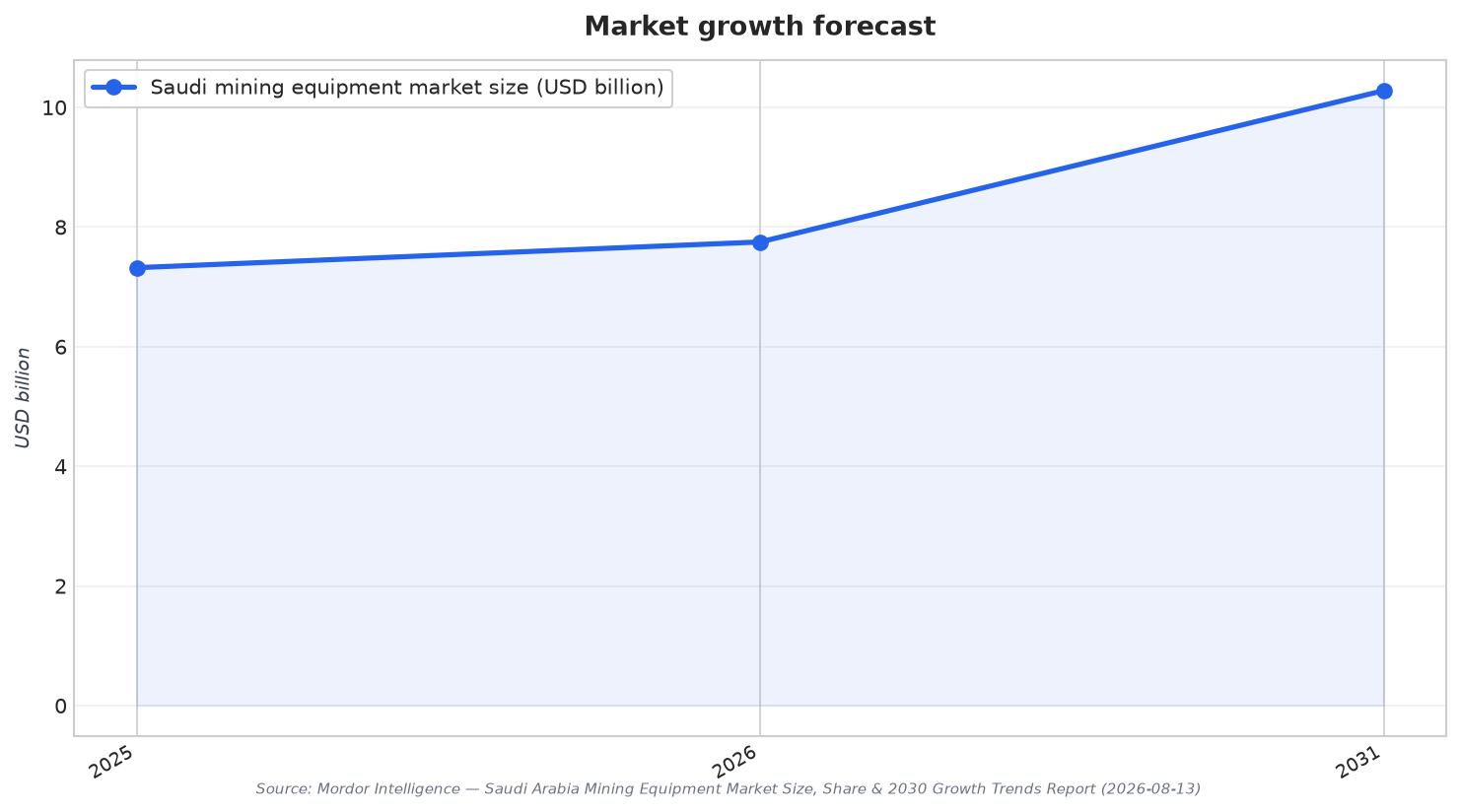
Mining investment momentum is translating into real equipment demand, which makes import costs and compliance steps more important to manage from day one. Mordor Intelligence values the Saudi Arabia mining equipment market at USD 7.32 billion in 2025, and estimates it grows from USD 7.75 billion in 2026 to USD 10.28 billion by 2031, at a CAGR of 5.83% (2026–2031). Within that mix, excavation accounted for 41.16% of the market in 2025, and surface mining support equipment led product types with 23.16%. As procurement scales, buyers often look for a practical customs duty exemption mining equipment Saudi Arabia pathway—while still planning for the tariff baseline and documentation requirements that apply at the border.
Start with the tariff framework. Trade.gov states that, as a member of the GCC, Saudi Arabia applies the GCC common external tariff of at least 5% on most goods imported from countries outside the GCC. Customs duties are calculated ad valorem on the C.I.F value, and Saudi Arabia adheres to the WTO Customs Valuation Agreement (Article VII of the GATT) on valuation methods. Imports are also subject to a customs surcharge, port fees, cargo service fees, and an import inspection tax. As of July 2020, VAT increased from 5% to 15%. Since January 2025, GCC states adopted a 2022 HS-based 12-digit tariff system, which enables more precise classification—an important detail when you are classifying specialized mining machinery and spares.
Industrial Exemptions and How to Track Them in Practice
Beyond the standard 5% baseline, Saudi Arabia also uses investment incentives that can change the economics of importing equipment. Invest Riyadh describes customs exemptions and reductions as part of the Kingdom’s incentive toolkit and notes that Saudi Arabia applies the GCC CET of 5% on most imported goods, with higher rates (up to 20%) on specific products where domestic alternatives exist. It also illustrates the potential scale of savings: for a manufacturing company importing $50 million in raw materials and equipment annually, the industrial input exemption saves $2.5 million per year at the standard 5% tariff rate, and for higher-tariff products, savings can exceed $10 million annually. For companies managing exemption decisions, ZATCA provides an “Industrial Exemption Inquiry” e-service for importing machinery, equipment, and materials, producing a detailed report on deducted and remaining quantities tied to industrial exemption decisions.
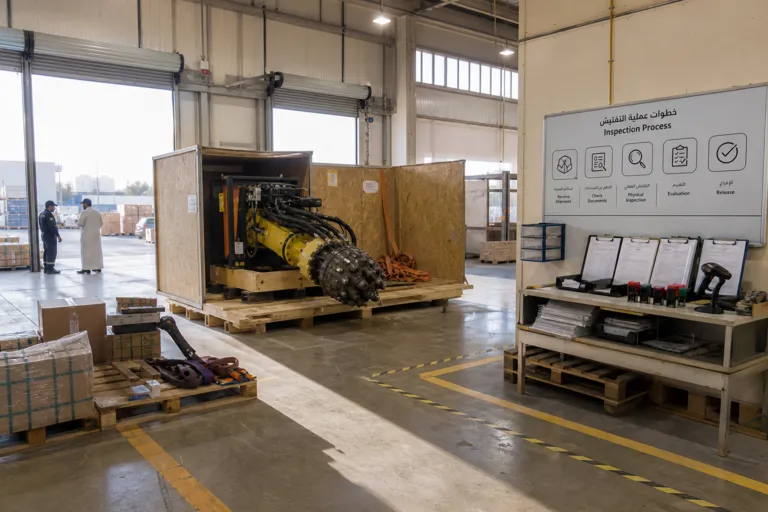
Compliance is the other half of the capex equation. Trade.gov identifies SASO as the regulatory authority controlling the quality of imported goods and says a conformity certificate is required to ensure imported goods conform with Saudi standards. Suppliers export through the Saleem product safety program, which includes Saber, an electronic portal used to register regulated and unregulated products with required shipping documents. The portal is accessible to importers, SASO-approved certification bodies, and Saudi customs officials. Trade.gov also cautions that the Saleem Saber conformity process can be complicated and may lead to unnecessary charges if completed incorrectly, recommending the use of an authorized certification body. For mining fleets and processing lines, these steps can be as operationally important as any tariff rate.
Macro trade context reinforces why import planning matters. The USGS reports Saudi Arabia’s total value of goods imports increased to $233 billion in 2024 from $207 billion in 2023, while imports of mineral products (including hydrocarbons) decreased to $14 billion in 2024 from $16 billion in 2023. It also lists major import origins as China (24%), the United States (8.4%), the United Arab Emirates (5.5%), India (5.4%), and Germany (4.3%). On the mining side, Mordor Intelligence links equipment demand to sector activity, noting 61 exploration licenses were issued in 2025 and highlighting shifting purchasing preferences driven by local-content regulations. Together, these signals point to a clear takeaway: control capex by treating classification, exemptions, and conformity as a coordinated workstream—not a last-minute customs task.
What is the baseline customs duty approach for importing mining equipment into Saudi Arabia?
How can an industrial exemption reduce the customs duty bill on imported machinery and equipment?
Where do companies track quantities under industrial exemption decisions in Saudi Arabia?
What conformity steps should importers plan for when bringing equipment into Saudi Arabia?
How does the customs duty exemption mining equipment Saudi Arabia topic connect to market demand?