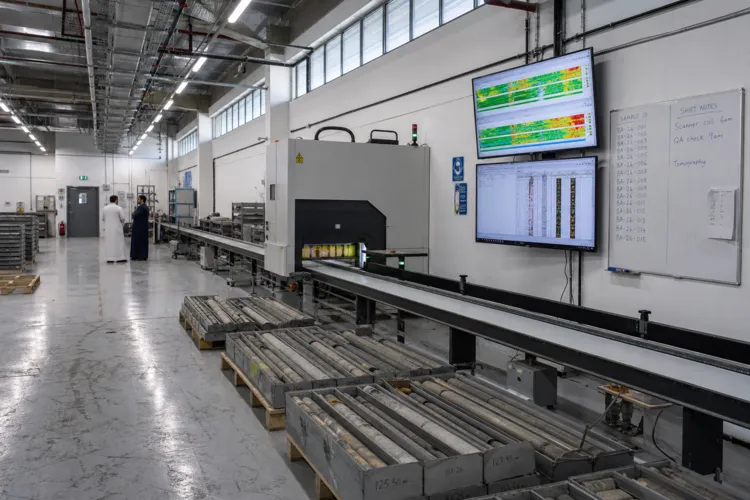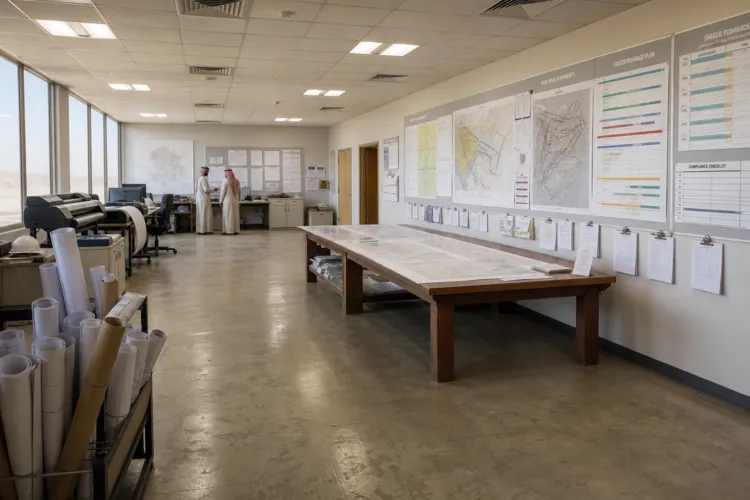
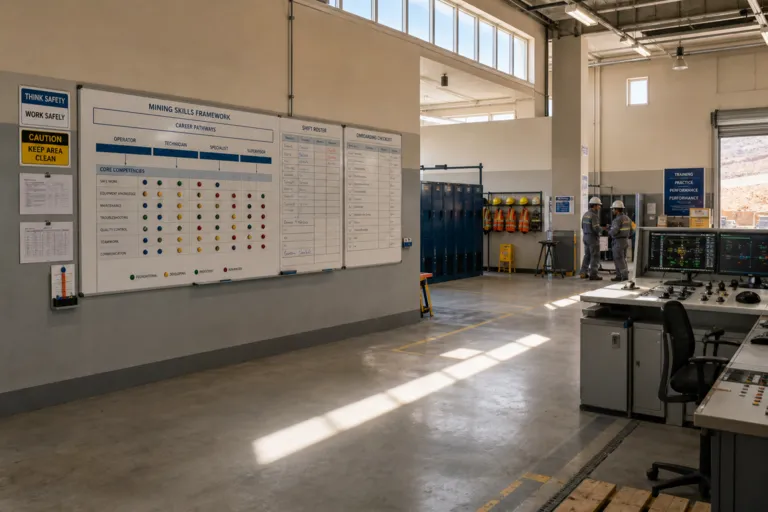
Saudi Arabia is trying to solve a familiar resource-economy challenge: how to turn natural endowments into durable competitive advantage while building indigenous capability for the long run. In mining, that means meeting immediate skills needs without locking the sector into permanent dependence on imported expertise. A key signal of the current gap is workforce composition: about 623,000 of 903,547 industrial workforce positions are filled by expatriate workers, indicating heavy reliance on imported labour. As new opportunities expand across exploration, extraction, processing, and value-added manufacturing, workforce strategy becomes as important as geology and permitting.
Demand is also being pulled by licensing momentum and improving scientific assessment capabilities. Saudi exploration licenses are described as a mechanism that can unlock previously unrecognised economic potential, and that creates a “demand-pull” for capabilities across the mining value chain. In parallel, the sector narrative includes regulatory reform and positioning: Saudi Arabia is described as having an estimated $2.5 trillion mineral endowment and being located at the intersection of European, Asian, and African commodity trade routes, supported by world-class logistics infrastructure and demonstrated regulatory reform capability. Together, these factors increase the need for highly skilled professionals who can execute projects responsibly and competitively.
Premium Residency as a Tool for Importing Expertise—Without the Old Friction
Premium Residency is being used to make Saudi Arabia easier to choose for globally mobile specialists, including those who can help train teams and transfer operating know-how. The Premium Residency Permit (PRP) is a self-sponsored long-term residency visa that allows eligible foreign nationals to live, work, invest, and own business or property without a local sponsor or employer. It also allows holders to sponsor dependents and provides travel flexibility by permitting entry and exit without a separate exit/re-entry visa, while exempting holders from monthly levies typically imposed on expatriates and their dependents. In early 2024, the program was restructured into seven categories, broadening eligibility beyond a narrow high-net-worth focus to include skilled professionals and individuals with exceptional talent, as well as investors, entrepreneurs, and property owners.
Eligibility signals are becoming more defined, which helps employers plan. A Reuters report cites a marketing brochure indicating categories that include executives earning more than 80,000 SAR ($21,300) per month and specialized health and science professionals earning more than 35,000 SAR per month. Reuters also reported that premium residency has been afforded to anyone purchasing a property worth more than $1 million. On the policy side, Fragomen notes that the Law of Real Estate Ownership by Non-Saudis took effect earlier in 2026, allowing individuals, companies, and funds to buy property in designated zones, operating alongside Premium Residency. For talent-based tracks, Fragomen also emphasizes employer whitelisting: Special Talent and related tracks require a contract with a Saudi employer approved and listed by the Saudi Premium Residency Center, meaning employer eligibility can be decisive.
Importing expertise is only part of the story. Saudi Arabia is also investing in structured domestic capability. One analysis describes a comprehensive mining skills framework as a strategic investment in human capital infrastructure that supports sustainable diversification and global competitiveness. It states that the approach systematically develops indigenous expertise across 500+ occupational categories, creating pathways between education outcomes, professional competencies, and industrial expansion objectives. This is where the mining talent premium residency Saudi Arabia topic becomes practical: Premium Residency can reduce friction for bringing in specialists now, while skills standardisation helps ensure knowledge transfer and a scalable local pipeline over time. Programs aimed at graduates are also referenced as early-stage efforts that may compound over decade-long timeframes, supporting the longer horizon required to rebalance the workforce.
Why does Saudi Arabia still rely heavily on expatriate industrial workers?
How does Premium Residency help companies recruit specialized mining expertise in Saudi Arabia?
What changed when Saudi Arabia expanded Premium Residency into seven categories?
What is employer whitelisting and why does it matter for talent-based Premium Residency?
How are Premium Residency reforms and workforce frameworks connected to the mining talent and residency topic in Saudi Arabia?