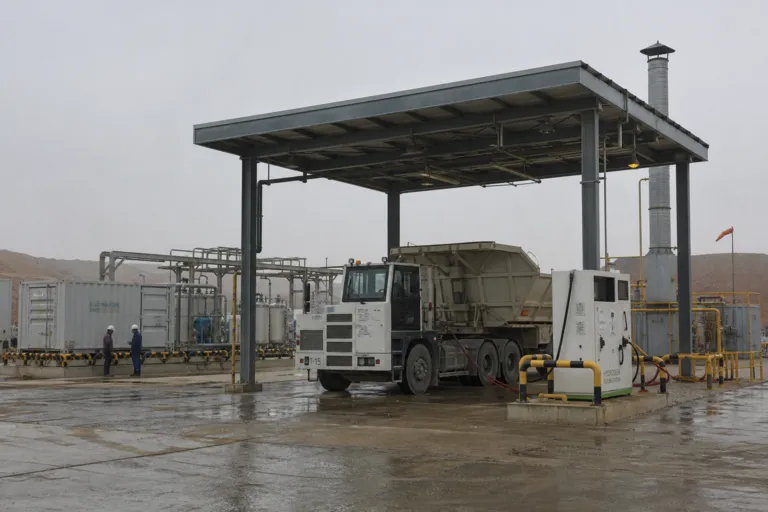
Decarbonizing mining is no longer only about renewable electricity. Operators are also testing hydrogen-fueled heavy haulage to cut diesel combustion and Scope 1 emissions at the source, while concentrators and smelters increase demand for emission reduction systems during refining and processing. This global push matters for Saudi Arabia because the Kingdom is positioning green hydrogen as a cornerstone of economic diversification under Vision 2030. In one global market view, Saudi Arabia is described as planning USD 6 billion worth of green hydrogen projects, alongside investment in renewable energy infrastructure and hydrogen-ready industrial clusters.
Market forecasts for Saudi Arabia’s green hydrogen sector vary by provider, but they point in the same direction: early commercialization with large projects leading. Grand View Research estimates Saudi Arabia’s green hydrogen market generated USD 6.1 million in 2025 and could reach USD 81.6 million by 2033, with a 32.9% CAGR from 2026 to 2033. The same source states Saudi Arabia accounted for 0.1% of the global green hydrogen market in 2025. Another report values the Saudi Arabia green hydrogen market at USD 0.66 billion in 2025 and projects USD 1.60 billion by 2033, describing the market as driven more by large-scale investments than by widespread demand adoption.
Where Mining Could Use Hydrogen First: Remote Power and Heavy Haulage
For mining, the near-term question is not whether hydrogen exists, but how it reaches sites and equipment safely. An IndexBox report on Saudi Arabia’s metal hydrogen generation highlights demand drivers such as safe, on-demand hydrogen without high-pressure storage, avoidance of grid dependency in remote locations, and logistical simplicity versus compressed hydrogen gas. It also notes that Saudi Arabia’s mining sector is expanding under Vision 2030, with new phosphate, bauxite, and gold operations in remote areas that need reliable, zero-emission power for processing, accommodation, and material handling. That frames a plausible early use case: hydrogen supply pathways that fit remote operations, even before broad domestic hydrogen demand takes off.
Heavy haulage is another priority because it is “hard-to-electrify” in many real-world mine conditions. A green mining market overview describes operators accelerating fleet electrification while also testing hydrogen-fueled heavy haulage to reduce diesel use and Scope 1 emissions. For Saudi Arabia, the opportunity is tied to how fast large supply projects mature. One Saudi market report says the NEOM Green Hydrogen Project alone is expected to produce approximately 650 tons of hydrogen per day upon full commissioning, positioning the Kingdom as a major exporter. The same report stresses that export-oriented demand is significantly higher than domestic consumption, with hydrogen often converted into green ammonia for storage and transport to regions such as Europe and Asia.
That export-first structure shapes the outlook for cleaner smelting and processing in-country. Several sources emphasize that big revenues depend on commissioning schedules and commercialization timelines, and that green hydrogen remains significantly more expensive than conventional hydrogen. A separate production-and-export forecast projects Saudi Arabia’s green hydrogen production and export market growing from USD 7.5 billion in 2025 to USD 23.8 billion by 2032, citing drivers such as renewable integration, expanding electrolyzer deployment, and long-term supply agreements with industrial markets in Europe and Asia. For mining decarbonization, this suggests a phased pathway: early pilots for haulage and remote power, followed by wider industrial integration as supply and logistics infrastructure deepen.
Can Saudi Arabia realistically use green hydrogen to decarbonize mining haulage and smelting?
What do forecasts say about the Saudi Arabia green hydrogen market size?
How big is the NEOM project expected to be in hydrogen output?
Why might remote mines in Saudi Arabia be early hydrogen adopters?
Is Saudi Arabia’s green hydrogen demand mainly domestic or export-led right now?