Saudi Arabia’s Ministry of Industry and Mineral Resources has qualified 24 local and international companies and consortiums to compete for exploration licenses across three multi-mineral belts covering about 13,000 square kilometres in five administrative regions: Madinah, Makkah, Riyadh, Al Qassim, and Hail. For teams tracking the Hail mineral belt Saudi Arabia is now putting into sharper focus, the Round 10 footprint matters because it connects gold targets with base-metal and nickel-bearing systems in the same licensing architecture. One report estimates the mineralised systems within these belts carry a combined resource valuation of SR9.4 trillion (about USD 2.5 trillion), spanning gold, silver, copper, nickel, and zinc.
Round 10 includes belts with different exploration profiles and different infrastructure needs. MEED highlights the Nabithah–Ad Duwayhi (Dahlat Shabeb) Belt, anchored by the Ad-Duwayhi mine, described as one of Saudi Arabia’s largest gold-producing operations with annual production of about 180,000 ounces of gold. MEED also points to the Sukhaybarat–Al-Safra Belt, recognised for gold and base-metals potential and home to the Sukhaybarat and Bulghah operations, and the Al-Nuqrah Belt, known for substantial gold resources and volcanogenic massive sulphide mineralisation rich in copper and zinc. Another Round 10 explainer notes that VMS settings can be structurally complex and may require sophisticated, capital-intensive geophysics before drill targeting is possible.
Why Hail’s New Frontier Is Being Taken More Seriously
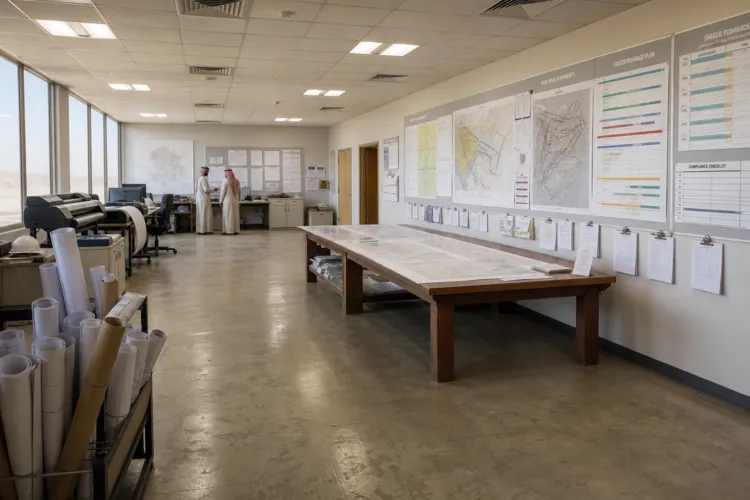
Saudi Geological Survey (SGS) work is a key reason more groups are treating the northern belt areas as more than a speculative idea. SGS supports systematic mapping and resource assessment across the Arabian Shield and is developing a comprehensive national geological database through the Regional Geological Survey Program (RGP) and the Accelerated Exploration Program (AEP). Recent official figures show exploration spending increased fivefold in four years, reaching SAR1.05 billion in 2024, up from SAR501 million in 2023 and SAR205 million in 2020. In the same period, private-sector exploration license spend rose to SAR770 million in 2024 from SAR155 million in 2020, while government spending through geological programs increased from SAR11 million in 2020 to SAR180 million in 2024.
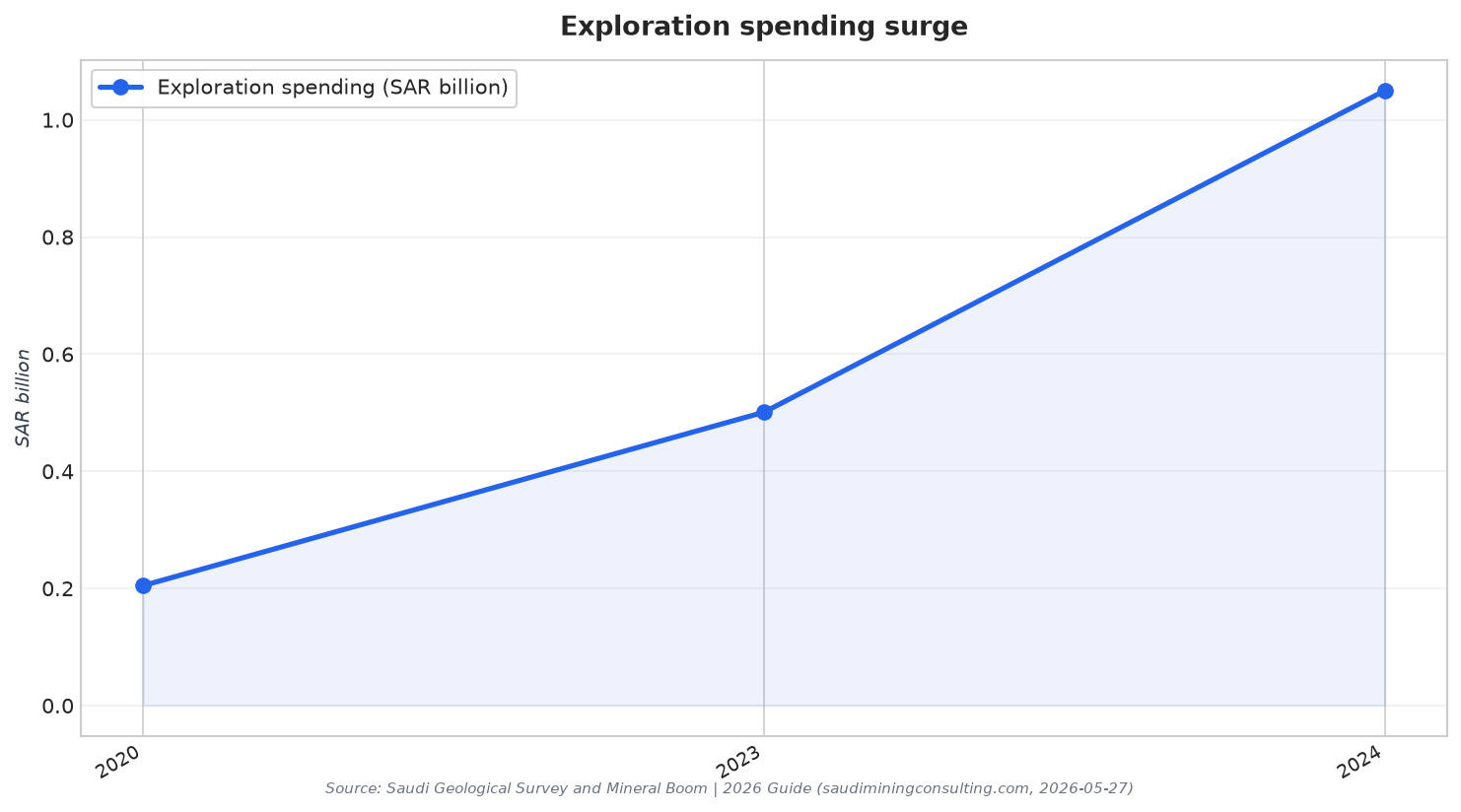
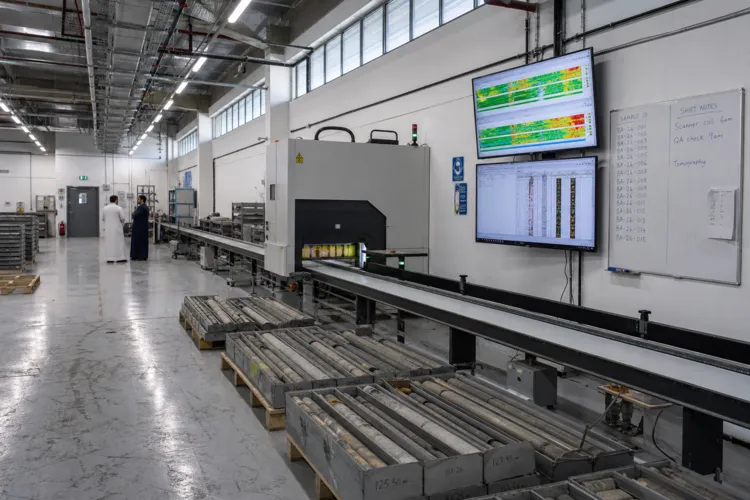
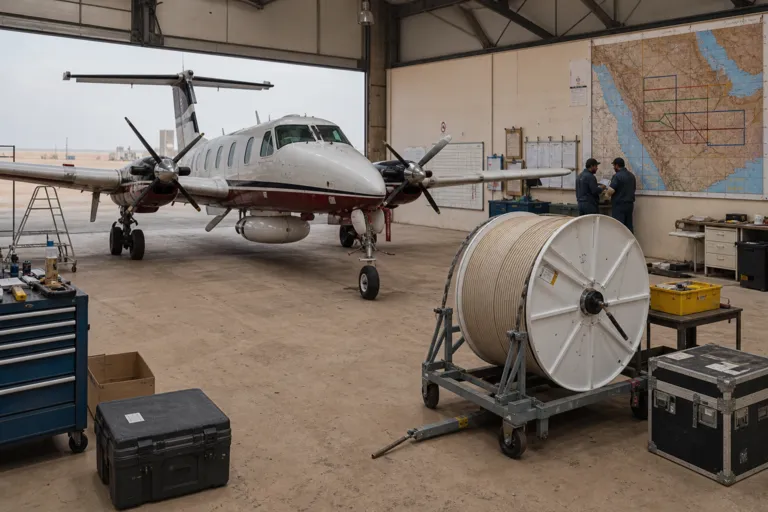
Data scale is also growing. One account describes a surveyed territory of 650,000 square kilometres across the Arabian Shield and says completed surveys revealed actual mineral wealth exceeding previous estimates, with survey operations continuing periodically every three to five years as data improves. On the market side, IMARC Group data cited in a Saudi Arabia exploration equipment report values the Saudi mineral exploration equipment market at USD 2,052.5 million in 2025, with an estimate of USD 3,786.1 million by 2034. Capability build-out is visible in partnerships and tools, including Ma’aden’s partnership with Ivanhoe Electric deploying Typhoon geophysical technology, with three units operating across Saudi Arabia and completing 510 square kilometres of surveys and drilling 2,100 metres across the Al Amar Belt.
Round 10 also shows how quickly the participant base is widening. The qualified list spans Saudi, Australian, and Indian entities, and one report flags the presence of PT ANTAM Tbk, a state-owned Indonesian mining corporation with significant nickel and gold operations across Southeast Asia. That participation is framed as a signal that sovereign-linked mining entities view Saudi Arabia as a credible exploration destination. At the same time, the risk picture is not being hidden: commentary around Round 10 stresses that Saudi Arabia remains a relatively early-stage mining jurisdiction, and policy evolution risk should be considered. It also notes that remote areas in Hail and northern Qassim may need material infrastructure investment beyond direct exploration costs.
Where is Round 10 exploration activity focused in relation to Hail?
Which metals are highlighted across the belts offered in Round 10?
How fast has Saudi Arabia’s exploration spending increased in recent years?
What production figure is cited for the Ad-Duwayhi mine connected to the Round 10 belts?
What should companies consider when planning work in the Hail mineral belt area in Saudi Arabia?