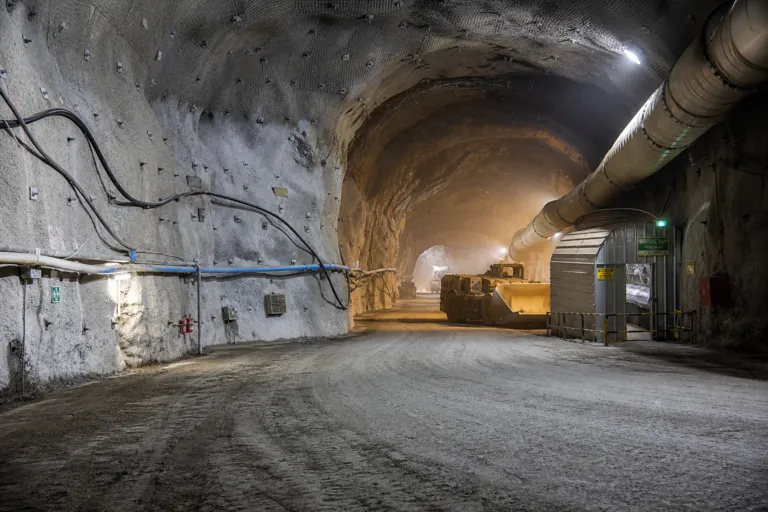
Saudi Arabia’s mining strategy is being shaped by operations that have had to solve problems the hard way. One of the clearest examples is the Al Amar gold mine in Saudi Arabia, an underground site that Wood Mackenzie describes as producing a gold-silver doré and gold-containing copper and zinc concentrates. That product mix matters because it shows how an underground mine can monetize more than one output stream while staying tied to a single orebody. The mine also sits inside Ma’aden’s broader gold portfolio. Wood Mackenzie lists Al Amar among Ma’aden-owned gold producing mines alongside Bulghah, Al Hajar, and Mahd Ad’Dahab, which helps explain why operational learning at one site can travel across the portfolio.
Longevity, however, is not automatic. Wood Mackenzie notes that, based on a production rate of 200 kt/a of ore, Al Amar has enough reserves to support an operation up to 2030. That kind of line-of-sight planning is a lesson in itself. A clear production rate tied to reserves forces disciplined decisions on mine planning, processing, and staffing. It also sharpens the business case for incremental upgrades, because improvements can be evaluated against a known operating horizon. The key takeaway is that long-running underground mines can still be managed with explicit rate-and-reserve logic rather than vague “life extension” narratives.
Technology and Exploration Are Becoming Part of the Operating Playbook
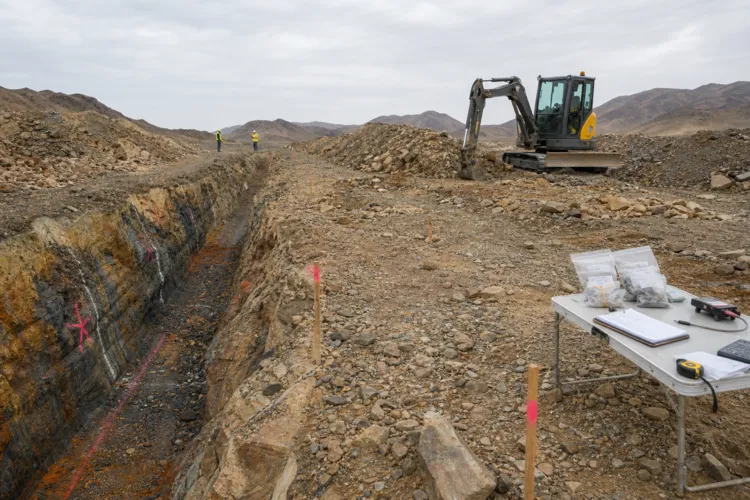
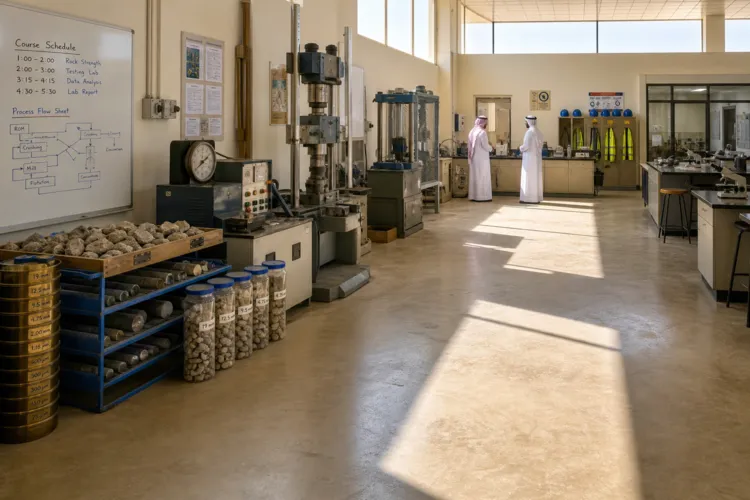
Another lesson from Al Amar is that underground operations increasingly depend on upstream data quality and the tools that generate it. A Saudi exploration equipment update says Ma’aden’s partnership introduced Typhoon geophysical technology with three units operating across Saudi Arabia, completing 510 square kilometers of surveys and drilling 2,100 meters across the Al Amar Belt. Separately, the same update notes that the number of drilled projects surged to 160 in 2024 from 58 in 2023, and that in 2025, 72% of exploration budgets targeted gold while 23% focused on copper. For operators, the implication is simple: exploration intensity and targeting priorities are now operational variables, not background noise.
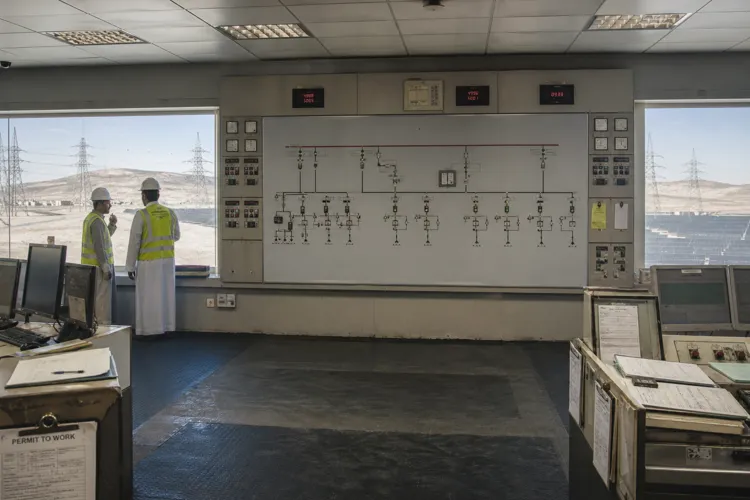
Automation and digitalization also show up as practical safety and productivity levers for underground work. A Saudi-focused technology update describes autonomous industrial mining robots deployed in Ma’aden’s underground operations through partnerships with OffWorld, positioned as a way to reduce human exposure to hazardous environments. The same update describes AI use cases across the value chain, including predictive maintenance, and says AI-driven cloud solutions can process large datasets in real time and reduce the time required for mineral discovery “from years to nearly half.” For a long-running underground mine, these are not abstract trends. They are ways to keep equipment running, improve decision cycles, and manage risk in day-to-day operations.
Finally, Al Amar’s story sits inside a national investment thesis that is being updated in real time. A Vision 2030 reference notes Saudi Arabia’s mineral wealth was valued at roughly USD 1.3 trillion in the original 2016 Saudi Geological Survey baseline, then revised in January 2024 to SAR 9.375 trillion, or about USD 2.5 trillion. It also states that mapping campaigns have catalogued over 5,300 mineral occurrences and that airborne geophysical surveys mapped roughly 600,000 square kilometres in 2024. For an operator, the lesson is scale: Al Amar is not an isolated asset. It is part of a wider pipeline where data, labs, surveys, and capital formation increasingly shape what “long-running” can mean.
What does the Al Amar gold mine in Saudi Arabia produce?
What production rate does Wood Mackenzie cite for Al Amar?
What exploration work has been reported across the Al Amar Belt?
How fast did drilling activity change in Saudi Arabia’s exploration pipeline?
What technology trends are linked to underground operations at Ma’aden?