Interest in volcanogenic massive sulfide deposits Saudi Arabia is rising because the country is pairing a highly prospective shield terrane with a fast-evolving exploration and licensing framework. Multiple sources cite government forecasts that previously estimated untapped mineral wealth at roughly SAR 9.4 trillion (about USD 2.5 trillion), spanning commodities that include gold, copper, and zinc. This push sits inside Vision 2030, where mining is positioned as a major diversification pillar. In Q1 2026, Saudi Arabia’s non-oil economy expanded by 3%, and mining is increasingly embedded in that broader policy agenda. For explorers, the point is not just scale. It is how VMS belts concentrate several metals into relatively compact targets that can be tested quickly when data quality improves.
The foundation is the Arabian-Nubian Shield, described as a Precambrian-age geological formation estimated at about 900 million years old. Sources also frame Precambrian shield environments as disproportionately associated with structurally controlled gold deposits and VMS ore deposits. VMS systems form at ancient seafloor hydrothermal vents and can combine copper, zinc, lead, gold, and silver in one ore body, which helps explain why these target types appear across Saudi licensing areas. One overview notes that VMS-style mineralisation can host copper grades exceeding 2–3%. Another industry explainer adds broader global context: VMS deposits generally range from 4 Mt to 25 Mt, with outliers up to 150 Mt, and exhibit grades in the vicinity of 5% copper and 4% zinc, with less than 1% lead and potentially gold (less than 1 g/t).
How Saudi Arabia Is Turning Belt-Scale Geology Into Drill Targets
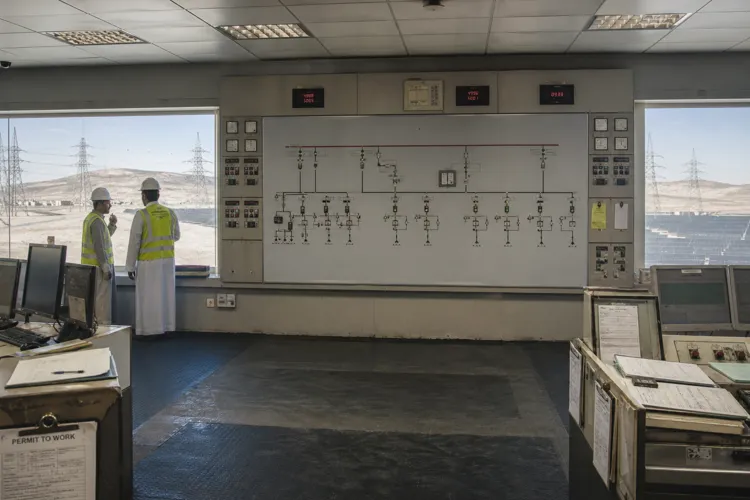
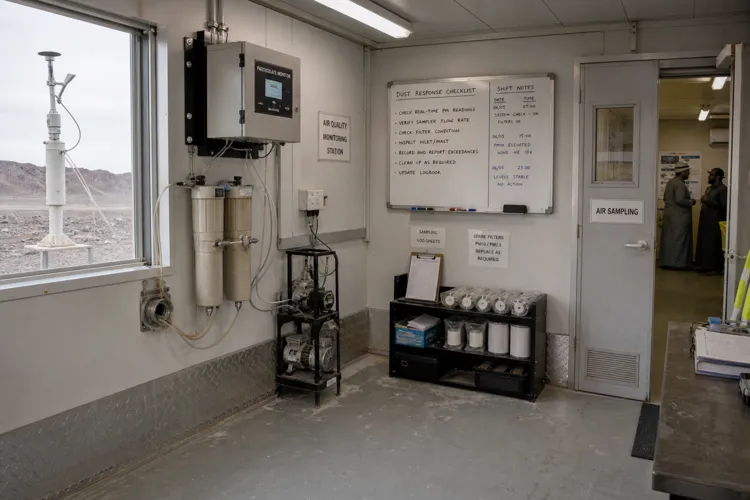
Saudi Arabia is also scaling access to ground through structured licensing. In one 2026 announcement, the Ministry of Industry and Mineral Resources qualified 24 local and international companies and consortiums to compete for exploration licenses across three multi-mineral belts covering about 13,000 square kilometres in five regions: Madinah, Makkah, Riyadh, Al Qassim, and Hail. The same package cites an estimated combined resource valuation of SAR 9.4 trillion (approximately USD 2.5 trillion) across metals that include gold, silver, copper, nickel, and zinc. Separately, a 2026 briefing states the competitive licensing process has run through ten consecutive iterations. Alongside this, national geochemical survey work and the National Geological Database are described as improving targeting and due diligence, helping explorers narrow the search space inside large belt-scale terrains.
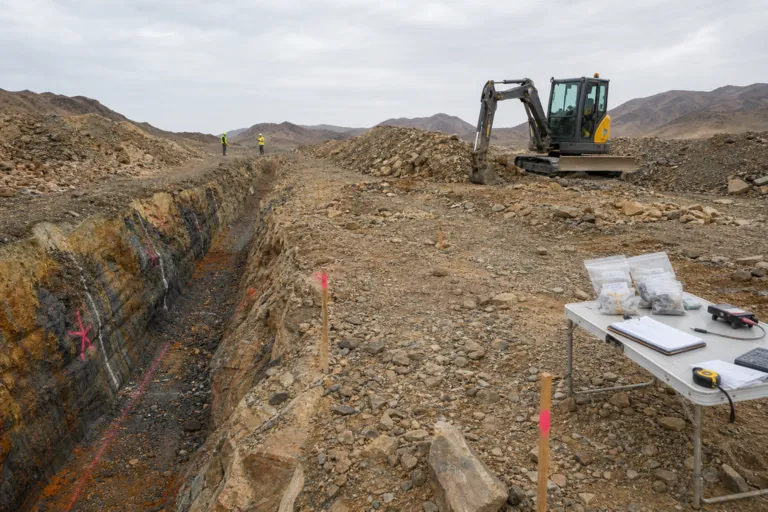
Early-stage project results show what “reading the belt” can look like in practice. Sun Peak Metals reported initial results in January 2026 from systematic mapping, rock-chip, and grab sampling at its 100%-owned Halahila copper-gold-silver VMS project. The main VMS gossan outlined a mineralized zone exceeding 650 meters of strike length, with widths up to 30 meters, and it hosted reported gold and silver values. In the same sampling set, 25% of samples (24 of 98) returned gold values greater than 1 g/t, with values up to 16.35 g/t gold. Also, 29% of samples (28 of 98) returned values greater than 10 g/t silver, with values up to 180 g/t silver. The company also reported holding 100% of six exploration licenses covering about 438 km², and it expected to add about 800 km² through Round 9 finalization and two accepted license applications awaiting grant.
Technology and systems-based targeting are being positioned as key to finding conductors and alteration halos under cover. One strategy-focused source says VMS deposits in the Arabian Shield exhibit sharp reactions to airborne electromagnetic surveys, and that Saudi Geological Survey work enables high-resolution conductivity mapping that can reveal “ore conductors.” The same source highlights spectral signatures from sensors on drones or satellites that can detect alteration minerals including kaolinite, illite, and montmorillonite. Elsewhere, a market-oriented overview describes rapid technology deployment: Ma’aden’s partnership with Ivanhoe Electric introduced Typhoon geophysical technology, with three units operating across Saudi Arabia, completing 510 square kilometres of surveys and drilling 2,100 meters across the Al Amar Belt. The joint venture also announced 1,345 square kilometres of additional exploration licenses, with continuous surveying and 4,000 meters of additional drilling scheduled. Together, these approaches connect belt-scale geology to target-scale decisions.
Why are VMS belts central to Saudi Arabia’s copper-zinc-gold exploration story?
What did the 2026 licensing announcement say about exploration scale in Saudi Arabia?
What sampling results were reported from the Halahila VMS project in 2026?
How are explorers using geophysics to target Arabian Shield VMS systems?
What makes “volcanogenic massive sulfide deposits” in Saudi Arabia a common topic in current exploration discussions?