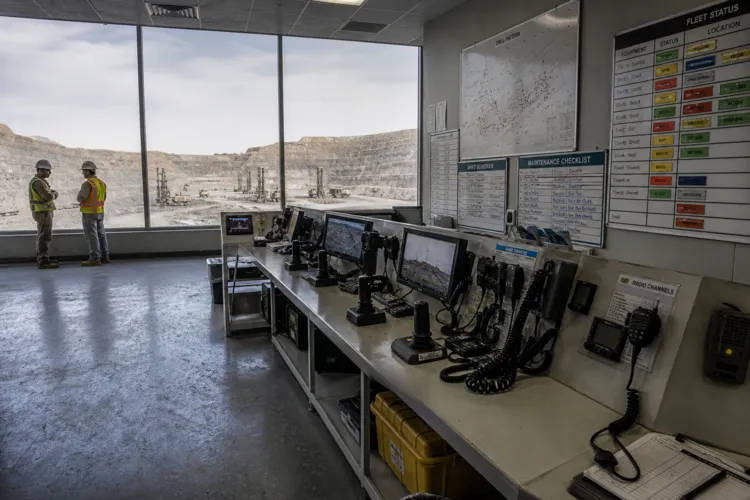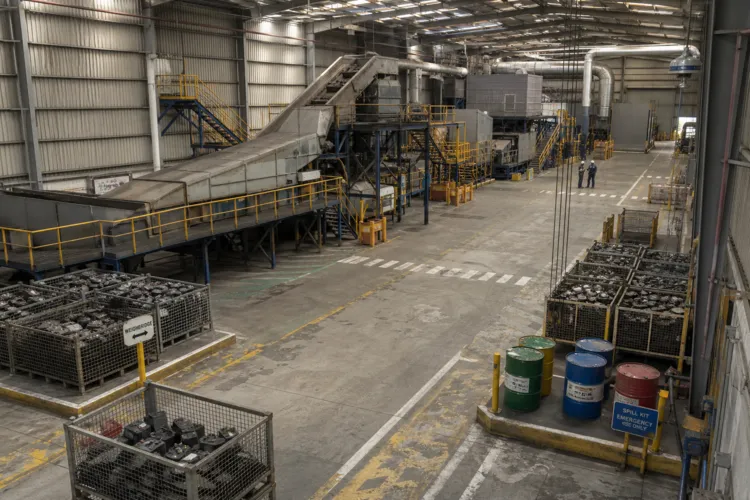
Mining activity generates dust across drilling, crushing, hauling, and material handling. TSI notes that particulate matter such as respirable silica poses direct health risks to workers, with respiratory illnesses possible when exposure is not properly controlled. In desert environments, the challenge becomes more persistent because common methods can underperform. Verified Market Reports highlights that in extreme environments such as arid deserts, conventional systems and chemicals may degrade rapidly, reducing effectiveness and raising maintenance needs. For Saudi Arabia, this pushes operators toward structured programs that combine monitoring, engineered controls, and site-specific suppression plans rather than relying on generic water spraying alone.
Investment signals reinforce why operators are prioritizing mine dust air quality control in Saudi Arabia. MarketsandMarkets reports that the Saudi Arabia air quality control system market was valued at $4,582.0 million in 2024 and is projected to reach $6,491.5 million by 2029, representing a 7.2% CAGR. The same source links expansion to stricter environmental regulations and emission standards, plus Vision 2030 sustainability goals and government-backed compliance programs that sustain demand across industrial facilities. While not mining-only, the trend indicates that environmental performance expectations are rising across heavy industry, making dust control planning a core part of operational readiness at arid mine sites.
Build the Control Stack: Measure, Contain, Suppress
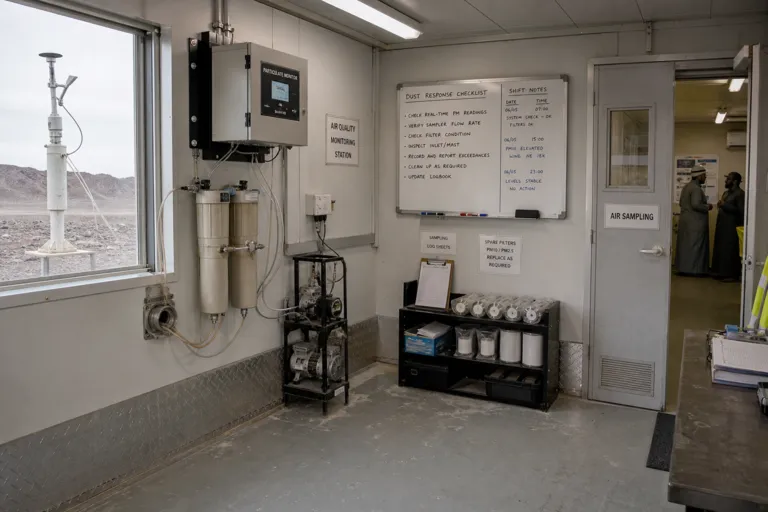
A practical dust program starts with measurement, because control actions depend on what is happening in real time. TSI describes its DustTrak™ Environmental Monitor as a tool designed for real-time monitoring of ambient dust levels, producing data that helps operations maintain compliance and respond proactively to rising particulate levels. That monitoring layer supports worker protection and also transparency with nearby communities, which TSI frames as important for building trust and demonstrating environmental stewardship. In arid Saudi settings, monitoring can also validate whether a chosen suppressant is lasting as expected or whether maintenance and reapplication cycles need adjustment.
With measurement in place, mines can choose containment and suppression methods that fit specific sources of dust. Stratview Research defines wet suppression as spraying water or other liquids onto dust particles to prevent them from becoming airborne, and dry collection as capturing airborne dust particles using a filtration system. In the wider dust control market, Global Growth Insights reports a shift toward resource-aware approaches: demand for water-efficient dust suppression techniques has grown by 25% particularly in arid regions, and demand for water-efficient dust control solutions has increased by 35% especially in arid regions like the Middle East. The same source adds that smart dust control solutions have seen a 30% adoption rate to enhance efficiency and regulatory compliance, aligning with operations that want predictable performance in harsh climates.
Planning also benefits from understanding where demand is concentrating and why. Global Growth Insights states that the Middle East & Africa hold 10% of the dust control systems market, with Saudi Arabia and the UAE accounting for 60% of regional demand. It also reports that the oil & gas sector contributes 40% of dust control system usage due to strict environmental safety measures, and that construction and infrastructure projects have driven a 35% increase in dust suppression solutions. For mine operators, these figures suggest a competitive supplier landscape and cross-industry learning opportunities: mining can borrow proven approaches from oil & gas safety programs, while coordinating dust plans with nearby construction activity that can amplify regional particulate loads.
Why is dust control especially challenging at arid mine sites?
What do the latest Saudi Arabia figures suggest about demand for air quality control systems?
What’s the difference between wet suppression and dry collection for dust control?
How are water-efficient and smart dust solutions trending in arid regions?
What does mine dust air quality control in Saudi Arabia need to prioritize first?