Saudi Arabia’s electricity system is expanding to meet rising demand and diversify the energy mix toward cleaner sources such as solar and wind. Mordor Intelligence forecasts the Saudi Arabia power generation market growing from 87.81 GW in 2024 to 116.41 GW by 2029, a 5.80% CAGR. The government has pledged that 50% of the country’s electricity will come from renewable sources by 2030, and the Ministry of Energy’s spending on power and renewable energy projects is expected to reach USD 293 billion by 2030. For large industrial loads like smelters, that backdrop matters because long-duration procurement decisions are shaped by how fast generation and grid capacity can be built and connected.
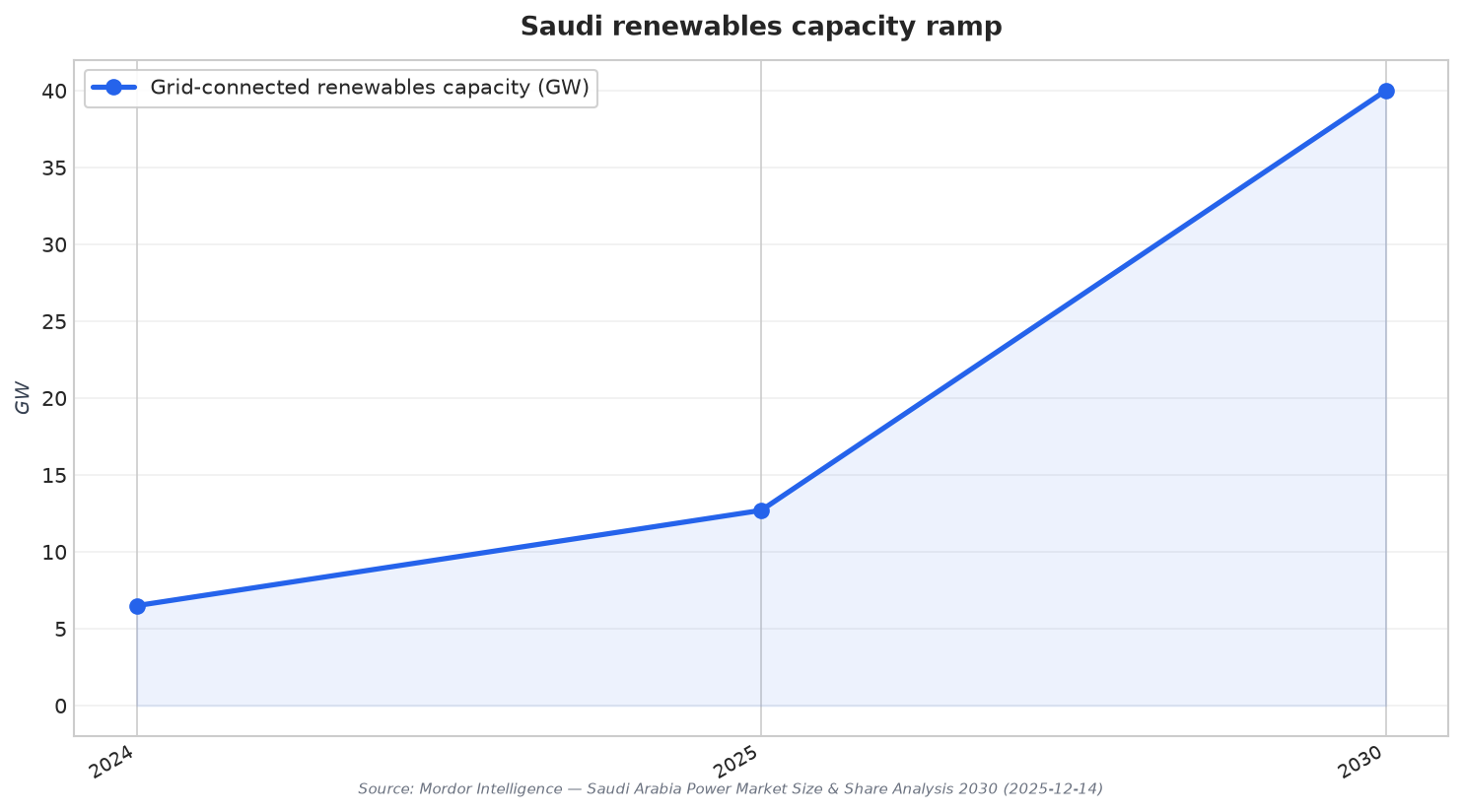
Renewables are moving from a small base to a larger slice of installed capacity in the Kingdom. Mordor Intelligence reports that renewables held 6.5 GW, or 6.8%, of installed capacity in 2024, are forecast to add 12.7 GW by 2025, and are expected to exceed 40 GW by 2030—lifting renewables to more than one-quarter of the power market within that outlook period. The same source notes the National Renewable Energy Program (NREP) has awarded 21 projects totaling 19 GW, and seven plants equal to 4.1 GW were operating by late 2024, with grid-connected renewables scheduled to double from 6.5 GW in 2024 to 12.7 GW in 2025. This is the market context that makes long-term contracting increasingly relevant for heavy industry.
Why PPAs Are Becoming a Smelter Tool, Not a Trend
Across the global power market, Mordor Intelligence reports corporate buyers—chiefly data-center and heavy-industry operators—inked 23.7 GW of renewable PPAs during the year, bypassing utilities for direct access to power plants. The same report notes aluminum smelters and chemical complexes are already relocating to wind-rich zones to capture cheap, firmed renewable power and locking in 15–20-year offtakes that underpin local transmission expansion. In Saudi Arabia, a renewable power purchase agreement smelter Saudi Arabia strategy has to fit local market realities: a rapid buildout of solar and wind, and the need to align contract terms with grid connection and delivery risk rather than relying on assumptions.
Project economics and execution constraints also shape PPA design for smelters. Mordor Intelligence’s renewable market analysis highlights cost-competitive solar tariffs averaging USD 0.018/kWh, while also flagging operational challenges such as dust-driven PV efficiency losses of 15–20% annually and grid congestion in high-solar regions. The same report states solar held a 93.15% share of the Saudi renewable market in 2025, while wind is projected to advance at an 81.7% CAGR through 2031. For a smelter, that mix suggests PPAs may need clearer performance, availability, and delivery provisions, plus a plan for how solar-dominant supply is balanced as wind scales.
Finally, PPAs depend on whether the grid can absorb and deliver new generation to industrial sites. Saudi Electricity Company (SEC) is investing heavily in infrastructure: its 2023 capex program amounted to USD 10.9 billion, a 51.8% increase from 2022, and in 2024 SEC deployed USD 16 billion into generation, transmission, distribution, and general projects, up 43.8% from the prior year. In 2024, SEC’s directly owned capacity stood at 56.4 GW, representing 61% of the Kingdom’s total capacity, with 2% year-on-year growth. For smelters evaluating long-term renewable offtake, these figures frame the practical question: not only which plant to contract with, but how grid buildout, congestion, and connection timelines affect delivered power.
What is driving renewable PPAs for industrial buyers like smelters?
How fast are renewables growing in Saudi Arabia’s installed capacity outlook?
What does the NREP pipeline and awards signal to a smelter buyer?
What risks should a Saudi smelter consider when contracting solar-heavy supply?
How can a renewable power purchase agreement for smelters in Saudi Arabia align with grid realities?