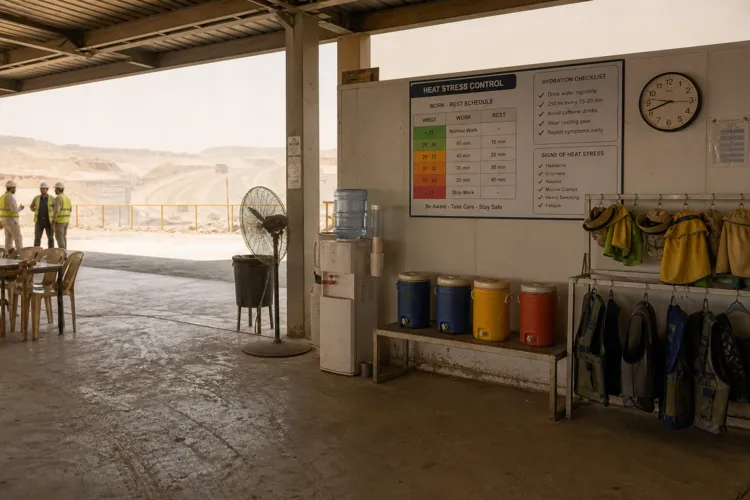
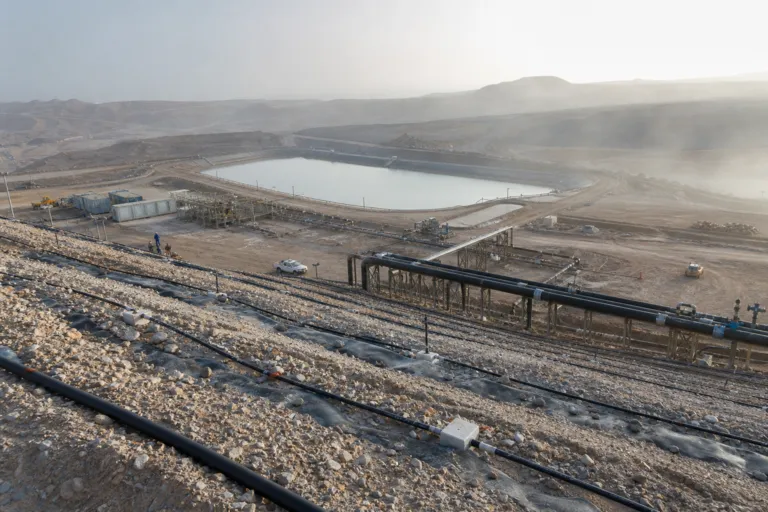
In Saudi Arabia’s modern gold story, Ad Duwayhi stands out as a flagship. Vision 2030-focused analysis describes it as Ma’aden’s largest gold mine by production, located in the Makkah region, operating as an open-pit mine that processes oxide and sulphide ores. That combination matters in a desert context. An open-pit layout and clear processing route provide a repeatable operating pattern for a national champion that runs multiple gold sites across the Arabian Shield. The broader sector is described as modest by global standards, producing in the range of several hundred thousand ounces per year, but positioned for expansion through industrialisation and exploration across an underexplored geological formation.
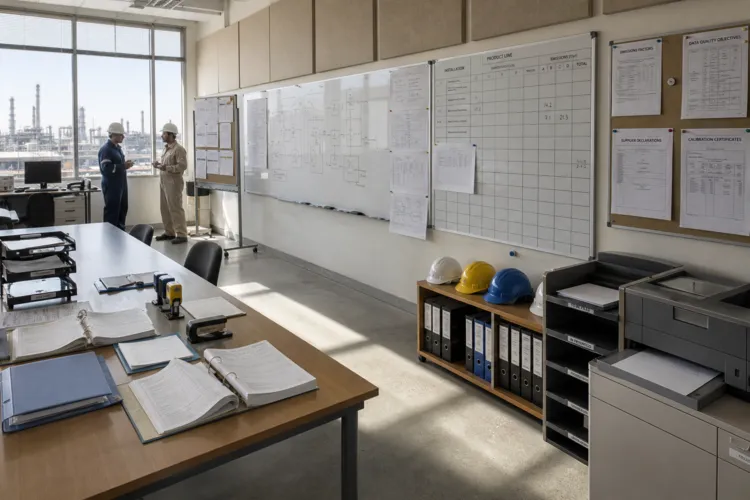
To understand why Ad Duwayhi became a template for arid operations, it helps to place it in Ma’aden’s portfolio and the Kingdom’s strategy. Ma’aden was established by royal decree in 1997 and listed on Tadawul in 2008, evolving from a single gold operation into a diversified mining and metals company spanning gold, phosphate, aluminium, copper, and industrial minerals. A company profile also notes Ma’aden now manages 17 operational sites, employs over 6,800 people, and exports to more than 30 countries. In that context, an operationally “standard-setting” gold mine is less about novelty and more about proving what can be replicated across a multi-site footprint in the Arabian Shield.
Why Ad Duwayhi’s Model Fits Desert-Scale Expansion
Ad Duwayhi’s role as a high-output anchor is explicit in Saudi coverage that cites it at approximately 180,000 ounces annually. The same source frames Saudi Arabia as operating six major gold mines and names other key sites such as Mahd Ad Dahab, Al Amar, Bulghah, and As Suq, while also pointing to Mansourah-Massarah as a newer large operation that began production in 2022 with an annual production target of 320,000 ounces. The signal for operators is that the Kingdom is building a portfolio, not a single mine. Ad Duwayhi’s open-pit, oxide-and-sulphide approach becomes a practical baseline when the national objective is to scale a set of mines, not just optimise one.
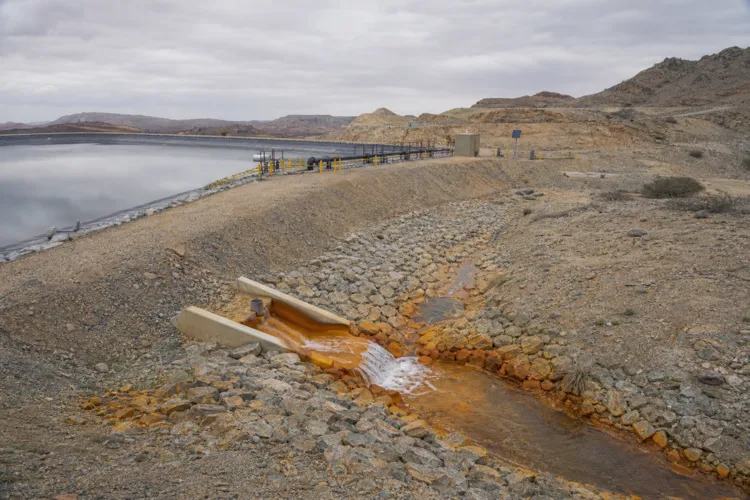
Arid operations are defined by constraints, especially water and energy, and Saudi policy narratives link those issues directly to mining expansion. One Saudi mining overview states that by 2025, more than 60% of gold mining operations in the Kingdom source energy from renewables, and it also describes priorities around responsible water resource management, including recycling treated water for industrial purposes and investing in desalination infrastructure at mine sites. It further links Ma’aden’s commitment to net-zero operations by 2050 with solar-powered desalination for water use in extraction. In that framework, a flagship mine like Ad Duwayhi becomes a reference point for how new and existing assets can align operational needs with these system-level desert constraints.
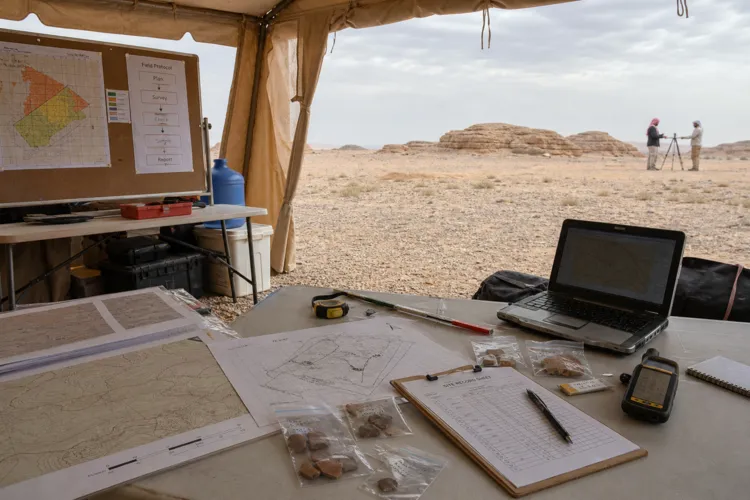
The significance of the Ad Duwayhi gold mine Saudi Arabia conversation also sits inside the Kingdom’s larger mineral endowment story. A Vision 2030 resource summary says Saudi Arabia’s mineral wealth was valued at roughly USD 1.3 trillion in a 2016 baseline and revised in January 2024 to SAR 9.375 trillion, or about USD 2.5 trillion, with the revaluation announced at the Future Minerals Forum in Riyadh. It also states mapping campaigns have catalogued over 5,300 mineral occurrences and that newer airborne geophysical surveys mapped roughly 600,000 square kilometres in 2024. Those figures are not mine-specific, but they explain the direction of travel: the country is building an exploration-to-operations pipeline where repeatable desert operating templates—like the one associated with Ad Duwayhi—support faster translation of mapped potential into producing assets.
Where is the Ad Duwayhi mine located and who operates it?
How much gold does Ad Duwayhi produce each year?
What mining and processing approach is used at Ad Duwayhi?
What desert operating priorities are highlighted for Saudi gold mining?
How does Ad Duwayhi fit into Ma’aden’s broader mining strategy?