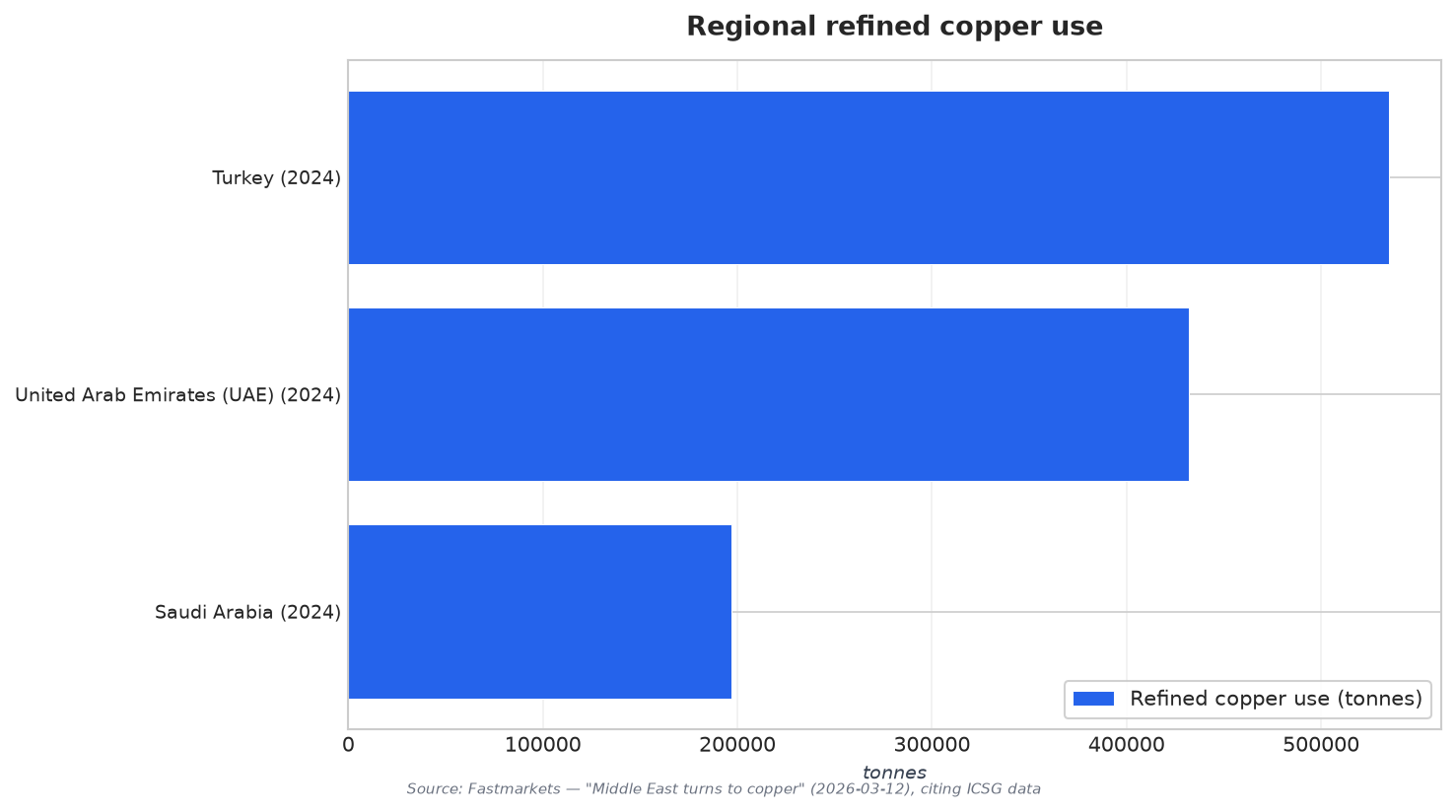
Saudi Arabia sits at a point where copper demand and industrial policy are colliding. Fastmarkets reports Saudi Arabia used 197,000 tonnes of refined copper in 2024, placing it behind Turkey (535,000 tonnes) and the UAE (432,000) among the biggest users in the region. At the same time, Fastmarkets notes that Iran is the only Middle Eastern country that exports refined copper, at around 114,000 tonnes per year, while the rest of the region are net importers. That mix creates a structural gap: consumption is spread across countries that import, while exportable refined supply inside the region is concentrated in one place. For Saudi buyers, that makes the case for building domestic processing capacity, not only to secure units, but also to reduce exposure to volatile premiums that traders describe as “way above anything in the past” and “extremely loss-making” into the UAE in 2025.
The wider regional backdrop points to why copper has become strategically important. Fastmarkets cites the International Energy Agency’s World Energy Outlook 2025, which expects 78% of energy investment in the Middle East to go to fossil fuels in 2025, falling to 66% by 2035 as grids, storage, and low-emissions electricity increase. The same outlook expects peak electricity demand in the Middle East to rise by around 40% by 2035 compared with 2025. That kind of electrification narrative does not automatically create a domestic copper industry, but it raises the cost of being dependent on external refined supply when demand tightens. Fastmarkets also describes “extreme market conditions in 2025,” which helps explain why regional consumers are looking more closely at local value chains, from mining through to refined metal.
A Domestic Smelter-and-Refinery Plan Targets the Missing Link
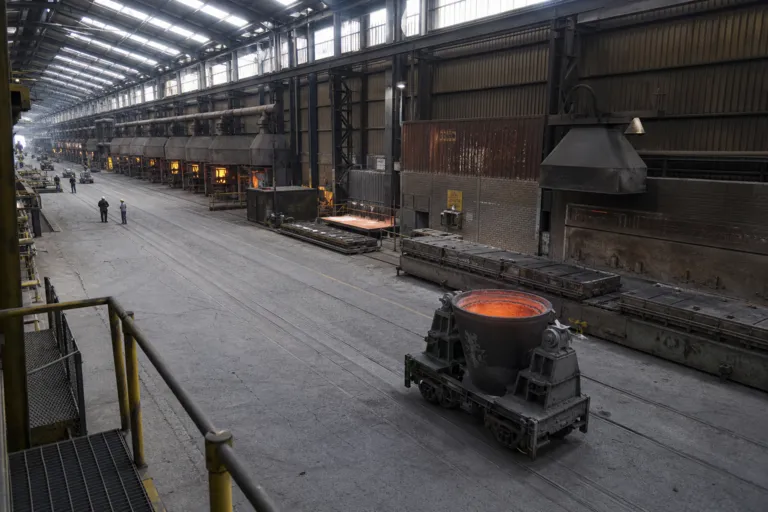
One proposed answer is to build the midstream that the copper chain lacks: smelting and refining inside the Kingdom. AInvest reports a planned USD 2 billion Vedanta smelter and refinery in Saudi Arabia, with production starting in 2026, designed to process 400,000 tonnes of copper annually. The same source frames the project as a way to reduce reliance on imported refined copper and global price volatility, with commissioning and the ability to ramp to the 400,000-tonne annual level described as a critical execution test. In regional context, the size of that processing target stands out next to Saudi Arabia’s 2024 refined copper use figure cited by Fastmarkets (197,000 tonnes). That comparison underscores the strategic logic: a domestic plant could potentially cover local needs and create optionality for serving nearby import-dependent markets, depending on feed availability and commercial decisions.
Saudi Arabia already knows what “midstream” looks like when it is treated as national infrastructure. Verified Market Research values the Saudi Arabia oil and gas midstream market at USD 82.50 billion in 2024, projecting USD 121.36 billion by 2032, with growth described at a CAGR of 5.1% from 2026 to 2032. The report calls midstream the “logistical backbone,” linking extraction to final refining and marketing through pipelines, storage, terminals, and processing. The point for copper is not to compare commodities, but to borrow a proven playbook: when a country invests to connect upstream resources to downstream industry, it can reduce bottlenecks and improve resilience. In copper, the bottleneck is the conversion of upstream material into refined units that manufacturers can buy reliably, without being forced into import corridors and premium shocks.
Building a copper smelter Saudi Arabia can rely on is ultimately a value-chain decision, not just a single-asset project. IndexBox’s 2026 market report frames refined copper scope around unwrought forms such as cathodes, sections of cathodes, billets, and wire-bars, and places “primary copper smelting and refining” as a distinct value-chain position alongside trading, secondary refining, and fabrication. That framing matters because it highlights what is missing when a country consumes refined copper but lacks local conversion capacity: it must import refined units rather than turning supply streams into the specific unwrought products that wire and cable, construction, and industrial buyers need. With regional refined exports concentrated in Iran and import dependency across neighbors such as the UAE, the case for domestic smelting and refining strengthens as a practical way to align Saudi demand with a more controllable supply pathway.
How much refined copper did Saudi Arabia use in 2024?
Which Middle Eastern country exports refined copper, according to Fastmarkets?
What is the planned capacity of the Vedanta smelter-and-refinery project in Saudi Arabia?
What does the IEA outlook cited by Fastmarkets say about Middle East energy investment and electricity demand?
Why does a copper smelter-and-refinery matter for Saudi Arabia’s supply security?