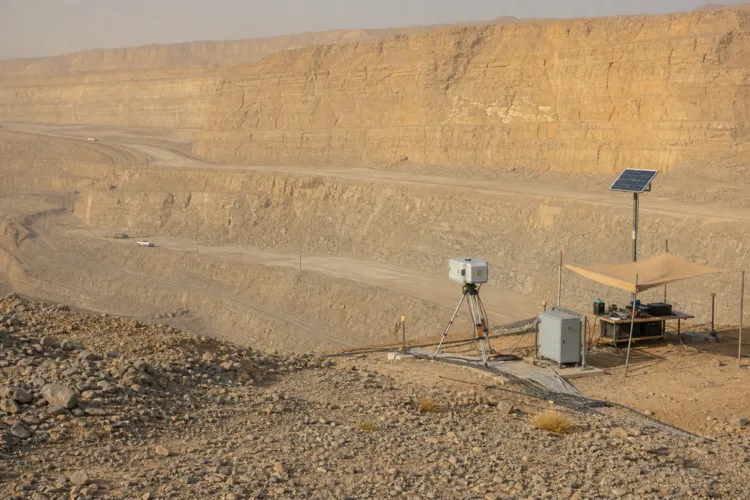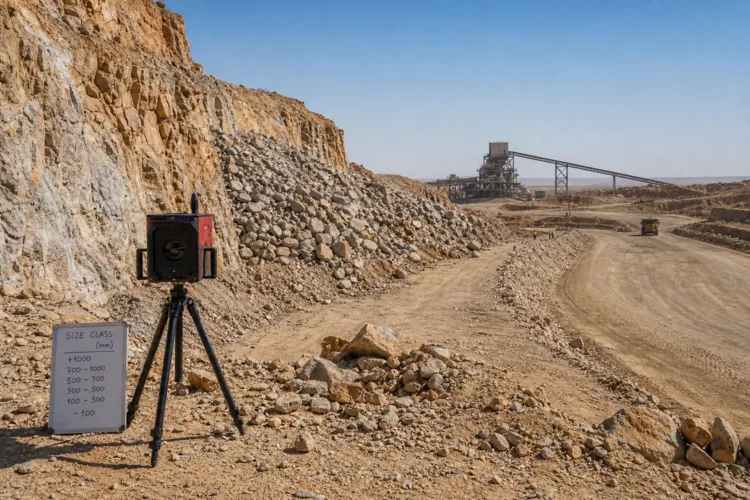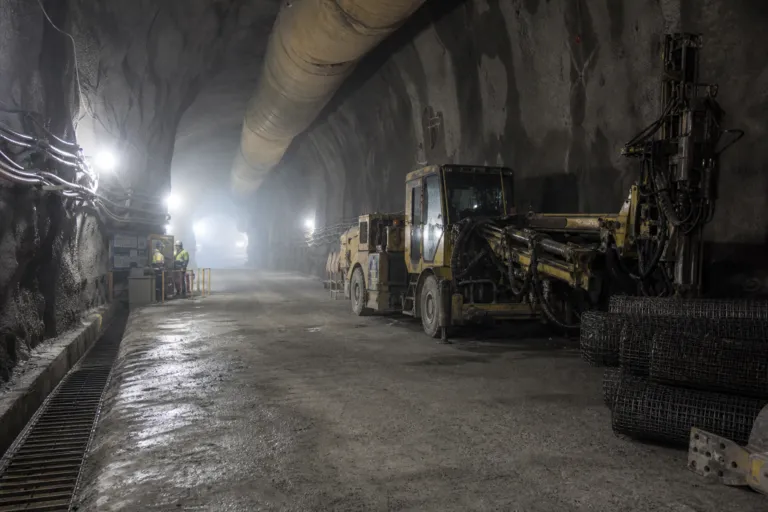
In the Middle East’s mining outlook, the shift from surface to depth is becoming a defining theme. One regional market report explicitly links underground growth to the depletion of near-surface deposits and the need to exploit deeper, higher-grade ore bodies that open-pit methods cannot access. In Saudi Arabia, open-pit techniques still dominate many active metal mines. According to the Saudi Ministry of Industry and Mineral Resources (as cited in the same report), over 80% of active metal mines in the country, including the Al-Lajat and Jabal Sayid projects, use open-pit methods. That starting point matters, because it frames underground development not as a replacement overnight, but as the next operational layer as shallow options tighten.
Investment signals also point in the same direction. Grand View Research reports the Saudi underground mining equipment market generated USD 1,368.6 million in revenue in 2025 and is expected to reach USD 2,545.8 million by 2033, with a CAGR of 8.27% from 2026 to 2033. The report also notes that Saudi Arabia accounted for 3.0% of the global underground mining equipment market in 2025. Within equipment mix, Load Haul Dump (LHD) machines were the largest revenue segment in 2025 and are also described as the most lucrative segment with the fastest growth during the forecast period. These are practical indicators that deeper mining plans require different fleets, not just more of the same surface gear.
From Open Pits to Deep Ore: What Changes Underground
The case for underground mining Saudi Arabia is also grounded in what the Kingdom is trying to unlock. Grand View Research ties demand for modern underground equipment to Saudi Vision 2030 and its emphasis on mining as a pillar of economic growth, naming mineral targets that include gold, copper, zinc, and phosphate. Another regional report adds detail on metals context: it states that Saudi Arabia alone hosts over 18 million metric tons of identified copper resources (citing the U.S. Geological Survey) and points to operations such as Mahd Al-Dhahab and Jabal Sayid. The same report says Saudi Arabia was the largest contributor to the Middle East mining of metal ores market in 2024, with a 48.2% share, attributing that position to Vision 2030 initiatives and expanding mining operations.
Broader market data reinforces why “going deep” changes procurement and operating models. Global Market Insights estimates the underground mining equipment and service market at USD 33.0 billion in 2025, projecting 5.3% CAGR from 2026 to 2035. For Middle East & Africa, it reports USD 3.6 billion in 2025 and a projection of USD 6.0 billion by 2035, while noting that Saudi Arabia accounted for 14% of the region’s revenue in 2025 and is forecast to grow at a 7.6% CAGR from 2026 to 2035. It also states the market is being reshaped by deeper mine plans and a shift toward equipment that can operate under stricter ventilation, safety, and productivity constraints, highlighting integrated systems across drilling, load/haul, ventilation, communications, and maintenance.
Outside Saudi Arabia, multiple sources describe the same depletion-to-depth pathway as a wider industry driver. Market Research Future says easily accessible near-surface deposits have been steadily depleted in mature regions such as Canada, Australia, and South Africa, pushing miners deeper to sustain production. It projects the underground hardrock mining equipment industry to grow from USD 23,665.2 million in 2025 to USD 39,147.76 million by 2035, at a CAGR of 5.11%. Meanwhile, Coherent Market Insights estimates the global underground mining market at USD 18.32 Bn in 2026, rising to USD 27.54 Bn by 2033 at a 6.0% CAGR, and describes ongoing trends toward automation and digitalization, including remote-controlled equipment, automated drilling systems, and smart sensors to improve safety and efficiency underground.
Why is Saudi Arabia paying more attention to underground mining now?
How large is the Saudi underground mining equipment market expected to become?
Which equipment category stands out in Saudi Arabia’s underground market outlook?
What does regional data suggest about Saudi Arabia’s position in underground equipment and services?
How does Saudi Arabia’s copper resource base connect to deeper mining discussions?