Zirconium and hafnium are often discussed as specialty metals, but their commercial reality is tightly linked. Hafnium is frequently found in trace amounts within zirconium ores, and multiple sources emphasize that commercial hafnium production is closely connected with zirconium refining rather than an extensive independent mining industry. That linkage matters for anyone assessing zirconium hafnium Saudi Arabia opportunities, because capacity, quality systems, and separation technology shape what can be supplied, not just what is geologically present. The market lens is also useful context. One source values the global zirconium and hafnium market at USD 2.8 billion in 2025 and projects USD 4.35 billion by 2033, implying growth at a 5.68% CAGR from 2026 to 2033.
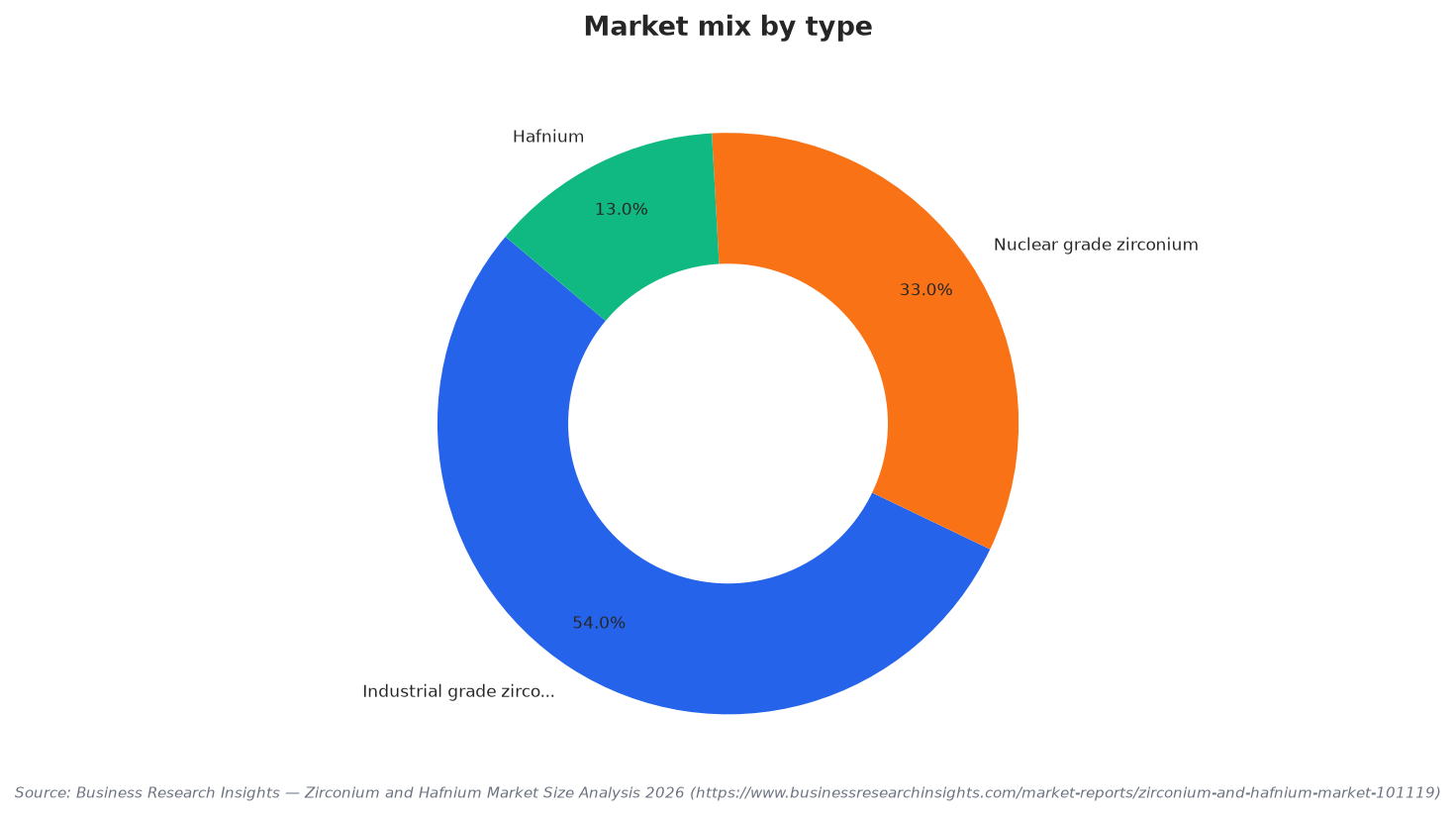
End uses split by grade, and the split shows why processing choices matter. In one market segmentation, industrial grade zirconium holds 54% share, nuclear grade zirconium represents 33%, and hafnium accounts for 13%. Another source similarly states hafnium represents approximately 13% of the zirconium and hafnium market by type. This creates two distinct value tracks: industrial zirconium is pulled by chemical processing, ceramics, metallurgy, and corrosion-resistant equipment, while nuclear grade zirconium is tied to nuclear fuel systems and strict procurement requirements around purity, traceability, corrosion performance, and metallurgical consistency. Hafnium demand is positioned around reactor control materials, superalloys, electronics, and high-temperature applications, which increases the importance of separation expertise and analytical capability.
Why Purity and Separation Define the Real Bottleneck
Several sources frame separation as the hard part, not the headline applications. High-purity hafnium production requires specialized separation technology, controlled metallurgical processing, and sophisticated analytical capabilities, and supply planning can be difficult because hafnium availability is a major challenge. Expansion projects underscore the scale and direction of investment. A Mordor Intelligence note cites that Nanjing Youtian Metal Technology Co., Ltd. commissioned a 510,000 sq. ft. facility for hafnium-zirconium separation in March 2024 to enhance capacity at its subsidiary, Jiangsu Yichu New Materials, focusing on high-purity zirconium and hafnium. In a separate example, a refinery associated with a Greenland-Romania strategy is anticipated to reach 120–150 tonnes of hafnium annually, paired with a Tanbreez concentrate expectation of 130,000 tonnes per annum.
Global demand signals also come from adjacent industries that consume these metals. For hafnium, one forecast puts the global hafnium market at USD 386.8 million in 2025 and expects USD 824.3 million by 2035, with a 7.86% CAGR during 2026–2035, driven by semiconductors, aerospace, and nuclear use cases. The same source cites SEMI’s expectation that semiconductor manufacturing equipment sales will amount to US$165.9 billion in 2026, a year-on-year growth of 23.2%. It also cites that 62 nuclear reactors are under construction worldwide as of February 2025, using IAEA PRIS data referenced via the IEA. These are global figures, but they explain why supply chains prioritize consistency, traceability, and refined output over raw extraction headlines.
For Saudi Arabia specifically, the most direct statement in the sources is modest but notable: emerging demand pockets appear in the Middle East, and the same source points to Saudi Arabia’s space initiatives, while stressing that volumes stay minimal through 2031. That framing suggests near-term activity is more likely to center on qualification, procurement pathways, and partnerships with established refiners than on immediate, large-volume consumption. The supplier landscape is also concentrated globally, with the five largest refiners controlling roughly 56% of global output, which can shape pricing power and availability for new buyers. For Saudi industry planners, the practical takeaway is that any ambitions around nuclear-grade or high-purity ceramic metals will hinge on access to qualified refining and separation capacity, not only on demand narratives.
How is the zirconium and hafnium market split by type?
Why is hafnium supply often tied to zirconium refining?
What global signals are driving hafnium demand growth?
What do the sources say about Saudi Arabia’s demand outlook for hafnium?
What recent separation capacity investments are mentioned in the sources?