Niobium is used as a microalloying addition that helps steelmakers push strength higher without relying on heavy sections of material. Market reporting links this directly to HSLA steel, where tiny additions can lift tensile strength by up to 30% while preserving weldability, and where formulations cited include 0.02–0.05% niobium for 20–30% strength gains over conventional grades. Another market source frames similar ranges and says additions of 0.03–0.05% by weight can increase yield strength by 30–40% versus plain carbon steel while maintaining weldability, formability, and toughness. For decision-makers tracking niobium Saudi Arabia relevance, the key point is practical: the value case starts in construction-grade steel and scales into other alloy families.
Regional demand signals in the Middle East and Africa underline how closely niobium consumption is tied to steel. One report states the Middle East & Africa region consumed 4,200 metric tons of niobium in 2023, and that the UAE and Saudi Arabia used nearly 2,300 metric tons in construction-grade steel. That same context matters because steel dominates niobium use in broader market breakdowns: in one outlook, steel accounted for 92.05% of the niobium market share in 2025, and ferroniobium held a 92.75% share by type. In other words, most demand is still driven by steelmaking pathways rather than niche applications, even as new uses emerge.
Why HSLA Steel Pulls Niobium Demand Up the Value Chain
HSLA adoption is repeatedly cited as the central demand engine because it changes how infrastructure projects balance strength, weight, and total tonnage. One market analysis says global HSLA steel output reached 235 million metric tons in 2023, with niobium used in over 90% of these formulations, and also notes that niobium’s addition increases material strength by over 20%. Another source describes a cost-and-volume logic in construction: material cost premiums remain 5–8% yet structural steel volumes fall by up to 20% when strength-to-weight ratios rise. These are global and policy examples, including references to China’s 2024 seismic standards, but they show why project specifications can lock in microalloy demand.
Beyond construction steels, the market also ties niobium to higher-temperature and higher-performance materials that can matter for industrial diversification. One report states that in 2023, approximately 59,300 metric tons of niobium were alloyed into HSLA steel, while over 3,600 metric tons were used in aerospace-grade nickel-based superalloys to improve oxidation resistance in turbine blades and jet engine parts. Another source adds that growing aerospace and defense sectors in the UAE and Saudi Arabia increase demand for high-strength alloys capable of withstanding temperatures above 1,200°C, and separately cites engines capable of withstanding temperatures above 1,400°C as a driver for aerospace niobium alloys. These figures are not Saudi production data, but they frame where higher-value demand can come from.
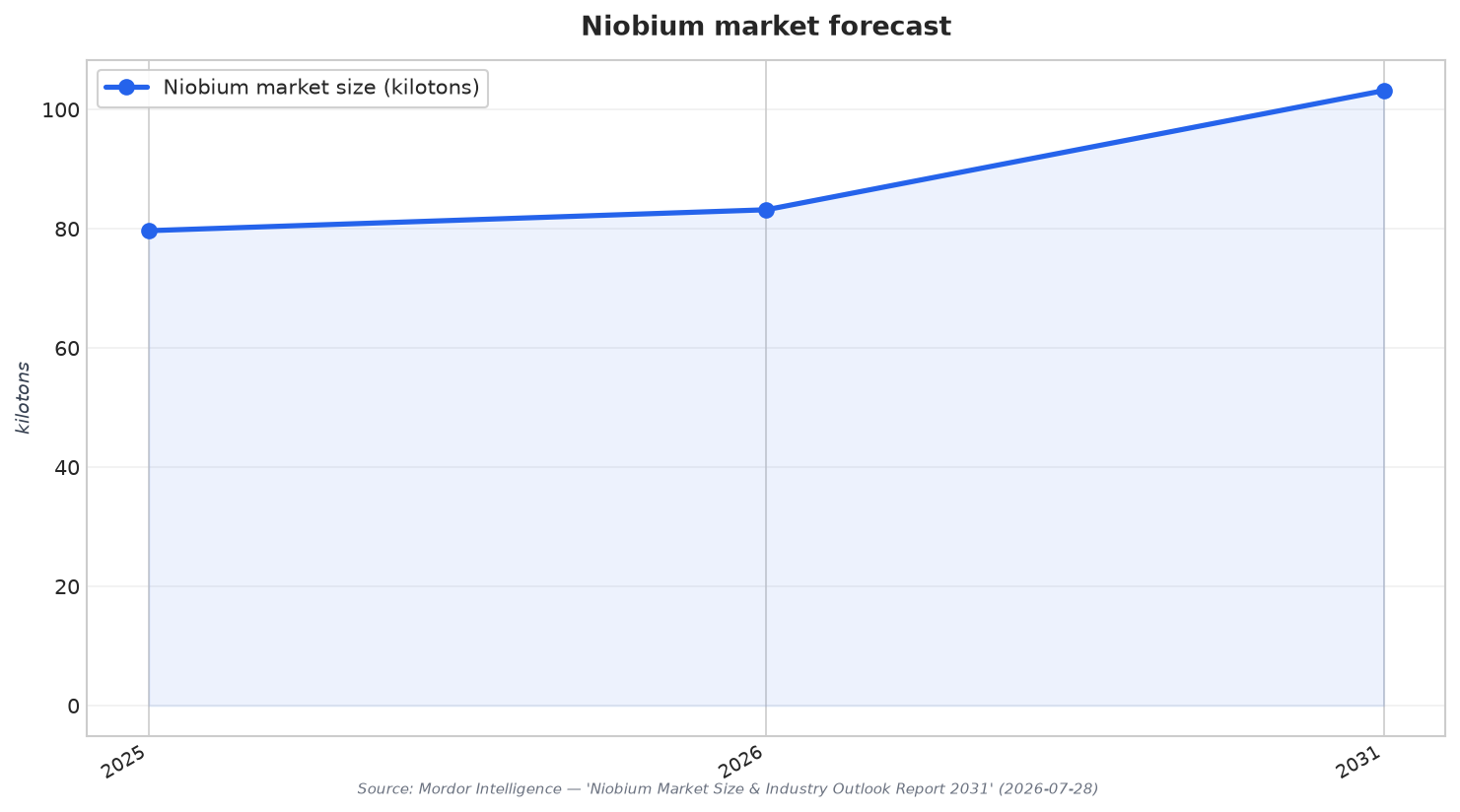
Market sizing and supply concentration provide additional context for how Saudi-linked demand could meet procurement realities. One outlook expects the niobium market to grow from 79.68 kilotons in 2025 to 83.19 kilotons in 2026 and reach 103.18 kilotons by 2031 at a 4.4% CAGR, while also describing price stability between USD 45–50 per kilogram supported by a concentrated supply base led by Brazil. A separate source says over 90% of niobium production occurs in Brazil, followed by Canada with 8%, and notes Brazil’s total exports reached 50,566 tons in August 2023. Together with the 2023 Middle East & Africa consumption figure of 4,200 metric tons, these points highlight why buyers often focus on long-term supply arrangements and why regional processing ambitions can matter as demand grows.
How is niobium use connected to Saudi Arabia’s steel demand?
What strength improvements do sources attribute to niobium in HSLA steel?
How dominant is steel in overall niobium demand?
What do the sources say about supply concentration and pricing?