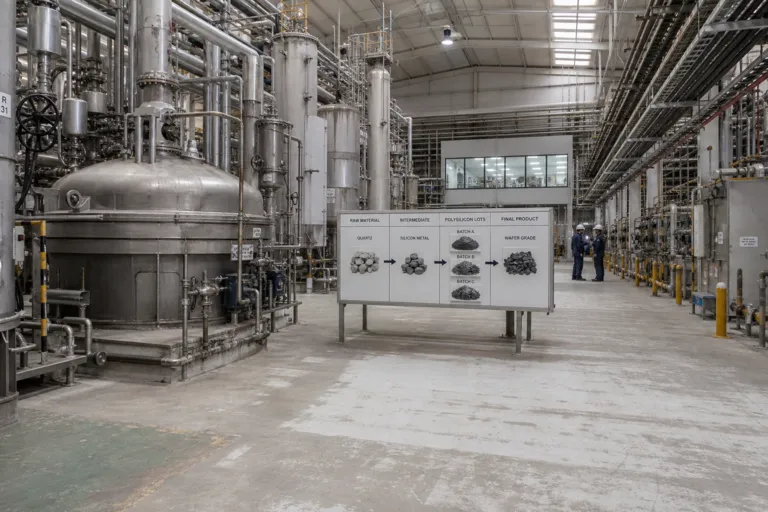
Building a Saudi value chain from quartz to silicon metal, polysilicon, and wafers depends on how fast upstream capacity can match downstream pull. Quartz is a silicon dioxide (SiO₂) mineral used across semiconductor manufacturing and solar photovoltaic (PV) systems, and market reports note that producers are investing in purification and beneficiation to meet stricter requirements for semiconductor and solar applications. Another quartz-focused report adds that silicon metal dominates quartz market volumes and is consumed in aluminum alloying, silicone chemical production, and polysilicon refining. For Saudi Arabia, that framing matters because it shows where value concentrates before wafers: first in material quality, then in conversion into silicon metal feedstock, and finally in high-purity polysilicon suitable for PV cells and semiconductor wafers.
On the demand side, Saudi Arabia already has a defined local wafer market trajectory. IMARC estimates the Saudi Arabia silicon wafer market reached USD 285.4 million in 2025 and expects it to reach USD 570.6 million, with a CAGR of 8.00% during 2026–2034. The same source links growth to renewable energy projects, especially solar PV, because silicon wafers are the principal material for PV cells. It also highlights government incentives and regulatory frameworks that encourage local content, including customs exemptions, subsidies, and long-term purchase agreements for solar energy developers who use locally manufactured components. This combination of market growth and localization tools is the practical basis for deciding whether upstream silicon metal and polysilicon investments can be justified within the Kingdom.
What Makes an Integrated Silicon-to-Wafer Chain Hard to Finance
Upstream integration is capital-intensive, and global wafer economics show why timing matters. A solar silicon wafer market report estimates the global solar silicon wafer market at USD 15.3 billion in 2025 and expects a 9.3% CAGR from 2026 to 2035. The same report notes that integrated polysilicon-to-wafer-to-cell facilities can require USD 150–350 million per GW, depending on technology and location. It also warns that polysilicon pricing remains a major source of margin uncertainty, especially when wafer prices are compressed. For Saudi decision-makers, this implies that building a local chain is not only about resource availability and industrial land; it is also about ensuring stable offtake and managing feedstock and wafer price cycles that can overwhelm process-cost improvements.
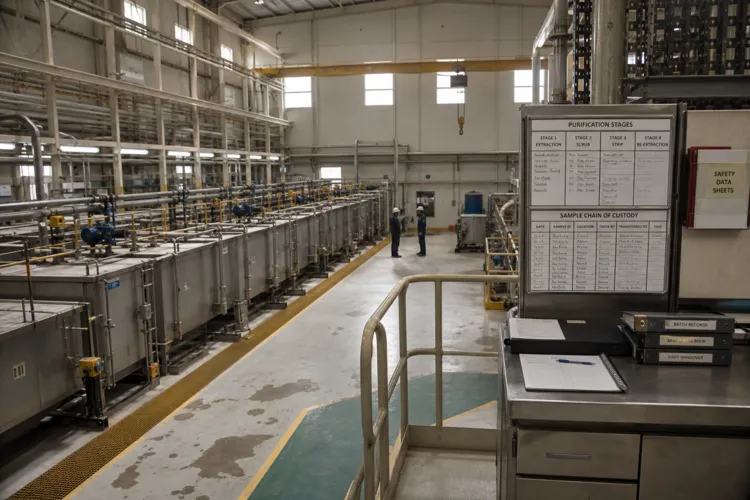
Trade, compliance, and carbon policy can reshape where refining and wafering capacity gets built, which affects any silicon metal polysilicon Saudi Arabia ambition. One polysilicon market source states that the U.S. Uyghur Forced Labor Prevention Act effectively bans polysilicon imports from Xinjiang-based producers, restricting access to roughly 35% of the global supply for American solar cell manufacturing firms. The same source says blockchain-enabled traceability platforms are gaining traction among silicon wafer buyers who require documentation to comply with UFLPA, and that providers monetize digital chain-of-custody certification services. It also notes Europe’s CBAM, effective from 2026, applies carbon-adjusted import duties that grant domestically produced low-carbon silicon wafer materials a 5–10% competitive advantage. These dynamics can reward producers who can document origin and emissions and may strengthen the case for co-locating refining with low-cost renewable energy sources.
Regional momentum is another piece of the feasibility puzzle. A wafer-market source reports Middle East renewable capacity increased 28.9% in 2025, led by Saudi Arabia, reinforcing a utility-scale module demand backdrop. Meanwhile, a polysilicon report says the Middle East, through initiatives like Saudi Arabia’s NEOM and the UAE’s Masdar, is exploring the feasibility of co-locating polysilicon refining with low-cost renewable energy sources, and adds that Saudi Arabia’s Vision 2030 includes plans for integrated solar manufacturing hubs co-located with low-cost solar power that target polysilicon refining costs competitive with Asian producers. Put together, the pathway looks clear in concept: align localization incentives, renewable-powered industrial clusters, and traceable supply chains with the domestic wafer market’s growth, while managing the capital and price-cycle risks inherent in integration.
How large is Saudi Arabia’s silicon wafer market expected to become?
What does it cost to build an integrated polysilicon-to-wafer-to-cell facility?
Why are traceability tools becoming more important for polysilicon and wafers?
How could CBAM affect low-carbon silicon wafer materials?
What is the core challenge for building a silicon metal and polysilicon chain in Saudi Arabia?