Saudi Arabia’s case for a more self-sufficient steel chain starts with a basic constraint: feedstock security. Conference insights note the Kingdom generates some 4.5–5 million tonnes/year of scrap, but that this is insufficient to meet local demand from mills. The same source links that shortage to induction furnaces running at lower capacity utilisation and struggling to compete. In that context, the discussion around building resilience is not abstract. It connects directly to how consistently furnaces can be supplied, and whether domestic inputs can help reduce exposure to shifts in trade flows and external pricing cycles.
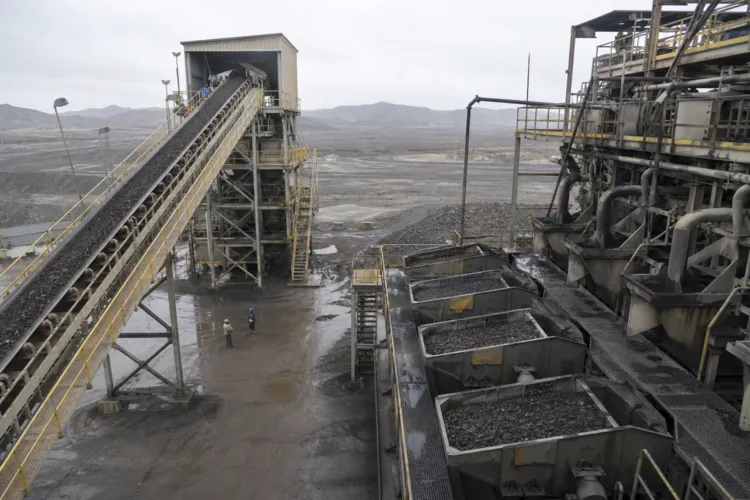
Market reporting on iron ores and concentrates adds a second signal: Saudi iron ore consumption has shown a perceptible shrinkage over the long run, peaking in 2012 and remaining lower from 2013 to 2025. At the same time, the production story is different. In value terms, iron ore production in Saudi Arabia “skyrocketed” to $X in 2025 (estimated in export price), and the same report says overall production continues to indicate significant growth. The immediate takeaway for iron ore mining in Saudi Arabia is that domestic output momentum can exist even when local consumption trends are weaker, which raises strategic questions about where the material can be placed and how it can best support downstream steel needs.
Exports Fell After a 2018 Peak, Concentrating the Risk
Trade patterns reinforce why a domestic steel strategy may matter as much as a mining strategy. In 2025, the amount of iron ores and concentrates exported from Saudi Arabia dropped sharply to X tons, down by X% year on year, and the report describes a dramatic decline over the period under review. Exports peaked at X tons in 2018 and failed to regain momentum from 2019 to 2025. In value terms, exports also reduced sharply to $X in 2025, peaking at $X in 2018 and then weakening. Malaysia was the main destination in 2025 at X tons, accounting for a X% share, and it exceeded shipments to Germany sixfold. For planners, that concentration is a reminder that reliance on a narrow set of export outlets can amplify volatility when market access or demand shifts.
Prices, however, show that value per ton can move in the opposite direction to volume. The average iron ore export price stood at $X per ton in 2025, up by X% against the previous year, and the same source says the export price posted a strong increase and reached a peak level. It also notes significant differences by market, with Malaysia at $X per ton while exports to Germany averaged $X per ton in 2025. Taken together with falling export volumes, the data suggests that the domestic debate should not focus only on “more tons.” It should also consider product positioning, consistent quality, and whether local steelmaking pull can provide a stable alternative outlet when export momentum weakens.
The downstream pull is visible in related steel and iron articles data. The Saudi market for articles of iron or steel expanded modestly to $X in 2025, up X% year on year, and the report characterises 2012–2025 consumption as strong growth with an average annual rate of X%, reaching record highs in 2025. Yet production of these articles shrank to $X in 2025 and peaked earlier at $X in 2022, failing to regain momentum from 2023 to 2025. That gap between demand strength and production softness is where a “feed the furnaces” argument lands: if scrap is constrained and downstream demand remains firm, aligning mining, metallics, and steel capacity planning becomes central to industrial competitiveness.
Why does domestic feedstock matter for Saudi steelmakers?
What do recent reports say about iron ore production in Saudi Arabia?
How have Saudi iron ore exports changed since their peak?
Which countries were key destinations for Saudi iron ore exports in 2025?
What is the outlook topic around iron ore mining in Saudi Arabia and self-sufficient steel?