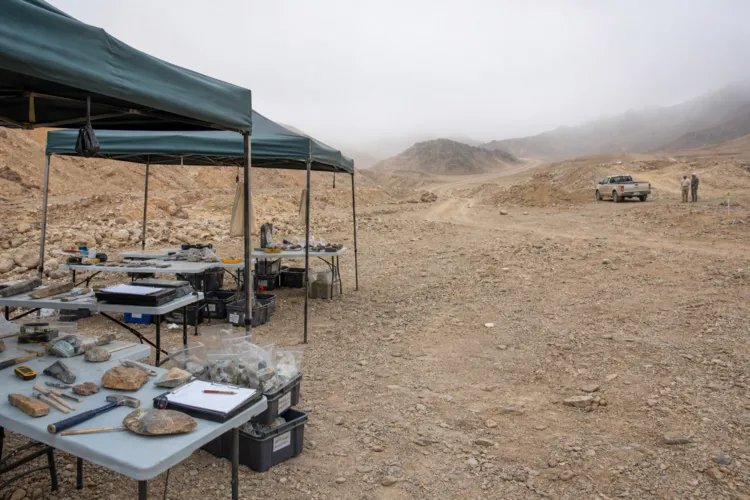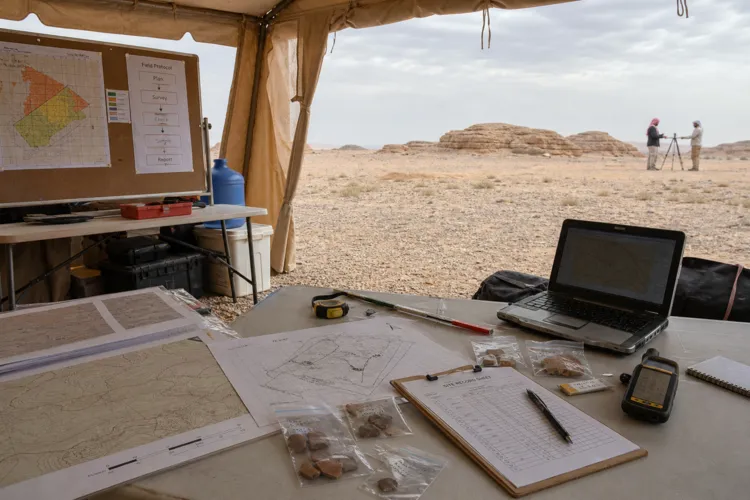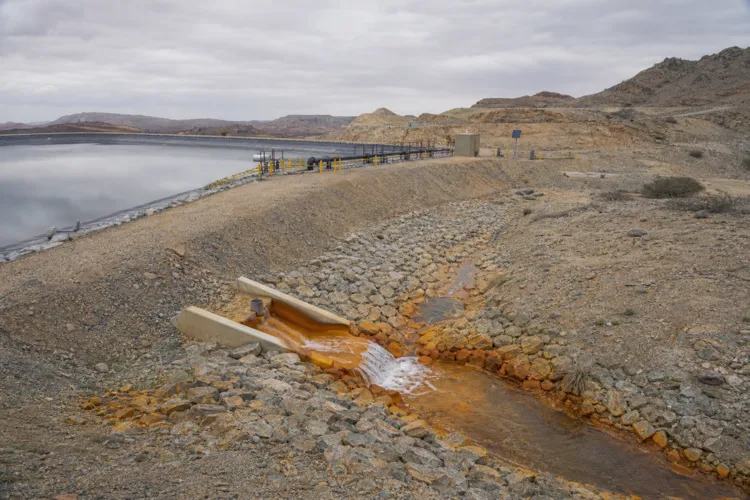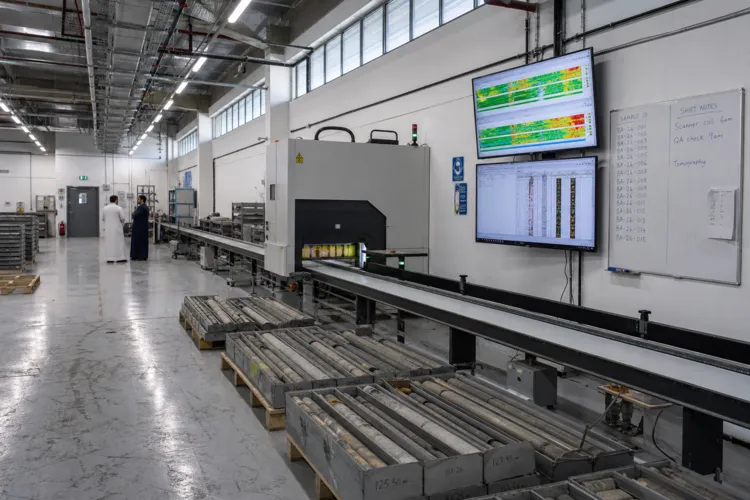
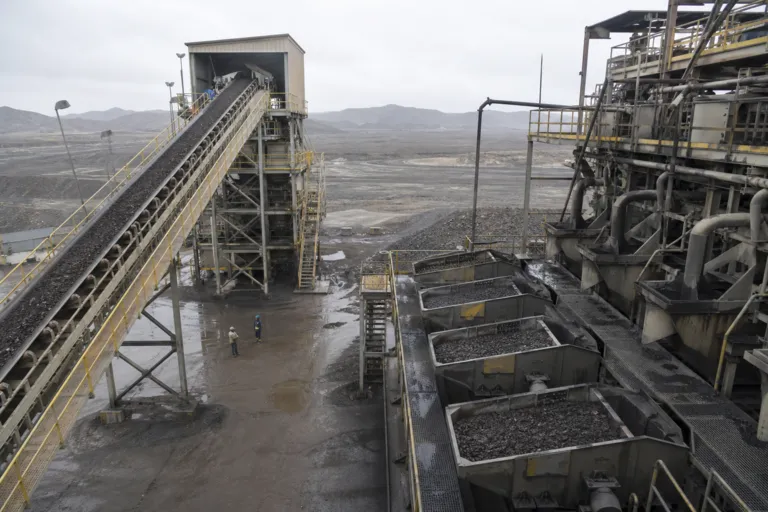
Saudi Arabia’s mining story is increasingly tied to the Arabian Shield, an exposed western portion of the kingdom’s ancient crystalline basement. The National describes the Shield as largely igneous and metamorphic rocks formed between about 880 million and 550 million years ago in the Precambrian period. This geological belt is presented as the “centre” of a national strategy to build an industrial sector spanning mining, mineral processing, and manufacturing. Saudi authorities estimate the kingdom has $2.5 trillion of mineral resources, and mapping projects backed by the Ministry of Industry and Mineral Resources and the Saudi Geological Survey have catalogued more than 5,300 mineral occurrences.
Chromium is explicitly listed among the minerals believed to occur in the Arabian Shield, alongside gold, silver, copper, zinc, lead, nickel, tantalum, niobium, and rare earths. Government data referenced by The National also points to nearly 50 minerals identified in the kingdom. This matters because the commercial logic for chromium is anchored in downstream industry demand rather than in geology alone. Verified Market Reports states that stainless steel accounts for approximately 70% of global chromium demand, tying the mineral directly to construction, manufacturing, and other stainless-intensive value chains.
Where Demand Signals Meet Saudi Arabia’s Exploration Push
Across the region, market research frames chromium as a stainless-steel input with growing strategic importance. Ken Research values the Middle East Chromium Mining Market at USD 2.7 billion, describing growth drivers that include rising demand for stainless steel and ferrochrome, investments in mining infrastructure, and advancements in extraction and processing technologies. Within that same regional framing, Ken Research highlights Oman and Turkey as strengthening their position as key suppliers of raw materials to the global stainless steel industry, while South Africa is noted as the world’s largest producer of chromite. For Saudi Arabia, these external reference points help define competitive context rather than local outcomes.
Inside the kingdom, Ken Research positions the KSA Chromium Mining Market as experiencing growth driven by increasing demand for stainless steel, government initiatives, and rising global chromium prices, with an emphasis on technological advancement and sustainable mining practices aligned with Vision 2030 objectives. It also describes segmentation by product type, including ferrochrome, chromite ore, and chromium chemicals, and by applications such as stainless steel production and refractory materials. In parallel, The National reports that Saudi Aramco and Maaden signed a joint venture deal to explore a 182,000-square kilometre Transition Zone (Zone 4) that runs parallel to the Arabian Shield, reinforcing the scale of the exploration push around the same geological theatre.
Trade and market sizing add another layer to how chromite mining in Saudi Arabia can be evaluated over time: as flows of chromium ore and related products, and as participation in a market whose demand is dominated by stainless steel. Verified Market Reports estimates the global Chromium Market at $24.8 billion in 2026 and projects $35.8 billion by 2033, with a stated CAGR of 5.4% from 2026–2033. In a related segment, the Chrome Metal Market is valued at $0.61 billion in 2026 and estimated to reach $0.84 billion by 2034, with a CAGR of 4.8% from 2026–2034. Together, these benchmarks underscore why Saudi Arabia’s overlooked chromium occurrences in the Arabian Shield are increasingly relevant to industrial diversification.
What is the Arabian Shield, and why does it matter for chromium?
How large is the area Saudi Aramco and Maaden are exploring near the Shield?
How important is stainless steel to global chromium demand?
How is chromite mining in Saudi Arabia being framed by market researchers?
What is a key market-size reference for chromium in the Middle East?