The EU Carbon Border Adjustment Mechanism (CBAM) applies in its definitive regime from 1 January 2026. It introduces obligations for importers, including authorisation requirements, reporting obligations, and the purchase and surrender of CBAM certificates corresponding to the embedded carbon emissions of imported goods. CBAM applies to imports of selected goods in six carbon-intensive sectors: cement, iron and steel, aluminium, fertilisers, electricity and hydrogen. For Saudi suppliers, the immediate commercial reality is indirect. CBAM charges EU importers, not Saudi producers. But EU importers need emissions information from non-EU suppliers to calculate embedded emissions and manage the number of certificates they must surrender.
CBAM was implemented in two phases. In the transitional phase from 1 October 2023 to 31 December 2025, importers had to report emissions, but no charges were applicable. In the definitive phase, which started on 1 January 2026, financial obligations for importers will be rolled out over a nine-year period. Importers of certain emission-intensive goods must purchase and surrender CBAM certificates related to greenhouse gas emissions embedded in those goods, and the price of CBAM certificates is linked to EU Emissions Trading System (EU ETS) allowance auction prices. For exporters, this linkage matters because buyers will ask for emissions figures they can defend during verification and compliance checks.
What Saudi Aluminium, Steel and Fertiliser Exporters Must Prepare for Under CBAM
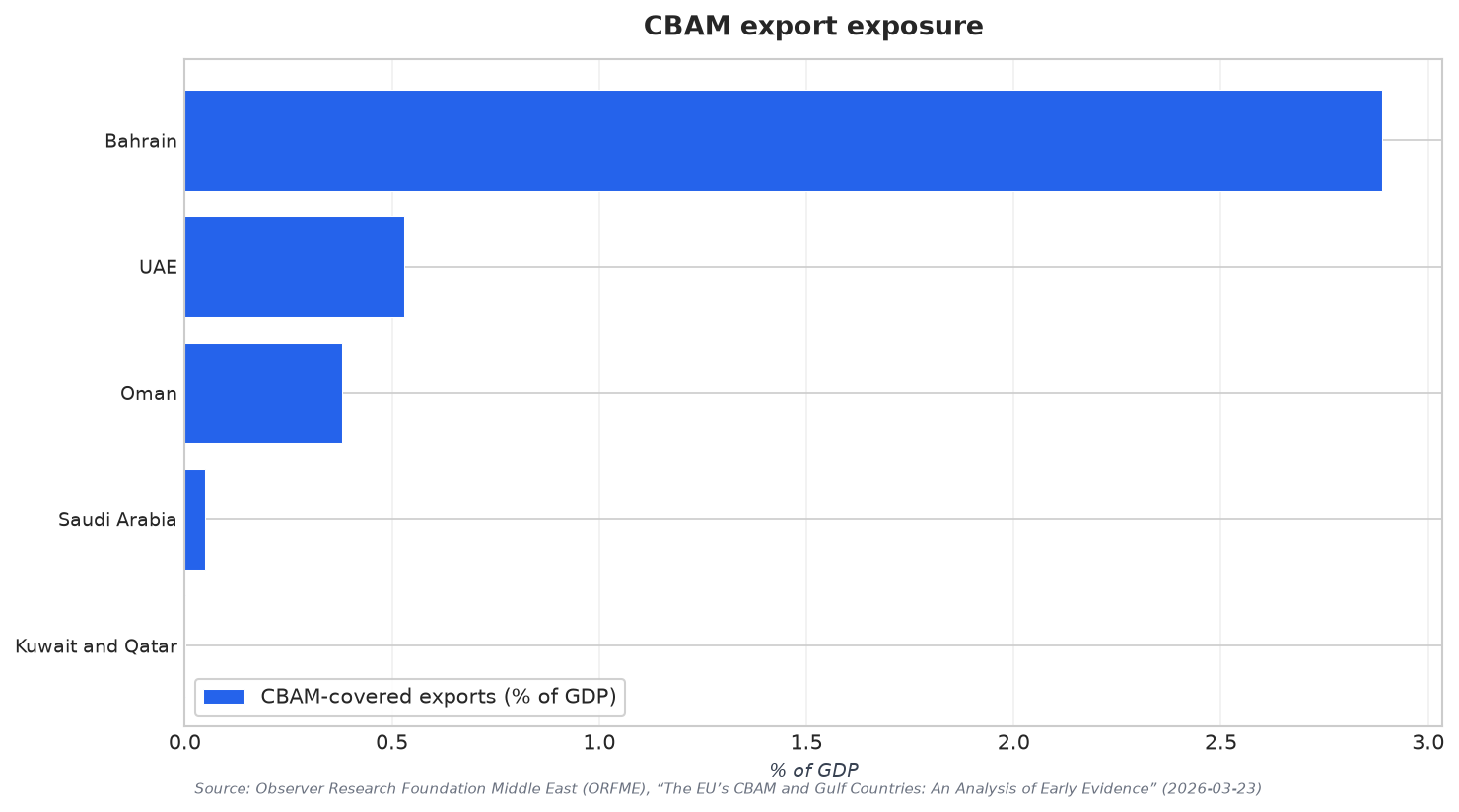
For the CBAM impact Saudi aluminium exports are expected to be the main channel in the Gulf, because aluminium dominates CBAM-covered exports. Aluminium accounts for between 68.1 percent and 75.3 percent of covered exports from the UAE, Oman, and Saudi Arabia in the ORF Middle East analysis, and 99.2 percent in Bahrain. The same source notes China accounted for 59 percent of world aluminium production in 2024, while Saudi Arabia ranked thirteenth globally for aluminium production. It also states that under current rules, only direct and precursor emissions from aluminium are covered, and that the CO2 intensity of GCC aluminium production is similar to the EU and lower than China and India, leading to CBAM-related price increases that are comparable to EU producers and lower than some competitors.
CBAM readiness is also about process and deadlines that shape EU buyers’ procurement rules. Spectreco states that importers above a 50-tonne threshold must be authorised declarants and surrender certificates for carbon embedded in the six covered sectors, and that importers bringing in 50 tonnes or less a year—counted across iron, steel, aluminium, fertiliser and cement goods—are exempt. It also states that certificate sales open on 1 February 2027 and the first annual declaration, covering 2026 imports, is due by 30 September 2027. Critically, Spectreco says a buyer who cannot get a verified carbon figure from its supplier must use a default value with a mark-up, and that the mark-up starts at 10 percent in 2026 for most goods.
For Saudi exporters trying to prioritise effort, the exposure is concentrated. Spectreco says most polymers and organic chemicals sit outside CBAM today and that metals carry most of Saudi Arabia’s CBAM exposure, while petrochemicals face buyer pressure rather than a border charge. It also provides trade context for aluminium: the EU imported US$385 million of goods under the aluminium chapter from Saudi Arabia in 2025, including US$235 million of unwrought metal, and about US$63 million was scrap. Practically, this pushes commercial focus onto aluminium, iron and steel, and fertilisers, and onto building verified, installation-level emissions data that EU importers can use in declarations, in the CBAM Registry workflow, and in verification.
When did CBAM’s definitive regime start, and what changed for EU importers?
Which product sectors matter most for Saudi exporters under CBAM?
Why is aluminium central to the CBAM impact on Saudi aluminium exports to the EU?
What happens if a Saudi supplier cannot provide verified emissions data to an EU buyer?
What are key CBAM compliance milestones EU buyers will plan around?