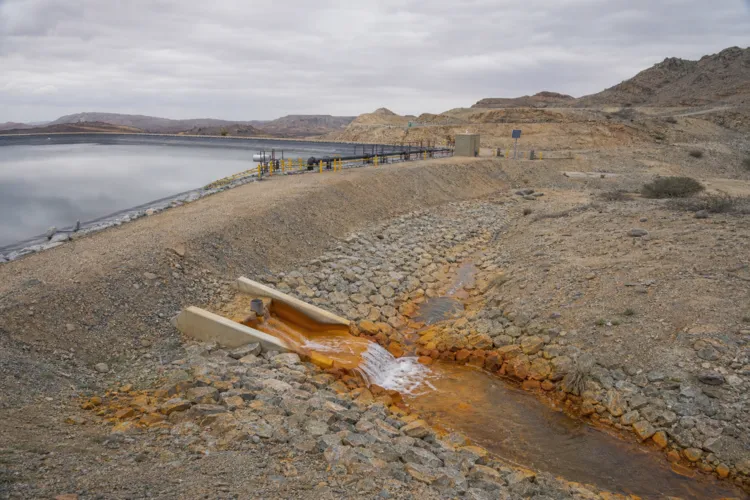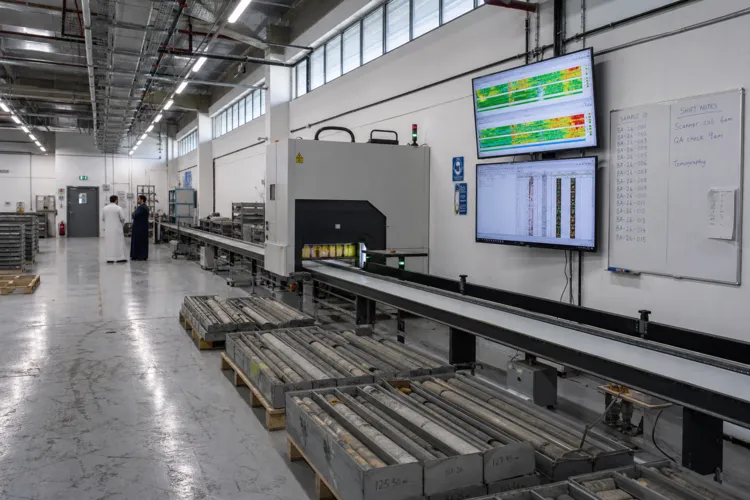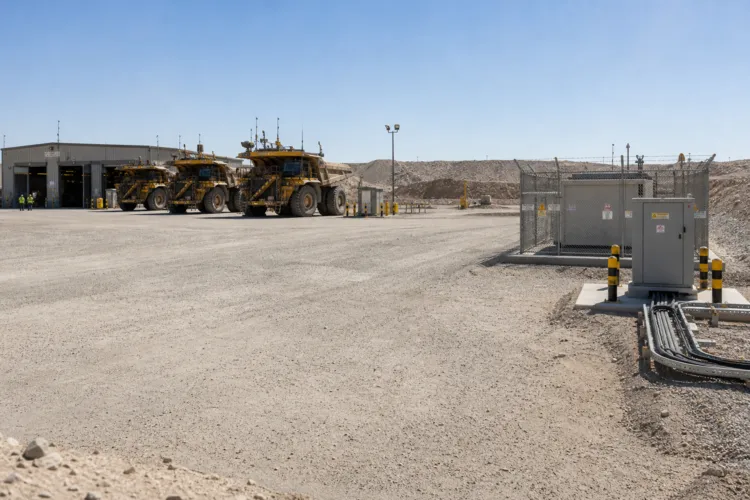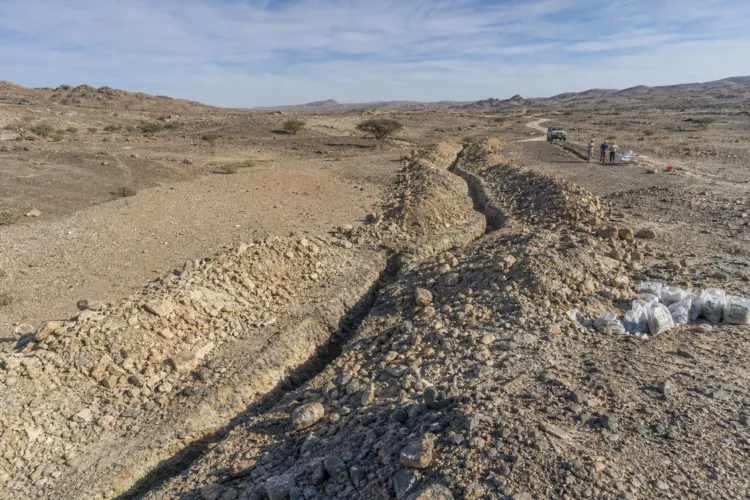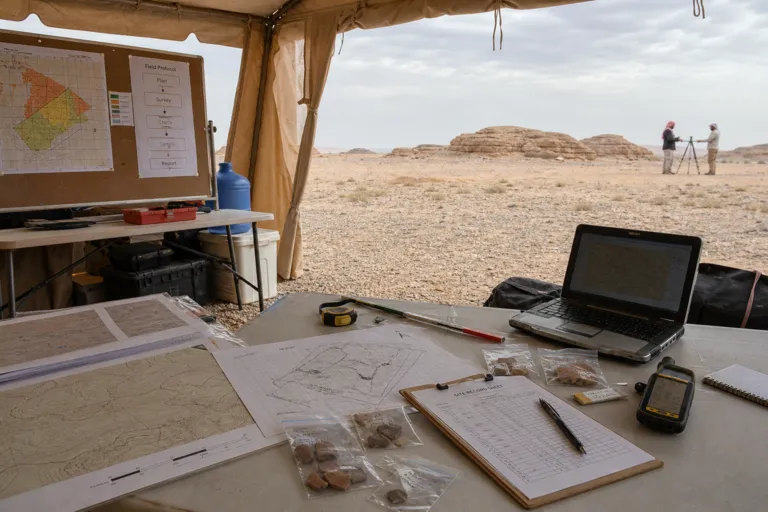
Mining activity and archaeology overlap in Saudi Arabia, not just in theory but on the ground. Excavations at Al-Ma’mala in Al-Aqiq Governorate, Al-Baha, are revealing an early Islamic settlement connected to mining, trade, and movement across southwestern Arabia, and the Saudi Press Agency described the location as a center for extracting gold, silver, and copper across different historical periods. At the same time, national heritage work is scaling up. In the 2025–26 fieldwork season, over 100 researchers are studying ancient villages, inscriptions, and early Islamic settlements across AlUla and Khaybar, and 1,516 new archaeological sites were newly registered. These facts matter for cultural heritage mining in Saudi Arabia because exploration teams can encounter heritage in areas that also show mineral potential.
Exploration licensing is also moving quickly, and it is structured to filter for capability. Saudi Arabia qualified 24 firms for Round 10 across three belts spanning 13,000 sq km, with gold and base metals in focus. Coverage of a separate Round 9 summary stated that 172 mining sites were awarded and said that round covers 24,000 square kilometers. The Ministry of Industry and Mineral Resources runs a staged competitive framework based on technical and financial evaluation, and companies then select sites via the Taadeen platform. Sources also highlight that digitised application and data access can lower the operational cost of market assessment for applicants evaluating blocks remotely. This scale creates a practical governance question: how to keep licensing schedules moving while avoiding accidental impacts on recorded, newly recorded, or still-undiscovered archaeological remains.
How License Holders Can Reduce Heritage Risk Early
Early risk reduction starts before boots are on the ground. The licensing process already emphasises technical credibility and financial capacity, and the same discipline can be applied to heritage safeguards. A comparative study of archaeological site management notes that state-dominated systems, including Saudi Arabia, often face constraints tied to bureaucratic processes and limited local engagement, even as governance structures and cultural attitudes shape management effectiveness. That is a signal for operators to plan for approvals and communication as real schedule items, not as afterthoughts. Practically, exploration teams can treat heritage screening as part of site selection on Taadeen, then align fieldwork timing with the reality that active research is underway in places such as AlUla and Khaybar during the 2025–26 season. This approach supports heritage preservation while keeping work programs predictable.
Field protocols should be designed for landscapes where mining history and settlement history can be intertwined. Al-Ma’mala shows why. Archaeological work there is uncovering an early Islamic settlement associated with mining and trade, and the Heritage Commission reaffirmed its commitment to continued excavations to preserve cultural heritage and civilizational identity for future generations. For exploration license holders, this kind of evidence argues for careful ground-disturbance controls, clear reporting lines when features are encountered, and coordination when operating near known heritage zones. It also suggests that “old mining ground” is not automatically low heritage risk, because industrial extraction can sit beside, or be embedded within, settlement remains and inscriptions across different periods.
Finally, heritage management is also an opportunity to build credibility with regulators and communities, which matters in a competitive licensing environment. The comparative heritage study notes that local engagement can be limited in state-dominated models, yet it also concludes that engaging local communities is an essential strategy for archaeological site management. Meanwhile, Saudi heritage work is supported by collaboration led by the Heritage Commission with partners that include King Saud University, the French CNRS, Ghent University, and UNESCO. For companies operating under exploration licenses, aligning with that ecosystem can mean designing consultation and access practices that respect research priorities and reduce friction. In a landscape where 24 firms are competing across 13,000 sq km in Round 10, smoother heritage coordination can become a practical advantage, not just a compliance checkbox.
What makes mining near ancient sites a real issue in Saudi Arabia?
What do we know about Saudi Arabia’s recent exploration licensing scale?
How can cultural heritage mining in Saudi Arabia be managed during exploration?
Why does Al-Ma’mala matter for exploration teams?