Saudi Arabia’s latest exploration push is reshaping how investors and operators think about copper-gold opportunities in the Kingdom. The Umm Ad Damar copper project Saudi Arabia narrative sits inside that wider shift, where policy, data, and competitive licensing are moving in tandem. Saudi Arabia’s estimated subterranean mineral wealth is cited at $2.5 trillion, and mining is positioned under Vision 2030 as a non-hydrocarbon growth pillar. In Q1 2026, the Kingdom’s non-oil economy expanded by 3%, a macro signal that sits alongside a clear, structured approach to awarding ground. The Ministry of Industry and Mineral Resources (MIMR) administers a multi-stage competitive licensing process that has now run through ten consecutive iterations, with Round 10 presented as part of that continuing architecture.
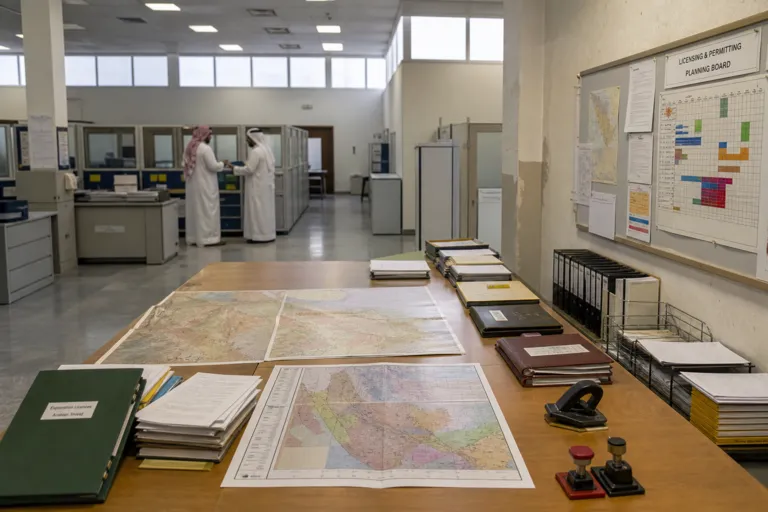
Round 10, as launched by MIMR, qualifies 24 local and international companies and consortiums to participate. The exploration opportunities offered under the round cover about 13,000 square kilometres across Medina, Mecca, Riyadh, Qassim, and Hail. The ministry describes these areas as highly prospective mineralised belts containing significant deposits of gold, copper, silver, zinc, and nickel. MEED also notes specific belts highlighted in the round, including the Nabithah-Ad Duwayhi (Dahlat Shabeb) Belt, the Sukhaybarat-Al-Safra Belt, and the Al-Nuqrah Belt. The Round 10 process starts with prequalification for technical and financial capability, then site selection through the Taadeen digital mining platform, and where competition overlaps, public multi-round bidding with awards based on exploration expenditure commitments and predefined evaluation criteria.
Why Licensing Momentum Matters for Copper-Gold Targets
The scale of licensing activity and the pace of permitting provide context for how copper-gold projects are framed. Stockhead reports that Saudi Arabia awarded 172 mining sites across three mineral-rich belts in competitive Round 9 bidding, attracting almost US$200 million in pledged investments. The same source states mining licenses jumped 220% in 2025 and investments hit US$11.7 billion in 2025. In parallel, other reporting links momentum to permitting, citing active mining permits reaching 2,485 by August 2025 and 350% growth in awarded exploration licenses. These figures matter because Saudi Arabia’s competitive rounds are not just about acreage; they are about turning a data gap into structured participation, with clear rules, staged selection, and investment commitments as an evaluation lever.
Budgets and incentives are also explicitly described in the sources as part of the exploration flywheel. Saudi Arabia’s mine site exploration budget increased to US$146 million in 2025 from US$21 million in 2022, according to S&P Global as cited by Stockhead. In 2025, 72% of the total exploration budget went to gold and 23% to copper, showing how both metals are prioritized within the same national spend profile. Futurism also describes a USD 182 million exploration incentive program that covers up to 25% of exploration costs and 75% of development costs through the Saudi Fund for Development, plus reforms such as the Mining Investment Law reducing tax rates from 45% to 20%. Together, these points help explain why a copper-gold target can be positioned as an “anchor” in licensing discussions: it sits inside a documented budget ramp, a defined incentive structure, and a competitive system built to scale participation.
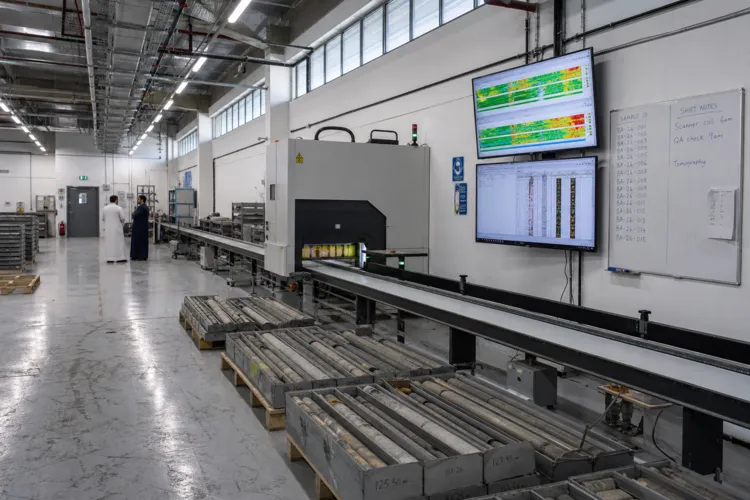
Technology is presented as the other half of the story, with exploration methods designed to compress timelines and extend depth reach. Futurism describes AI-powered satellite tomography and Fleet Space Technologies’ ExoSphere platform enabling real-time data transfer for AI-enhanced processing across 12,000 square kilometers of the Arabian Shield. It also cites Ivanhoe Electric’s Typhoon geophysical surveying systems delivering three-dimensional inversion results within 24 hours from terabytes of raw data and discovering copper zones beyond 700 meters depth. A separate Saudi-focused technology update describes Ivanhoe Electric announcing a new copper zone at the Umm Ad Dabah prospect using Typhoon, with mineralization intersected in three holes reaching depths beyond 700 meters. In this setting, copper-gold projects discussed around licensing rounds are increasingly framed not only by geology, but by faster data cycles, deeper targeting, and the structured pathway from qualification to bidding.
What is the Umm Ad Damar copper project in Saudi Arabia being discussed alongside?
How large is Saudi Arabia’s Round 10 exploration area and where is it located?
How does the Round 10 licensing process work in practice?
What do the sources say about Saudi Arabia’s exploration budgets for gold and copper?
What technology examples are cited for faster or deeper copper discovery?