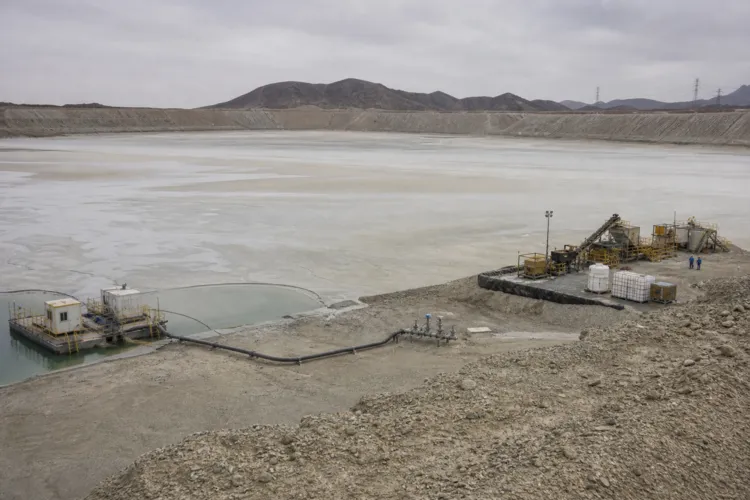
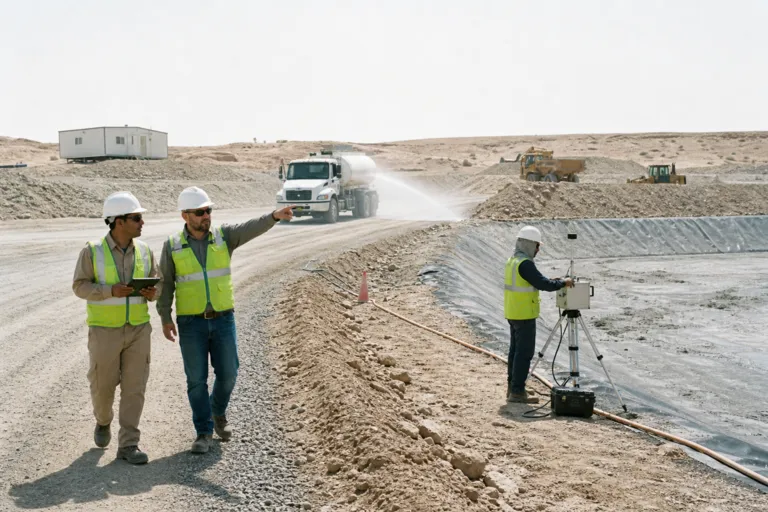
Tailings management is harder in arid climates because tailings can dry out and move as dust. A tailings dam failure risk assessment article warns that, in arid regions, dried tailings can become airborne and affect wide areas. The same source also describes water transport pathways where contaminants can spread through flood flows, irrigation canals, and groundwater. These pathways matter for Saudi Arabian mining because many mining areas face heat, drying surfaces, and sudden water movement during storms.
One practical goal is to reduce free water in stored tailings. A 2025 innovation guide defines a tailings management method where water is removed from the tailings, producing a stable, compacted stack instead of a wet, slurried pond. The guide says this approach greatly reduces dam failure risk and surface leakage. It also says it curbs water demand and is suitable for arid regions.
Good design is only one part of risk reduction. The same guide stresses redundant barriers, climate resilience, and transparent data reporting for public review. It also points to engineered dam structures designed for secure, long-term surface storage of tailings and geotechnical innovation that accounts for seismic risks, climate, and hydrology. In arid settings, planning for changing moisture and runoff is part of basic facility resilience.
Monitoring and Stewardship for Dry and Unsaturated Tailings
A Springer Nature article on unsaturated mine tailings states that the unsaturated properties of mine tailings establish a vital foundation for sustainable mining operations in a changing climate. It also notes that delivering vegetated covers in arid regions brings dual advantages because such systems decrease spatial dust emissions and facilitate sustainable reforestation. This connects directly to arid-climate tailings management: less dust, and more stable long-term surfaces.
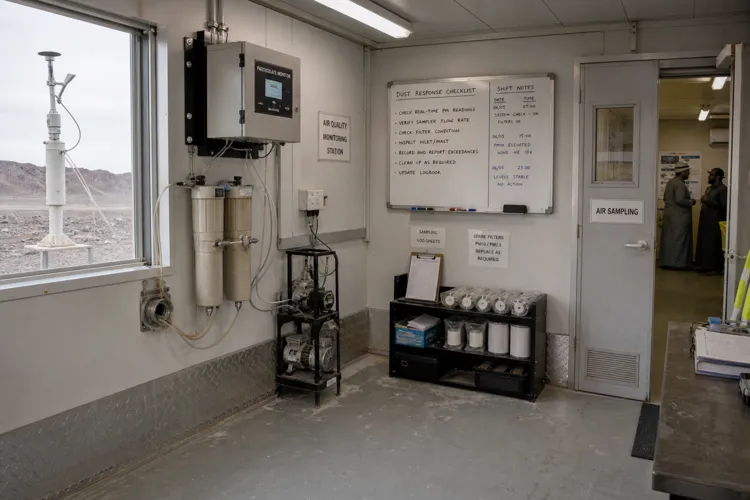
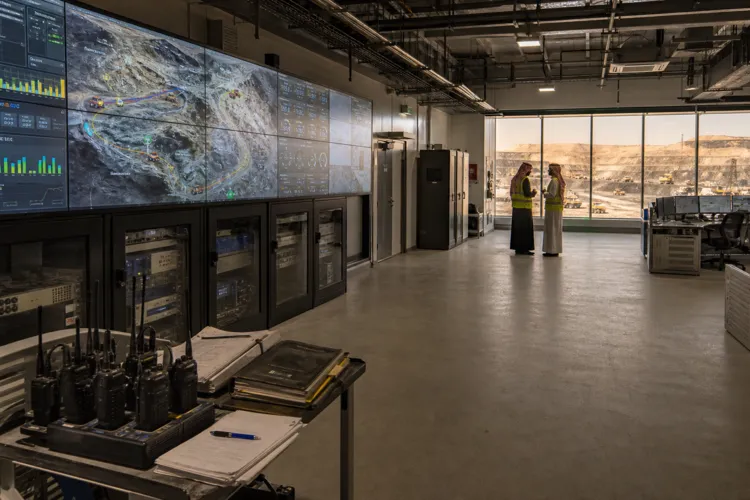
That same article says integrated monitoring systems now combine geotechnical and geochemical observation methods alongside remote sensing technology, including satellite imagery, to deliver real-time surveillance of tailings facilities. A separate sustainability-focused mining technology page describes satellite-based mineral detection “with over 90% accuracy” and says it is trusted across “20+ countries.” While this is not a tailings sensor specification, it signals how remote sensing can support broad-area observation where on-the-ground checks are hard.
Saudi mines can also reduce risk by reducing the amount of tailings kept on the surface. A paper on re-use of Saudi mine tailings in mine backfill says there is strong potential for mine backfill technology to be applied to a wide range of Saudi Arabian mines to enhance sustainability. It also reports strong negative relationships between unconfined compressive strength (UCS) and the water-to-binder ratio. For tailings management, this highlights a key control point: water content choices can strongly affect strength outcomes in backfill-type mixtures.
Finally, corporate direction can support better practice. A Ma’aden mission statement describes a commitment to responsibly mine and transform the Kingdom’s mineral resources into value, while operating safely and sustainably. In day-to-day tailings management, that means linking engineering controls, monitoring, and re-use options to clear safety and sustainability expectations across the mine-to-market model.
Why is tailings management harder in arid climates?
What is one tailings management method that fits arid regions?
How can monitoring reduce tailings facility risk?
How can mine backfill help reduce surface tailings risk in Saudi Arabia?