Ma’aden is building its next phase of gold growth around the Ar Rjum gold mine Saudi Arabia project, positioning it as a meaningful addition to the Kingdom’s production base under Vision 2030’s diversification goals. Saudi Arabia’s existing gold operations, including the Mansourah-Massarah complex and Al Hajar mine, currently produce approximately 500,000 ounces annually, creating a clear baseline for measuring expansion. Ma’aden’s stated strategic plan calls for reaching 1 million ounces annually by 2030, and Ar Rjum is framed as a core lever in that architecture because it is expected to contribute approximately 300,000 ounces of the increase.
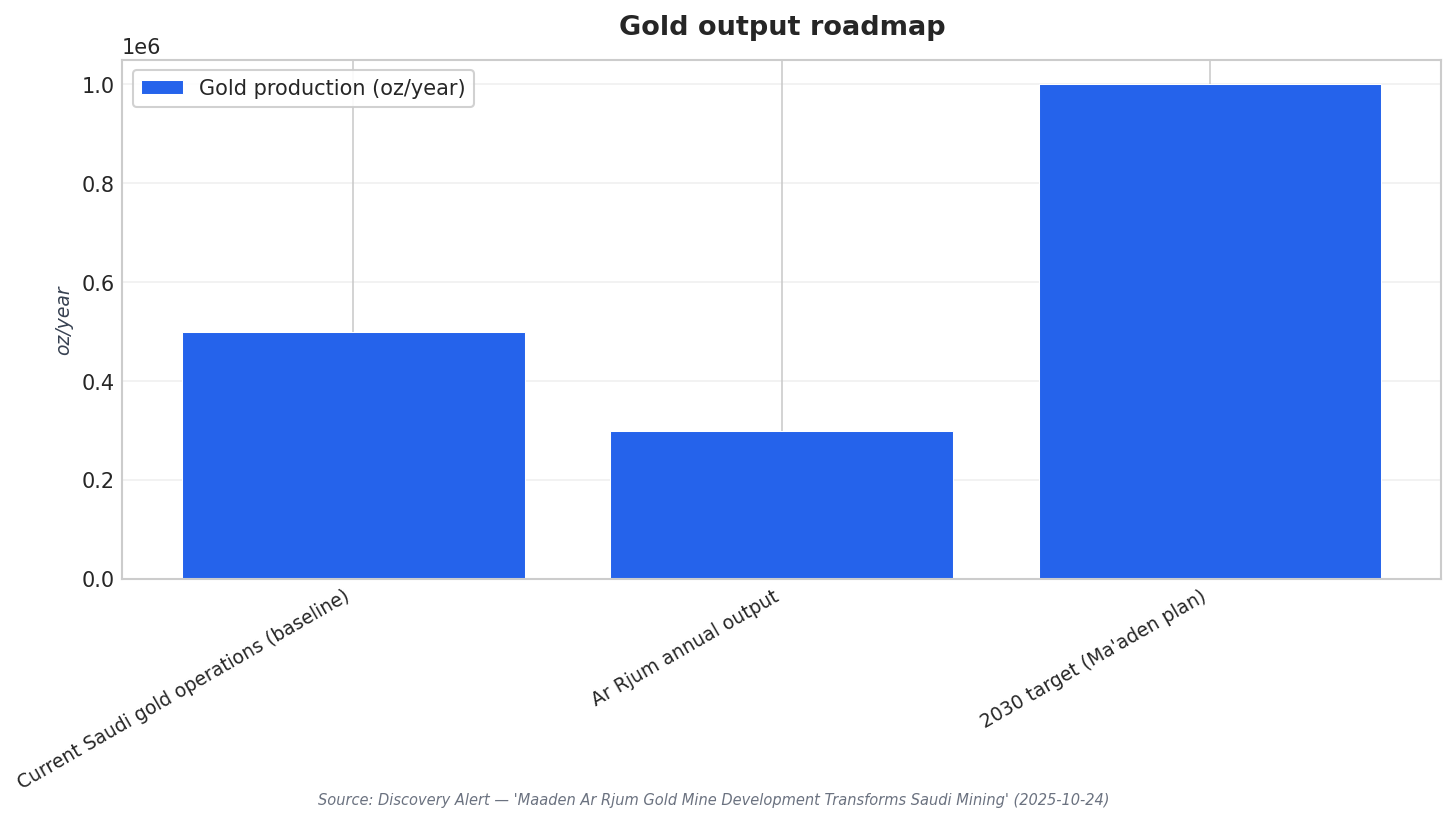
Across company and media reporting, Ar Rjum’s production profile is consistently presented at about 300,000 ounces per year. A Q2 2025 update disclosed with Ma’aden’s financial results described Ar Rjum as a tier-2 gold asset located in the Central Arabian Gold Region, with an expected annual output of approximately 300,000 ounces. Separate reporting also states the mine is expected to produce 3.6 million ounces of gold over 12 years, which averages around 300,000 ounces annually. Another strategic overview adds that both the Mansourah-Massarah operation and the Ar Rjum project are each capable of sustaining approximately 300,000 ounces of annual production over the next decade.
How Ar Rjum Fits Ma’aden’s 2030 Doubling Blueprint
Ma’aden’s 2030 gold production strategy is described as centring on doubling current output levels through strategic asset development and operational optimisation. In that context, Ar Rjum is repeatedly singled out as an enabling project rather than a standalone increment. Ma’aden CEO Bob Wilt said Ar Rjum “will be a major component of our ability to double production,” linking the asset to both output growth and the talent pipelines needed for sustained scaling. The 2030 target architecture explicitly ties the 1 million ounces annual goal to the contribution from Ar Rjum, which is described as approximately 300,000 ounces of that increase.
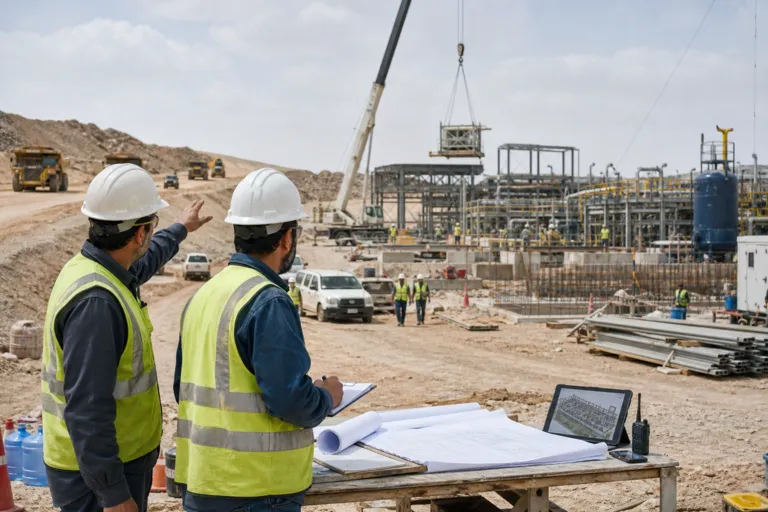
Delivery execution is being supported through a large contracting package. Ma’aden signed an engineering, procurement, and construction management services agreement for the Rjum gold mine in the Makkah region valued at SAR391.1 million (USD 104.3 million) with Bechtel Saudi Arabia and Bechtel Australia, and related reporting describes it as a SAR391 million ($104.3 million) deal awarded to Bechtel. The mine’s development approach is also described as open-pit, with reporting noting that open-pit configuration can maximise ore recovery while minimising waste rock movement, with pit design optimisation intended to reduce operational costs per ounce.
On the processing side, Ma’aden selected Metso to deliver a gold processing plant to the Ar Rjum project in Saudi Arabia, with Metso describing end-to-end solutions that integrate accurate, live data from various sources and incorporate advanced analytics enriched with machine learning, artificial intelligence, and cloud scale. In parallel, Saudi Arabia’s gold expansion narrative includes a broader production base: the country currently operates six major gold mines, and Mansourah-Massarah is described as the newest and largest, with an annual production target of 320,000 ounces. Together, these moving parts show why Ar Rjum is presented as a key addition expected to contribute substantial annual volumes for more than a decade.
How much gold is the Ar Rjum gold mine in Saudi Arabia expected to produce each year?
What is Ma’aden’s gold production target for 2030, and where does Ar Rjum fit?
What contract has been awarded to support the Rjum mine’s development?
Where is the Rjum gold mine project located?
What mining method is associated with Ar Rjum in public reporting?