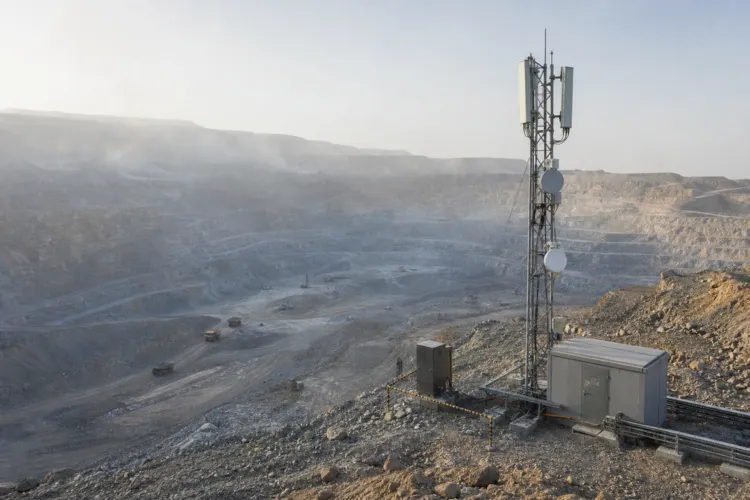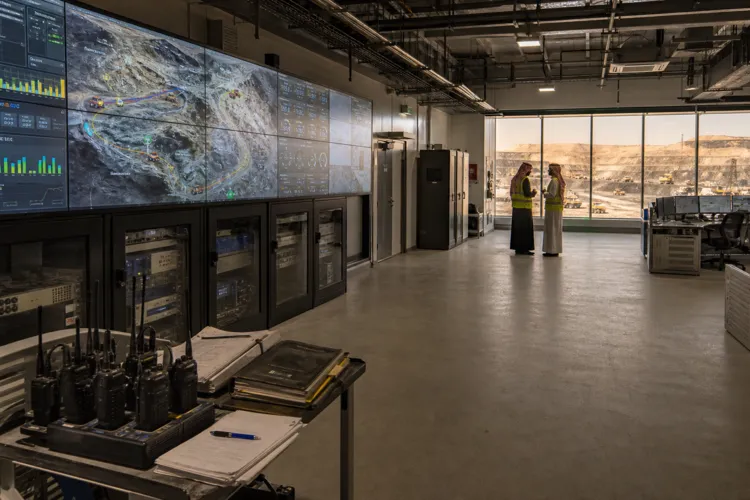
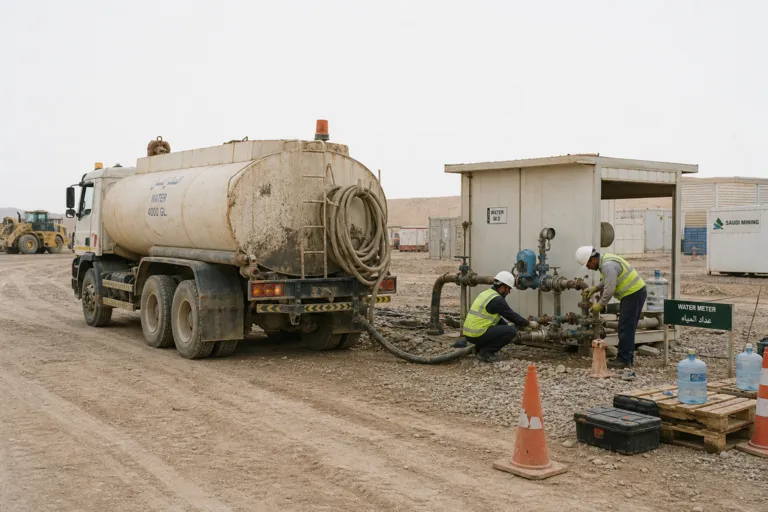
In water-scarce regions, mining operations often lean on tanker trucks to move bulk water for dust suppression and employee welfare. A global water tanker truck market report notes that mining operations in water-scarce regions require substantial fleets of tanker trucks for these needs, and it frames trucked water as part of the broader bulk water transportation segment. For Saudi operators, the emissions conversation starts with how much road activity these fleets create. That road activity sits inside a domestic freight system where domestic movements represented 61.25% of the Saudi Arabia road freight transport market size in 2025, and long-haul captured 71.66% share in 2025, reflecting the Kingdom’s 73,000 km highway grid. Reducing dependence on repeated water haulage is one practical lever to cut vehicle activity at the source, rather than trying to offset it later.
This is why the topic of eliminating water tankers mining sites Saudi Arabia is increasingly linked to broader industrial system design, not just fleet decisions. Vision 2030-era investment is reshaping freight patterns and driving “technology-driven efficiency gains,” as Mordor Intelligence describes for the road freight transport market, which is expected to grow from USD 6.74 billion in 2025 to USD 7.09 billion in 2026 and reach USD 9.17 billion by 2031. That same push for efficiency shows up in adjacent sectors that can support mine sites, including utilities and waste services. When mines reduce imported water dependency and build tighter on-site or near-site resource loops, they also reduce the number of fluid-good movements that otherwise must be coordinated through a freight network where full-truck-load held 78.42% share in 2025 and non-containerized freight dominated with 87.22% share in 2025.
Cutting Emissions by Localizing the System Around the Mine
Saudi Arabia’s policy direction on waste and resource recovery provides useful signals for how industrial sites can think about localized infrastructure. A U.S. Commercial Service country guide states that Saudi Arabia aims to divert 90 percent of waste from landfills by 2040, and it reports total municipal solid waste produced amounts to 110 million tons annually. It also cites the former CEO of the Saudi Investment Recycling Company saying most waste is currently being landfilled at an average of $1.87 per ton. While these figures are national and municipal in scope, the logic matters for mining: the more materials and by-products are treated, recovered, or repurposed nearer to where they are generated, the fewer repeated transport cycles are required. The same guide also notes a 2018 memorandum of understanding between Sadara and Veolia to build a sustainable utilities plant in Jubail aimed at producing industrial steam, cooled water, and compressed air from the incineration of industrial waste, illustrating how industrial utility needs can be met through integrated systems.
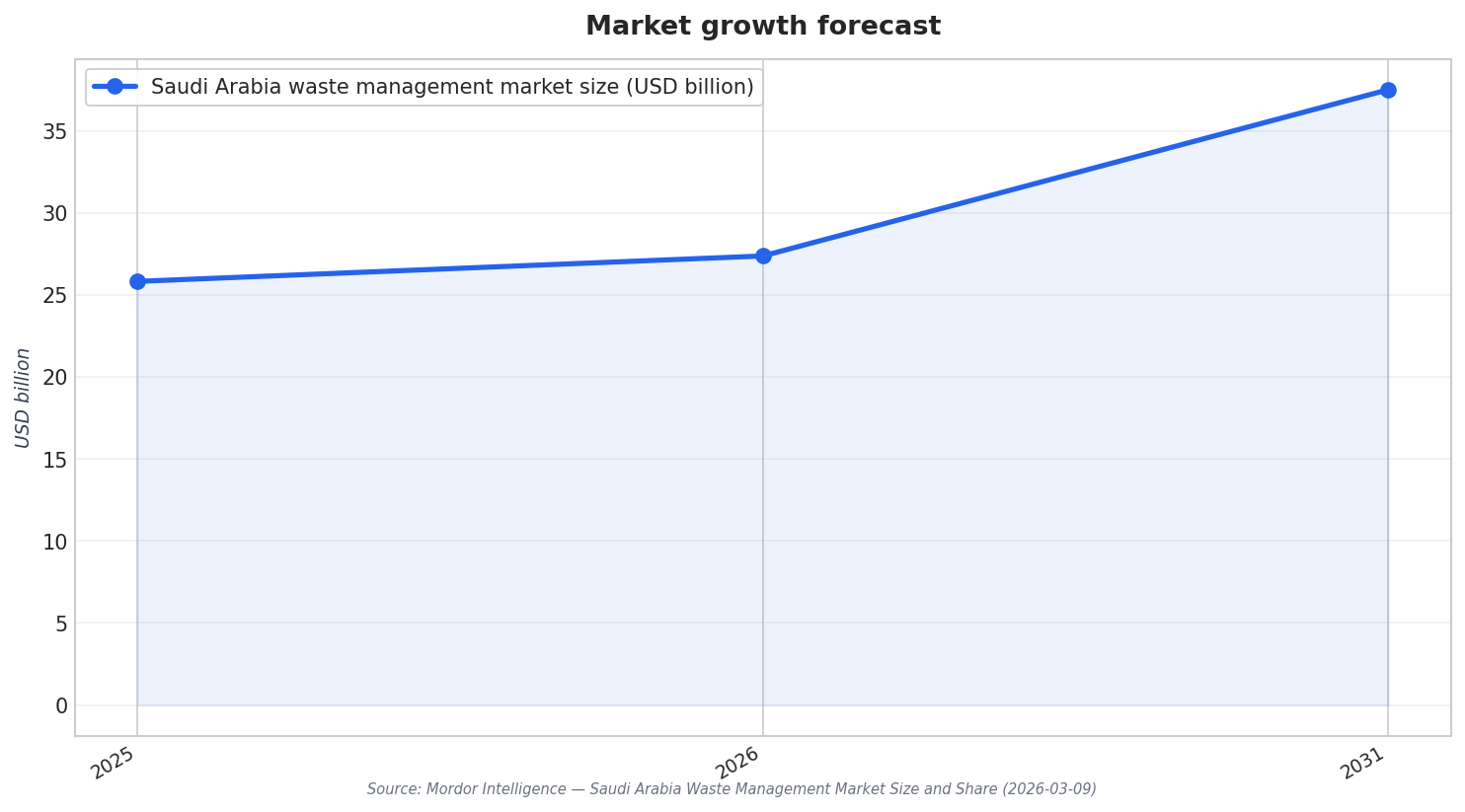
Market signals reinforce that the Kingdom is building capacity in organized waste services and circular processing that can support industrial decarbonization strategies. Mordor Intelligence values the Saudi Arabia waste management market at USD 25.84 billion in 2025 and estimates growth from USD 27.39 billion in 2026 to USD 37.53 billion by 2031, at a CAGR of 6.5% over 2026–2031. It also states that disposal and treatment services accounted for 53.45% of the market in 2025, while recycling is projected to grow at a 9.7% CAGR through 2031. In the same report, Saudi Investment Recycling Company (SIRC) alone recycled 16 million tons of construction and demolition waste in 2025. For mines, the takeaway is not that these exact streams mirror mining waste, but that Saudi Arabia’s ecosystem is moving toward traceability, recovery, and better-designed material flows—conditions that can make it easier to retire unnecessary tanker movements by building more stable, localized site services.
Localizing supply chains to reduce transport emissions is not limited to industrial waste. In the Saudi bottled water market, Expert Market Research notes a “strong push for localised bottling units that reduce the carbon footprint linked with transportation,” and it reports that Agthia Group inaugurated a solar-powered bottling plant in November 2023, aiming for net-zero emissions by 2026. This is consumer-market context, not mining, but the principle transfers: produce closer to demand, and transport emissions fall. For mine sites, retiring tanker fleets depends on the same kind of re-architecture—building water and utility resilience into the site design, then letting fewer truck kilometers do the same job. In a freight market shaped by Vision 2030 infrastructure and efficiency pressure, fewer recurring water-haul runs can mean a cleaner footprint that is achieved upstream, before emissions hit the road.
Why are water tankers so common in mining operations?
How does reducing tanker trips connect to Saudi Arabia’s freight landscape?
What national targets suggest a shift toward more local, integrated resource systems?
What examples show integrated utilities replacing linear, transport-heavy models?
How can Saudi miners approach eliminating water tankers at mining sites?