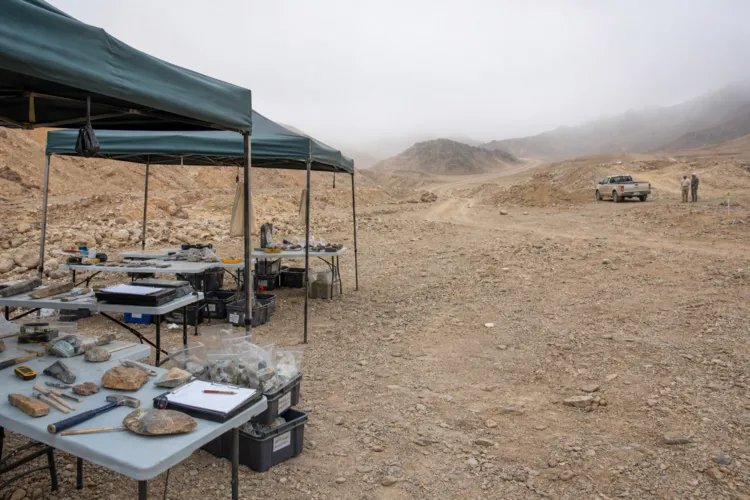
Saudi Aramco and Ma’aden are moving from parallel roles in the Kingdom’s industrial economy to a shared push into hard-rock exploration. They have signed a shareholders’ agreement to form a joint venture focused on mineral exploration and hard-rock mining in Saudi Arabia, building on plans first disclosed in January 2025. The new venture is expected to be owned 51% by Ma’aden and 49% by Aramco, and it will target copper first, alongside zinc, lead, and rare earth elements. The strategic logic is explicit: Aramco brings decades of geological and geophysical knowledge from oil and gas work, while Ma’aden brings mining and mineral exploration experience that can turn targets into programs.
The exploration footprint is large and clearly defined. Work would concentrate on Zone-4, also called the Transition Zone, within the Arabian Platform. Sources describe the expected exploration area as about 182,000 sq. km, nearly 10% of Saudi Arabia’s total land area, and stretching along a 100-kilometer-wide zone running parallel to the Arabian Shield. The same reporting says this zone is believed to contain deposits of multiple minerals, including copper, zinc, lead, rare earths, and also gold and silver. The agreement is not the finish line, however. Argus notes the proposed joint venture remains subject to corporate, regulatory, and antitrust approvals.
From Oil Data to Mineral Targets: What Changes in Practice
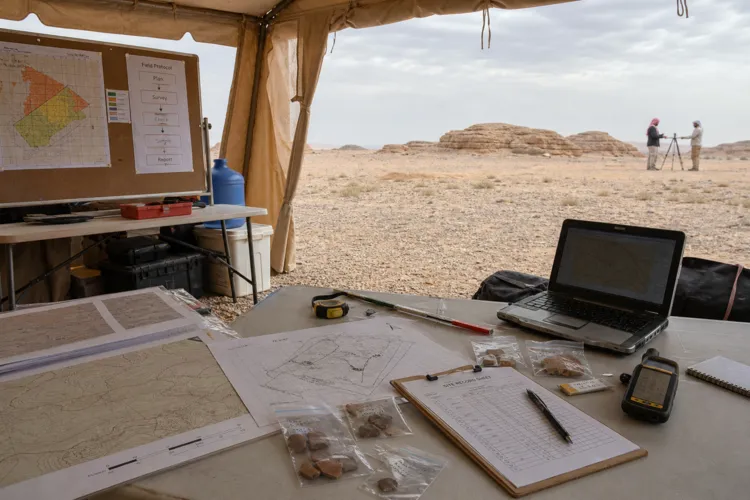
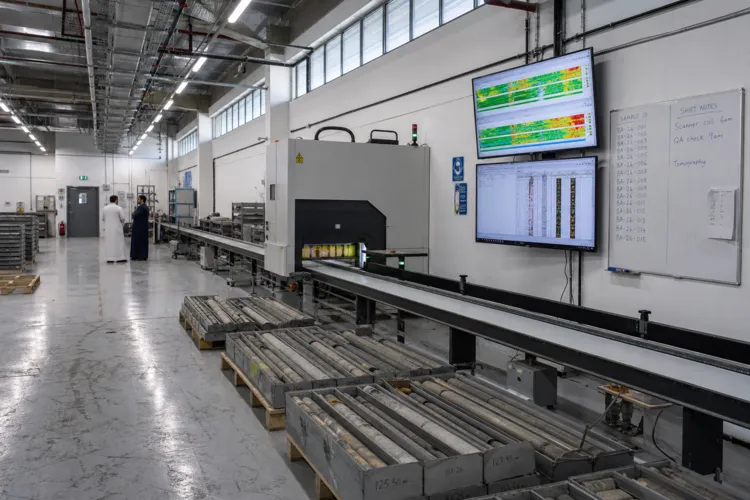
In practical terms, the partnership is designed to translate oil-and-gas style subsurface knowledge into mineral targeting at scale. Aramco’s transition minerals leadership says that over 90 years the company has accumulated and analysed the largest amount of geological and geophysical data ever acquired in a single basin for the Kingdom, and that this legacy information will be leveraged to find minerals in the joint venture area. Multiple sources also describe the use of advanced computational algorithms, AI, and high-performance computing to pinpoint areas most likely to contain copper and other valuable minerals, with the aim of accelerating the path from screening to target definition and discovery at low cost.
Why center the effort on copper? The companies and industry outlets tie copper directly to electricity networks, electric vehicles, renewable energy systems, and energy storage. International Mining and Argus describe copper as a major metal making up over 20% of the US$1.2 trillion mined metals market, and they place the copper market at approximately US$250 billion with projections to grow to over US$400 billion by 2035. That market context helps explain why the Aramco Maaden mineral exploration joint venture is framed as an “energy transition minerals” play rather than a narrow local exploration campaign.
The venture also fits within Saudi Arabia’s stated drive to expand its minerals sector and value chains. Arab News reports the Kingdom’s mineral wealth is estimated at more than SR9.3 trillion (US$2.5 trillion) and that Saudi Arabia has identified extracting copper, gold, and rare earth elements as part of diversification efforts under Vision 2030, while aiming to increase mining’s contribution to GDP to SR240 billion. Oil Review Middle East adds that Saudi Arabia’s Mining Strategy is positioned as a key pillar of Vision 2030 and notes a new mining investment law that reduced the tax rate from 45% to 20%. Business Insider Africa adds a regional dimension: the move could increase competition with Africa for mining investment and processing, even as future Saudi processing plants could become another market for African minerals.
What is the Aramco Maaden mineral exploration joint venture focused on?
How big is the area the JV plans to explore, and where is it?
Who owns the new Aramco-Ma’aden venture?
What tools will Aramco and Ma’aden use to speed up discovery?
Is the joint venture already fully approved and operational?