Interest in stronger mineral disclosure is rising as Saudi Arabia executes large, multi-year industrial and infrastructure programs. In construction, Mordor Intelligence projects the Saudi Arabia Construction Market at USD 133.79 billion in 2025 and USD 142.30 billion in 2026, reaching USD 186.13 billion by 2031 at a CAGR of 5.52% from 2026 to 2031. That same push for investment-ready information also shows up in adjacent technical markets. Mordor Intelligence values the Saudi Arabia Drilling Rigs Market at USD 4.94 billion in 2026 and projects USD 6.23 billion by 2031 at a CAGR of 4.74%. When capital is moving across complex, high-spec projects, mineral estimates benefit from reporting formats that reduce information gaps and make project quality easier to compare.
CRIRSCO describes its International Reporting Template as drawing on leading reporting standards, including the JORC Code (Australasia), and notes these standards are recognised and adopted worldwide for market-related reporting and financial investment. For teams thinking about JORC mineral resource reporting in Saudi Arabia, the practical implication is a familiar structure for how exploration results and mineral estimates can be communicated to external stakeholders. Discovery Alert states the JORC standard was established in 1989 and updated in 2012, with a focus on comprehensive modifying factor disclosure. The same source links standardised terminology and classification methods to improved project evaluation efficiency and reduced due diligence costs for institutional investors, because projects can be assessed using comparable data formats.
From Drill Data to Classified Resources: What Changes in Practice
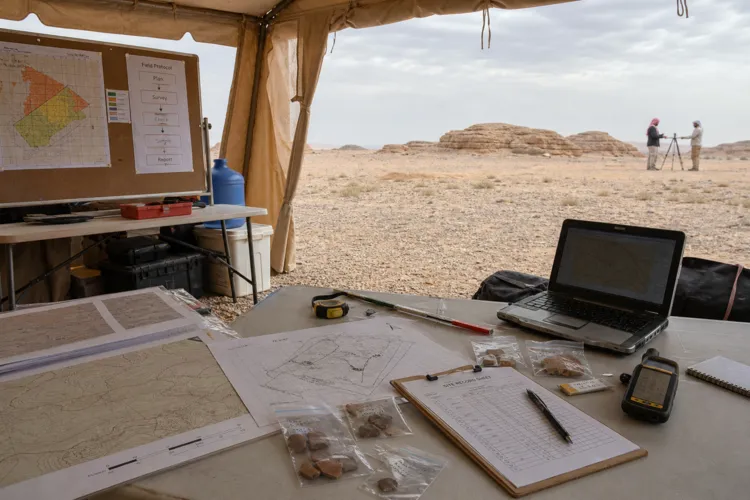
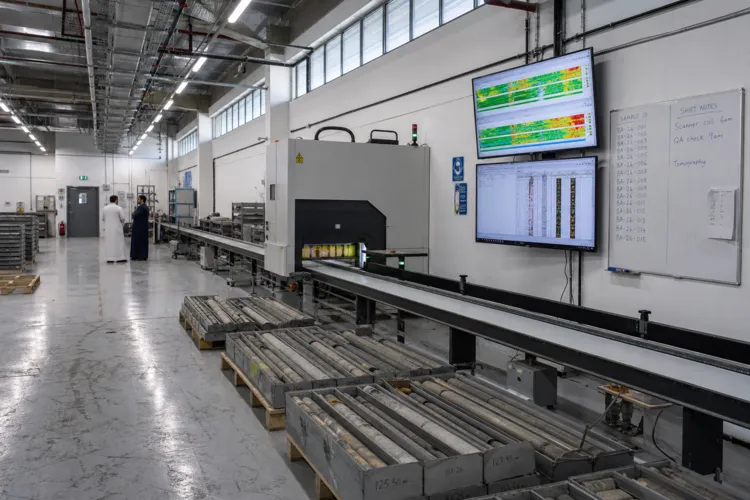
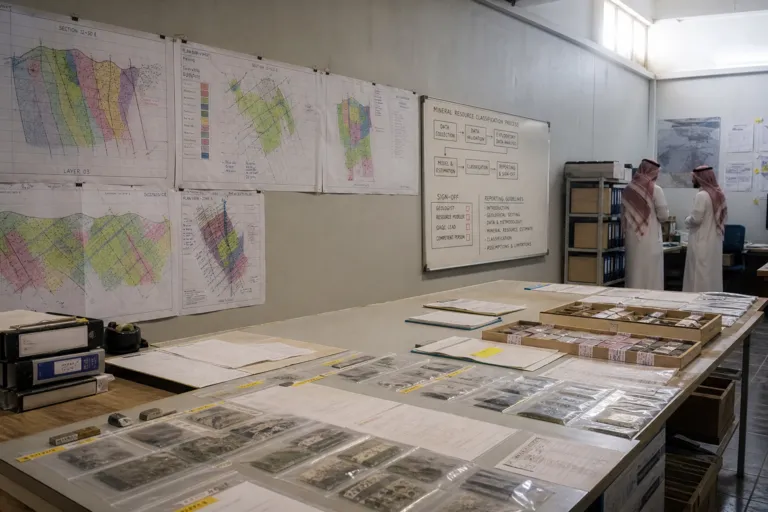
Moving from drilling to reportable resources is not just a formatting exercise. Grokipedia summarises CRIRSCO-harmonised standards as defining three Mineral Resource categories: Inferred, Indicated, and Measured, reflecting escalating reliability. It also notes that assignment depends on geological confidence indicators such as data density, sampling reliability, geological continuity, and estimation methodologies like geostatistics. As an example of the kind of expectations commonly referenced, it states drill hole spacing typically ranges from 50–100 meters for Indicated in many deposits. Grokipedia also highlights the role of a Qualified Person or Competent Person who conducts or oversees site visits to inspect workings, core samples, and quality assurance measures, and who documents reliance on specialists where relevant. This is where drilling logs, core handling, and QA/QC become directly tied to classification decisions.
Saudi Arabia’s broader drilling ecosystem is already moving toward more data-rich operations, which can support tighter technical verification routines. MarkWide Research describes drilling services as engineered borehole construction using systems capable of generating torque exceeding 50,000 ft-lbs and managing downhole pressures in formations exceeding 300°F, across depths ranging from 5,000 to 20,000 feet. It also points to digital rig technology and advanced LWD systems as fast-expanding categories because real-time downhole data can reduce non-productive time in complex geologies. While that source addresses hydrocarbon drilling, the underlying theme carries over: as operations become more instrumented and auditable, teams have more structured inputs to support consistent resource classification workflows and clearer disclosure.
Adopting international reporting conventions also helps manage governance and compliance expectations across jurisdictions, especially for projects seeking broader capital access. Discovery Alert argues that standardised disclosure addresses information asymmetries between mining companies and capital markets, and associates unified reporting standards with decreased regulatory compliance costs. Grokipedia adds that multinational firms mitigate gaps through “if not, why not” disclosures mandated in codes like JORC, while CRIRSCO’s UNECE bridging efforts highlight persistent global adoption gaps. In practice, this encourages Saudi project teams to plan reporting from the first drill program: build traceable databases, document sampling and verification, and present classification outcomes using recognised CRIRSCO-style language so external reviewers can follow the chain from drill core to estimate.
What is the JORC Code, and why is it used for mineral reporting?
How does CRIRSCO relate to JORC and other reporting standards?
What are the main Mineral Resource categories used in CRIRSCO-style reporting?
What does a Competent Person or Qualified Person typically do during verification?
How are Saudi teams approaching JORC mineral resource reporting in Saudi Arabia as projects scale?