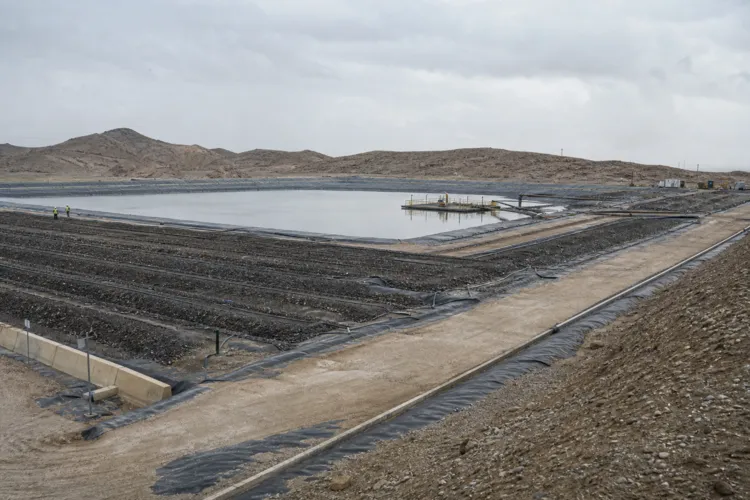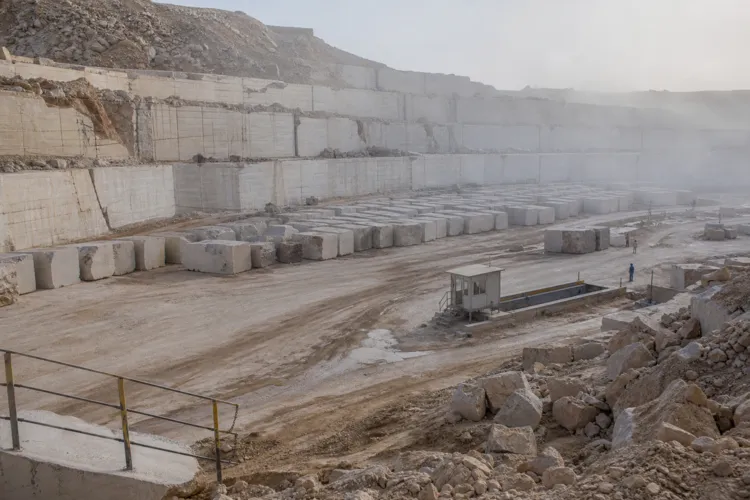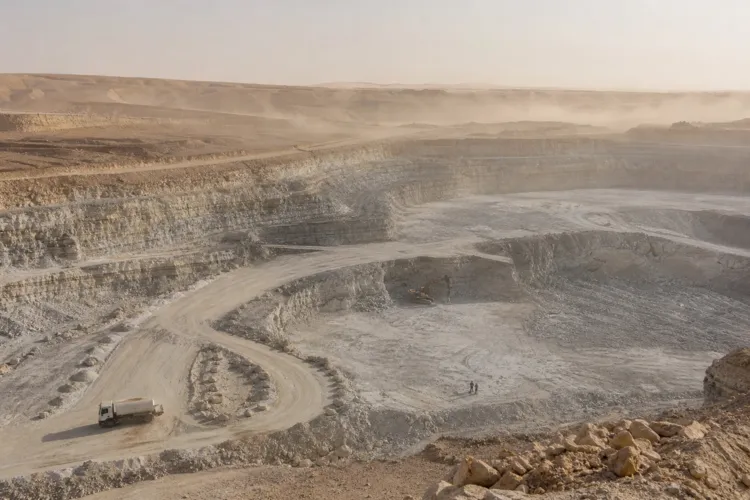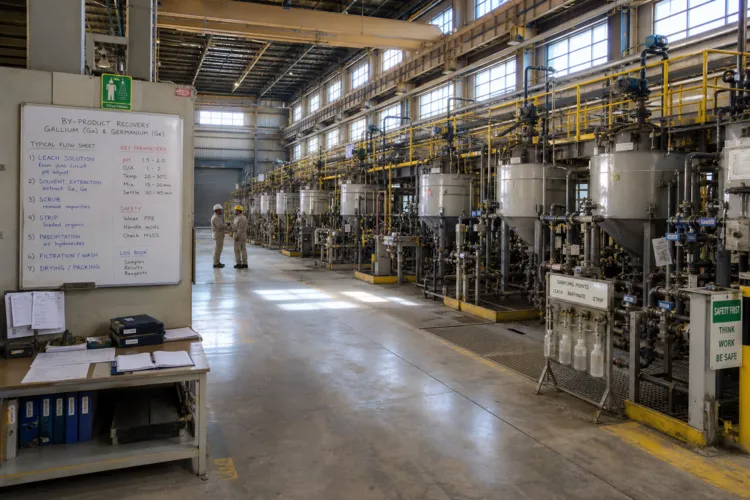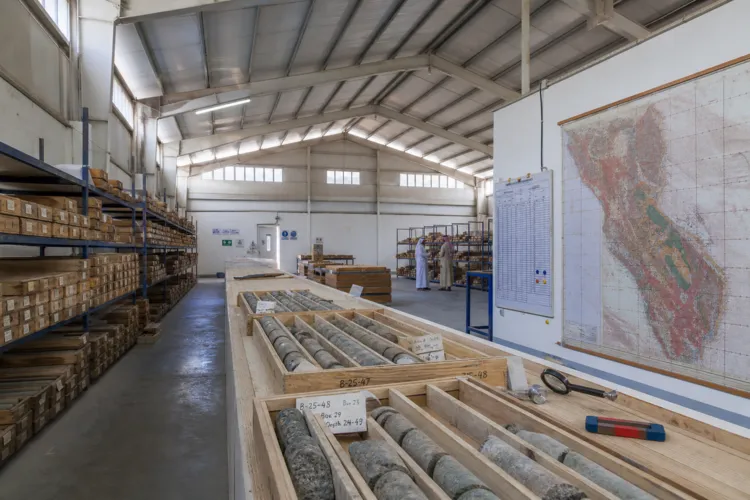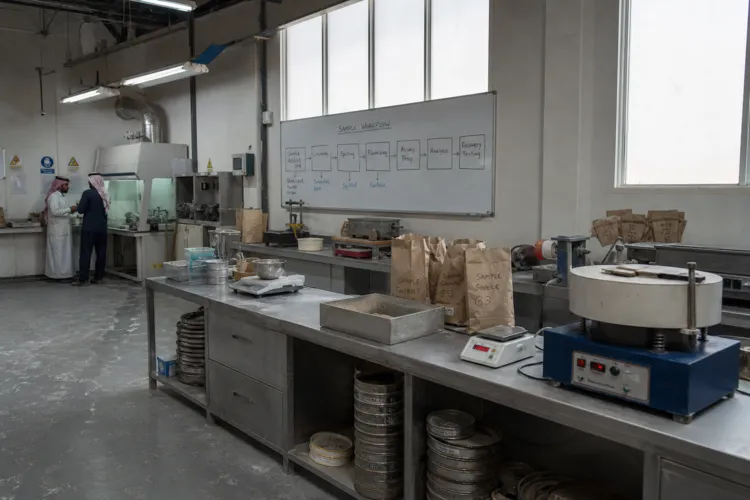
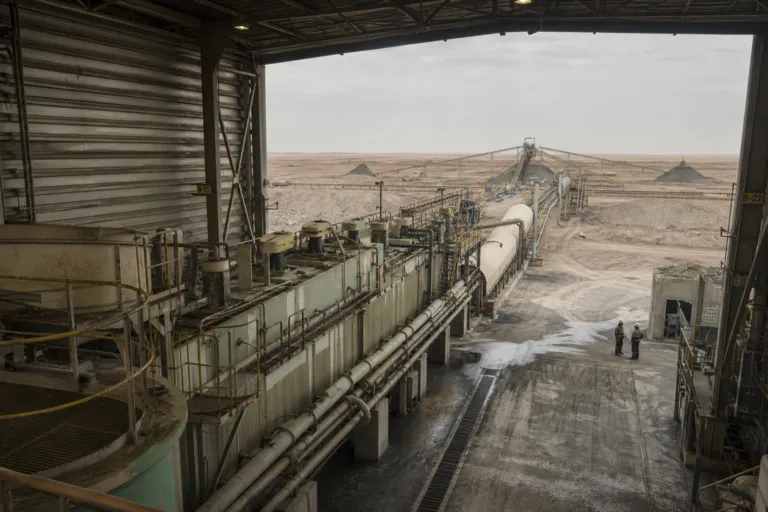
In Saudi Arabia’s Northern Borders Province, phosphate mining has become a cornerstone of the Kingdom’s resource-based industrialisation model under Vision 2030. A central asset is the Al Jalamid phosphate mine, described as an open-pit operation in the Turaif area near the Jordanian border and built as part of the Wa’ad Al Shamal Phosphate Project. The Wa’ad Al Shamal complex is presented as an integrated mining and processing system that moves beyond exporting raw rock by converting concentrate into higher-value fertiliser products such as diammonium phosphate (DAP) and monoammonium phosphate (MAP). This strategy is framed as a way to build industrial employment and strengthen global competitiveness through a mine-to-finished-product chain.
Across the sources, the scale of northern operations is shown through several capacity figures that sit at different points in the chain. The Vision 2030 sector deep dive states that the Al Jalamid mine has an annual capacity exceeding 11 million tonnes of ore. Wikipedia describes mine production around 11.6 Mtpy of ore, and adds that beneficiation facilities can produce an estimated 5 Mtpy of flotation concentrate on a dry basis. These numbers are paired with notes on supporting infrastructure at the site, including a power plant, potable water production, treatment and distribution facilities, roads, and telecommunications that support mining and beneficiation operations.
From Northern Ore to Finished Fertiliser: The Integrated Corridor
Integration is a recurring theme in how Saudi phosphate development is described. The Vision 2030 deep dive places Al Jalamid inside the $8 billion Wa’ad Al Shamal Phosphate Project, which includes a beneficiation plant and a phosphoric acid and fertiliser complex that produces mainly DAP and MAP. It also notes sulphuric acid production using imported sulphur and ammonia from domestic natural gas as key inputs. MWSPC is identified as the operator of the complex, structured as a joint venture between Ma’aden (60%), SABIC (15%), and Mosaic Company (25%). For market context, the same source states that Saudi Arabia’s total phosphate fertiliser production capacity exceeds 6 million tonnes per annum and positions the Kingdom among the world’s top five phosphate producers, with most output exported to Asia, including India, Bangladesh, Pakistan, and Southeast Asia.
Logistics links the remote mine site to processing and export pathways. A phosphate rock market report states that output from Al Jalamid feeds a beneficiation plant and a 1,500-kilometer dedicated pipeline to Ras Al Khair on the Arabian Gulf coast, where approximately 3 million metric tons per year of DAP and MAP production capacity is co-located with captive ammonia production. Wikipedia, by contrast, describes transport by rail from Al Jalamid to Ras Al Khair and notes that in mid-2011 the Saudi Railways Company launched a 1,392 km long railway project to link phosphate-producing areas, including Jalamid, with ports. Together, these descriptions highlight the corridor concept: mine and beneficiation in the north, then movement to large industrial complexes that convert phosphate into fertiliser products.
The mine sits within a broader national expansion story supported by official and industry-reported figures. One source cites reserves estimated at 2.7 billion tons for Saudi Arabia’s phosphate sector and says these deposits represent about 7% of global phosphate reserves, concentrated largely in the Northern Borders Province, particularly around Turayf’s Wa’ad al-Shamal City. The same source reports that phosphate exploitation rose by 199.11% from 1.9 million tons in 2014 to 5.7 million tons in 2019, citing the General Authority for Statistics. It also states that phosphate ore was first discovered in 1983 at Hazm al-Jalamid and that Saudi Arabia exported its first shipment of phosphate in 2017, with exports reaching 16 countries. Separately, Wa’ad al-Shamal Industrial City is described as spanning 440 square kilometers, with investments exceeding SAR 80 billion and 150 square kilometers dedicated to Ma’aden’s phosphate projects, including ammonia plants with 1.1 million tons annual capacity.
Where is the Al Jalamid phosphate mine located?
How much ore can Al Jalamid produce each year?
What does the beneficiation plant produce at Jalamid?
How does phosphate from Jalamid reach downstream processing hubs?
Who operates the Wa’ad Al Shamal phosphate complex and what is the ownership split?