Bentonite is positioned in multiple sources as a practical, performance-grade mineral input for filtration, sealing, binding, and absorption across industrial systems. Verified Market Reports describes it as a naturally occurring volcanic ash material primarily composed of montmorillonite, and frames the market around raw and processed natural bentonite rather than synthetic substitutes. This wide utility helps explain why market trackers keep tying bentonite demand to oilfield services, construction, agriculture, and environmental uses. For global context, Verified Market Reports values the global bentonite clay market at USD 2 billion in 2025 and projects USD 3.14 billion by 2034, with a 5.14% CAGR for 2026–2034.
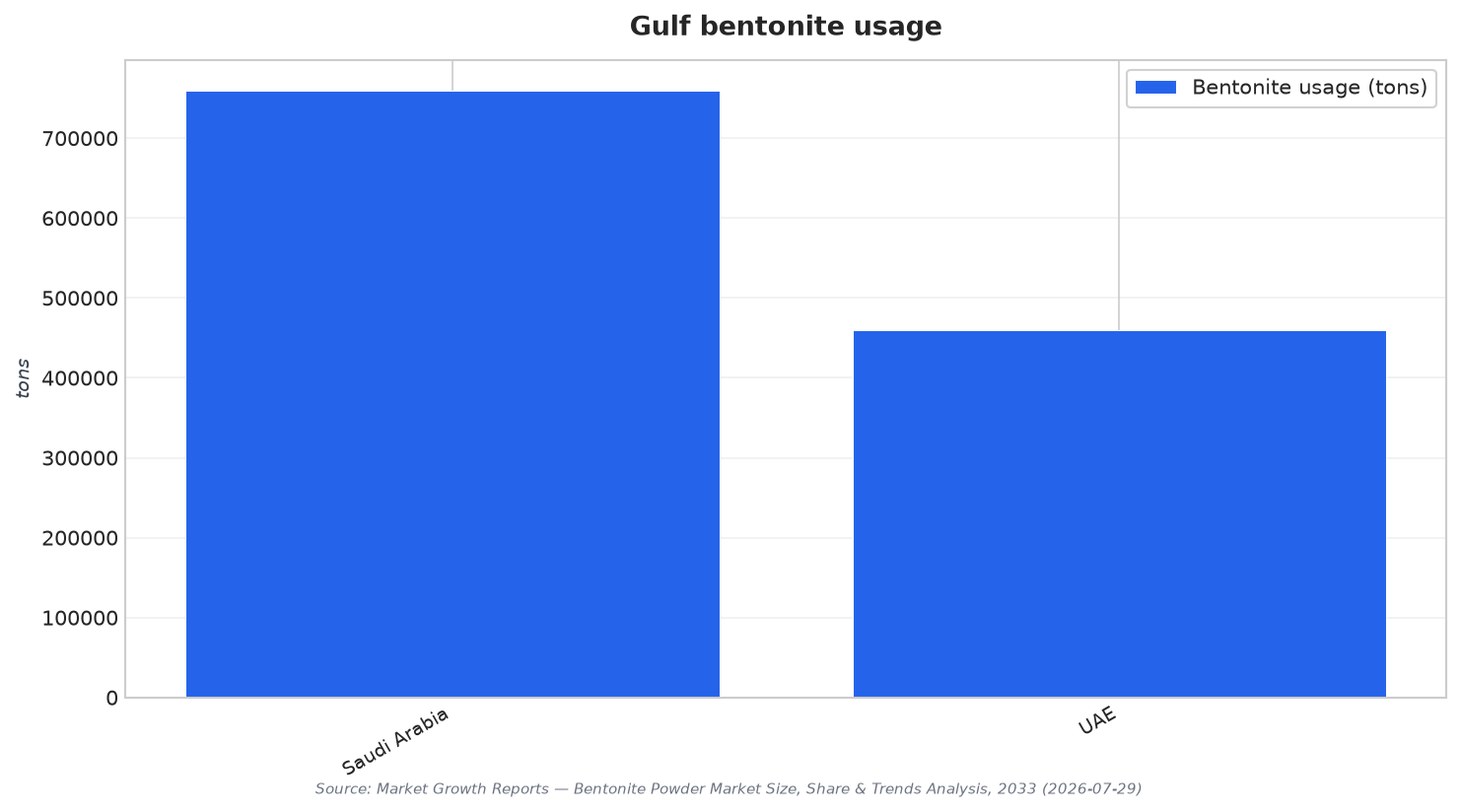
For Saudi Arabia specifically, one bentonite powder market source reports usage leadership in the region, stating Saudi Arabia used 760,000 tons and the UAE used 460,000 tons, mainly for oil and gas drilling and large-scale construction. The same source adds that imports dominate supply, while logistical investments improve access to Asian and European producers, reinforcing that the procurement side can matter as much as the ore body. In parallel, Future Market Insights frames Saudi Arabia’s market priorities around infrastructure development and sustained oil and gas drilling intensity, citing bentonite systems for drilling fluid performance as well as landfill sealing and aquifer protection within Vision 2030 modernization programs.
What Saudi Buyers Specify: Swelling Performance, Consistency, and Compliance
Across industry segments that intersect with bentonite clay mining in Saudi Arabia, sources repeatedly emphasize performance attributes and predictable quality. Credence Research states sodium bentonite dominates by type in 2024, attributing this to swelling properties, high viscosity, and absorption capabilities that suit drilling fluids and sealing applications. Verified Market Research similarly highlights bentonite’s swelling, adsorption, and rheology characteristics, and explains that buyers increasingly evaluate raw material consistency, strengthening the link between supply qualification and purchasing decisions. This focus aligns with foundry and processing environments where repeatability matters, and where product stewardship expectations around handling and traceability are described as encouraging investment in beneficiation consistency.
Foundries and civil engineering also show up as demand anchors in the cited materials. Verified Market Research lists foundry operations among the “core end uses,” alongside drilling fluids and construction-related barrier and sealing applications. MarketGrowthReports adds detail on civil engineering, stating bentonite is used to stabilize excavation walls and seal groundwater, and that civil engineering projects accounted for 1.4 million metric tons in 2024, with key markets including China, India, and the UAE. While those civil engineering tonnages are not stated as Saudi-only figures, they provide context for why regional infrastructure pipelines can raise attention on secure, specification-grade feedstock and processing capacity.
Agriculture and broader industrial uses sit alongside energy and construction in the same supply story. Grand View Research notes demand drivers across construction, oil and gas, and agriculture, and says growing infrastructure development in countries like the UAE and Saudi Arabia is expected to drive demand for bentonite in construction applications. It also describes bentonite being marketed for fertilizers, foundries, cosmetics, and pharmaceuticals. On market scale, Grand View Research values the bentonite market at $2.4 billion in 2023 and projects growth from $2.8 billion in 2026 to $3.7 billion by 2030, at a 6.2% CAGR. These global figures do not measure Saudi output, but they do underline why supply chains, import dependence, and processing upgrades remain central to how Saudi end users secure bentonite and specialty clays.
What does one source report for Saudi Arabia’s bentonite usage, and what are the main uses?
How do sources describe the role of sodium bentonite versus other types?
How is infrastructure tied to bentonite demand in Saudi Arabia in the cited sources?
What do the sources say about supply patterns affecting Middle Eastern buyers?
Where does bentonite clay mining in Saudi Arabia fit within broader end uses like foundries and civil works?