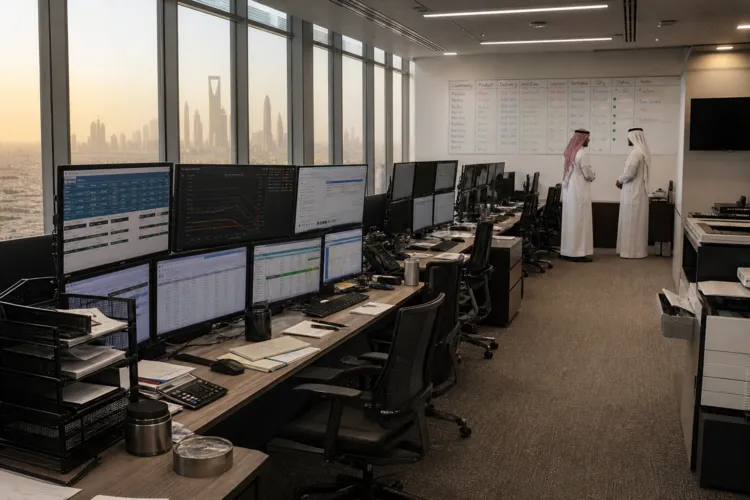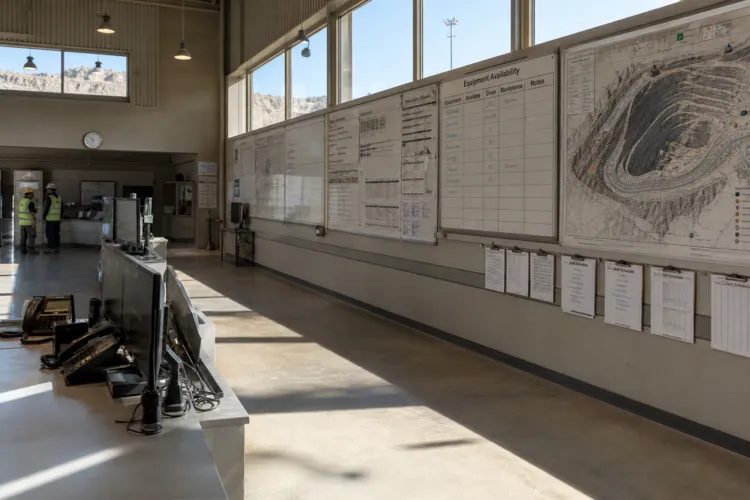
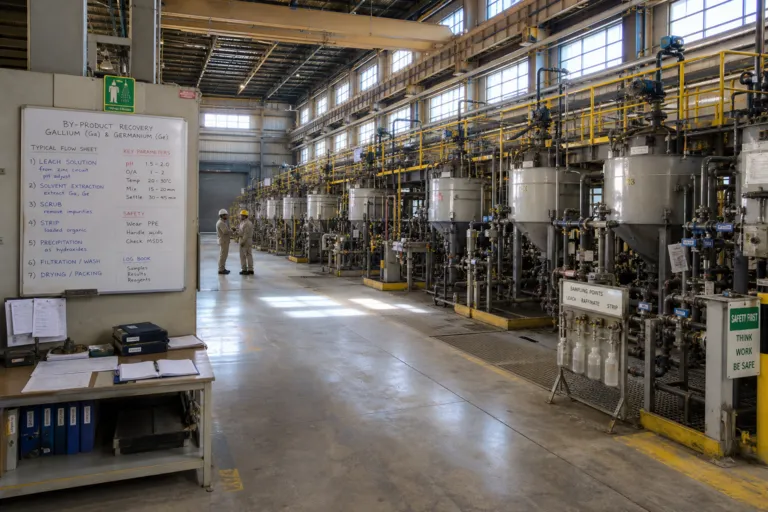
Gallium and germanium are not typical “mined and milled” commodities. They are minor metals recovered as by-products of other industrial streams, mainly bauxite-to-alumina and zinc processing, and sometimes coal-ash processing. One peer-reviewed review notes that gallium occurs only in trace quantities and does not form distinct minerals of economic significance, which is why recovery depends on the efficiency and scale of alumina and zinc refining operations. It reports an average gallium concentration in bauxite of around 57 ppm, while also describing supply as structurally tight because the bottleneck is capture and purification, not ore availability. That framing matters for gallium germanium recovery Saudi Arabia conversations, because the practical “resource” is the country’s industrial throughput and the ability to add capture, separation, and quality-control steps.
The biggest near-term lever for gallium is alumina refining performance. The same review states that approximately 90% of global primary gallium production is derived from alumina refining, yet less than 5% (about 438 t) of the gallium present in Bayer liquor is actually recovered. That gap is the definition of a hidden by-product: the element can be present in process liquor, but not monetized without additional circuits. Separate supply-chain commentary reinforces that Western nations cannot simply “mine more gallium” because production is capped by the global throughput of alumina refineries. In pricing context, one 2026 supply-chain update says that, as of August 2026, spot prices for gallium outside China had stabilized at an elevated $850/kg.
Why Zinc Concentrates Matter for Germanium—and What Usually Gets Lost
Germanium faces a similar reality, but with zinc concentrates and smelter circuits as the key entry point. A 2026 analysis citing a long-standing USGS fact sheet says that historically less than 5% of the germanium contained in zinc concentrates was actually recovered, illustrating how much value can remain trapped inside host value chains. A market outlook also points to “upstream byproduct recovery from base metals smelting” as one of the principal industrial entry points into the germanium value chain, alongside downstream conversion into optical components. The same August 2026 supply-chain note places germanium spot prices around $2,400/kg outside China, underscoring why higher recovery from existing zinc streams can matter when supply chains tighten.
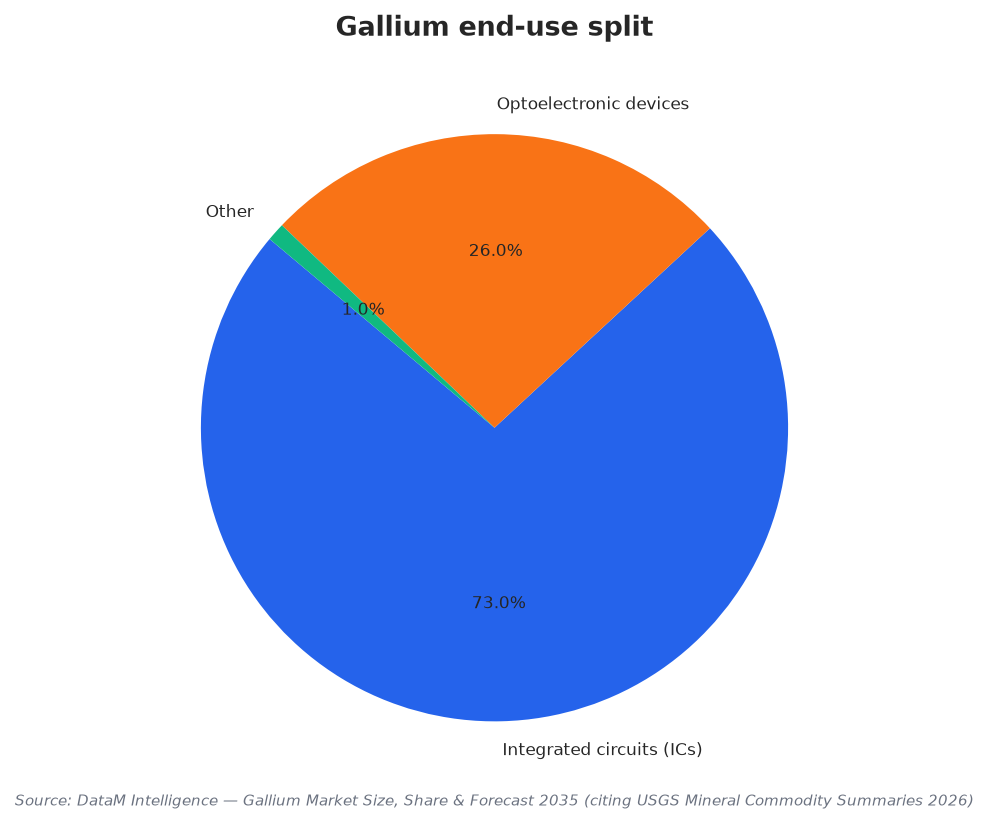
Any Saudi Arabia-focused recovery strategy also has to be honest about the global refining map. One supply-chain intelligence source says China controls over 80% of global gallium and 60% of germanium production, while another geopolitical summary states China controls 99% of primary gallium production and 68% of germanium refining. This concentration shows up in market structure too: one market study describes a moderate-to-high concentration industry where the top five players hold 55.3% of global market value, and Chinalco holds 27%, supported by by-product extraction from Bayer process alumina refining. For would-be entrants, S&P Global notes it analyzed low-purity gallium production costs from alumina and zinc recovery processes—highlighting that both routes are already industrially recognized.
International project announcements offer concrete signals on what “building capability” looks like, without implying they apply locally. In Greece, the European Investment Bank approved €90 million (USD 98 million) to METLEN Energy & Metals to develop Europe’s first plant for industrial production of gallium within the Aluminium of Greece complex. In North America, American Elements announced a program with conditional financial assistance of C$18.95 million plus C$7 million from the Government of Quebec, including a pilot plant in Saguenay, Quebec targeted to be operational in 2027 and a demonstration plant that would manufacture 4 tonnes of gallium yearly; it also stated a commercialization plan to manufacture 40 tonnes yearly, described as 5% of global primary gallium production. These examples show that by-product recovery is increasingly being treated as a strategic refining build-out problem—exactly the lens Saudi industrial planners can use when evaluating alumina and zinc-linked opportunities.
Why are gallium and germanium called “by-product” metals?
How much gallium in Bayer liquor is typically recovered today?
What does historical data suggest about germanium recovery from zinc concentrates?
What do recent prices indicate about market conditions outside China?
What does gallium germanium recovery in Saudi Arabia depend on in practice?