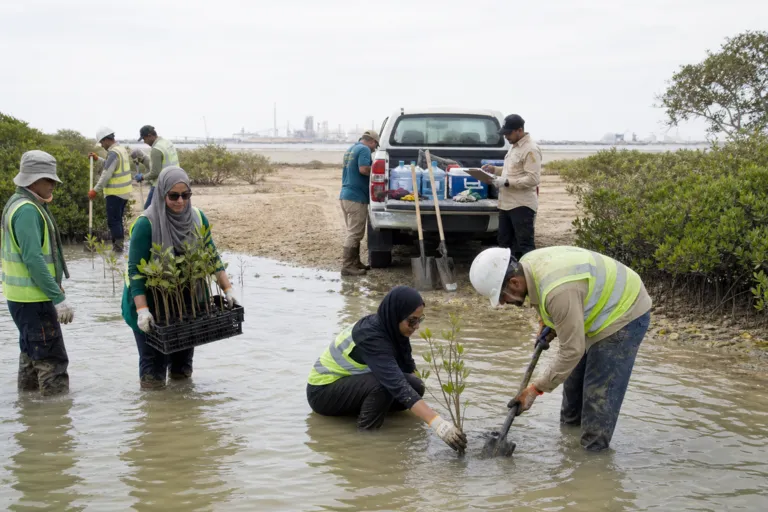
The framing around “10 million trees” and “10 million mangroves” signals ambition. But the practical test for the Maaden afforestation initiative is whether planting translates into survival, resilient habitat, and credible monitoring. A 2025 comprehensive review of Middle Eastern mangroves stresses that global generalisations can overestimate functional capacity in arid systems. That matters along the Red Sea and Arabian/Persian Gulf, where mangroves are spatially restricted and fragmented, yet still support shoreline protection, fisheries, and blue-carbon initiatives. The review points to four primary controls that govern distribution and function in the region: freshwater inputs, hypersalinity, heat, and sheltering geomorphology. Any afforestation push that includes mangroves has to be designed around those constraints.
In the same review, Avicennia marina is described as dominating as dwarf, slow-growing stands of about 2–4 m, allocating resources below ground on carbonate and nutrient-poor substrates. The science-based picture is not a reason to scale back; it is a reason to plan restoration that fits arid dynamics and avoids overpromising. The review reports modest vertical accretion of about 1–3 mm yr-¹ and low organic carbon burial of about 10–15 g C m-² yr-¹, with soil carbon stocks around 43 ± 5 Mg C ha-¹ relative to the humid tropics. It also argues that undisturbed soils confer high carbon permanence, which elevates the importance of protecting intact sites alongside planting new ones.
What “Arid-Limit” Mangrove Success Looks Like
For coastal planting, success hinges on risk-aware siting and governance. The review highlights sea-level rise of 2.92 mm yr-¹ and a projected increase of 39.1 cm by 2100, alongside thermal and salinity extremes, dust burial, and oiling as risk factors. It also flags uneven enforcement and uneven monitoring, reporting, and verification (MRV), even as socio-economic benefits such as nursery support, shoreline defense, and cultural amenities are described as large. The authors call for a region-specific framework, including safeguarding groundwater-fed refugia, securing retreat corridors, reducing local stressors, and implementing “stress-matched restoration” that replicates resilient features such as space, sediment, seepage, and shelter. That checklist is directly relevant to a Ma’aden-led mangrove component, where credibility will depend on MRV that is grounded in arid-zone realities.
This corporate push is also unfolding inside a wider national story. A 2026 report describes the Saudi Green Initiative (SGI), launched in 2021, as aiming to plant 10 billion trees across Saudi Arabia and rehabilitate nearly 74.8 million hectares of land. The same report says that by July 2025 the Kingdom had planted more than 151 million trees and rehabilitated around 500,000 hectares of land. Those national figures are not the same thing as a company program, but they set expectations for scale, tracking, and delivery. For any large industrial actor, alignment with national restoration pathways can help standardize metrics and improve comparability, especially when MRV and co-management are identified as uneven across the region.
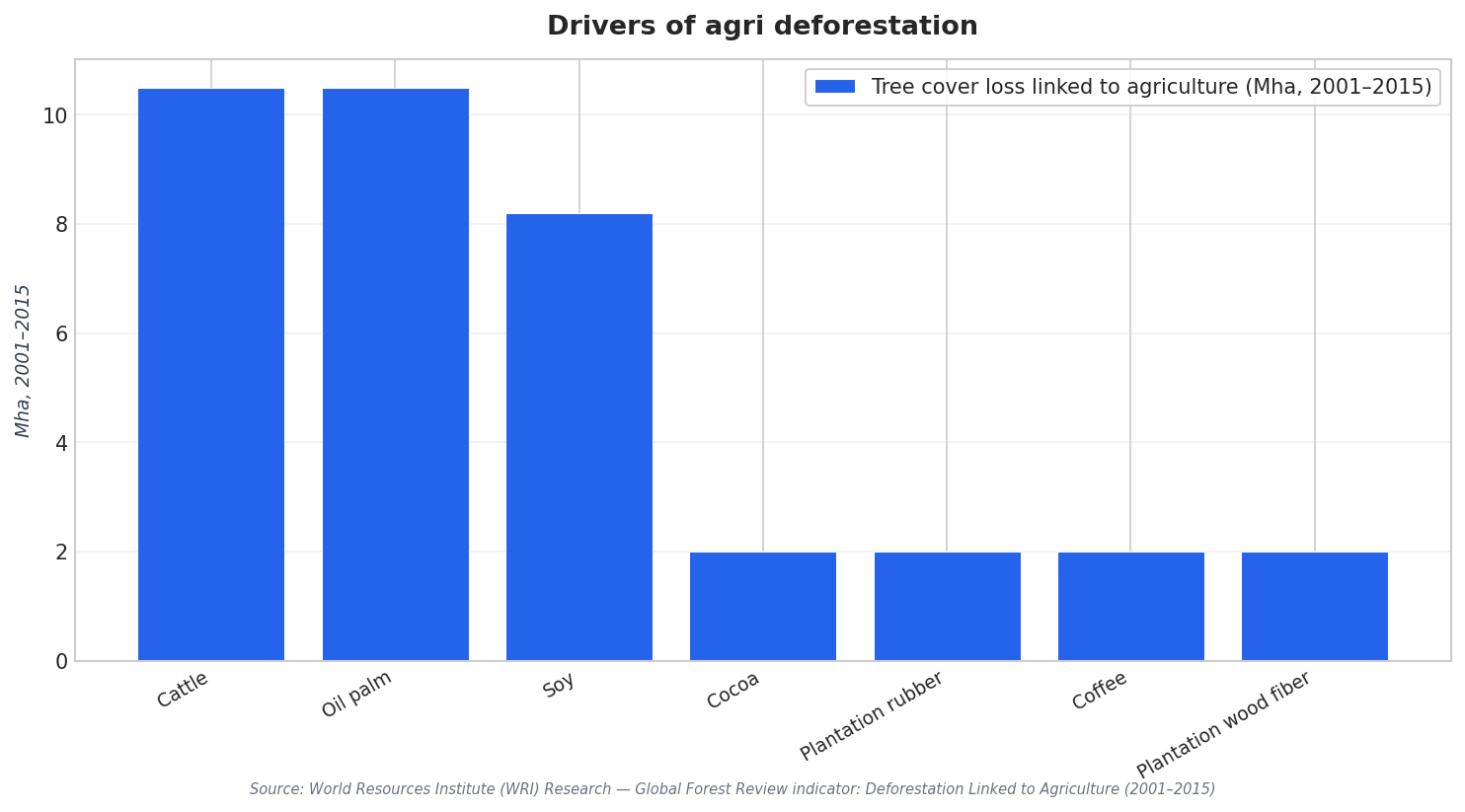
Viewed globally, afforestation and forest loss often sit side by side in public debates, which raises the bar for transparency. A forestry market analysis citing the FAO says forests cover about 4.06 billion hectares, or 31% of Earth’s total land area, while also stating that from 1990 to 2020 the world lost around 178 million hectares of forest. The same source also reports that since 1990 about 420 million hectares of forest have been lost, and that between 2015 and 2020 trees were cut down at a rate of 10 million hectares per year. In that context, the Maaden afforestation initiative will be judged not only by planting counts, but by survival, avoided loss, and monitoring practices that can stand up to scrutiny in arid-zone mangrove landscapes.
What is the Ma’aden afforestation initiative trying to achieve?
Which factors most control mangrove success in the Red Sea and Arabian/Persian Gulf?
What does the science say about mangrove carbon and growth in the Middle East?
What are Saudi Arabia’s publicly reported tree-planting targets and progress figures?
Why does monitoring, reporting, and verification (MRV) matter for mangrove projects?