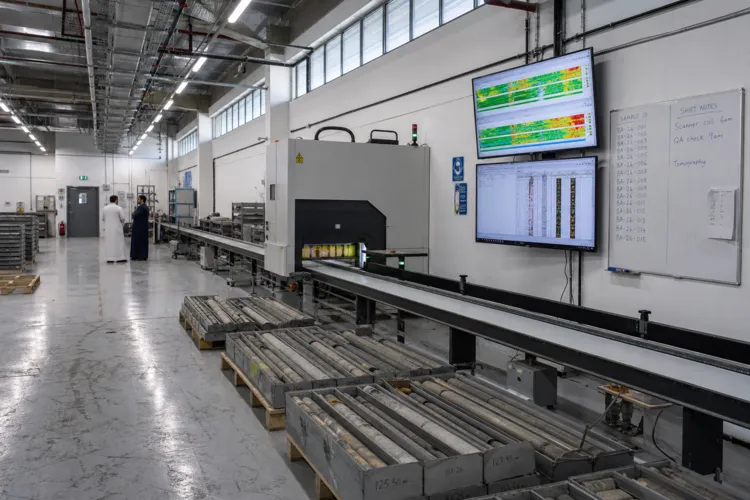
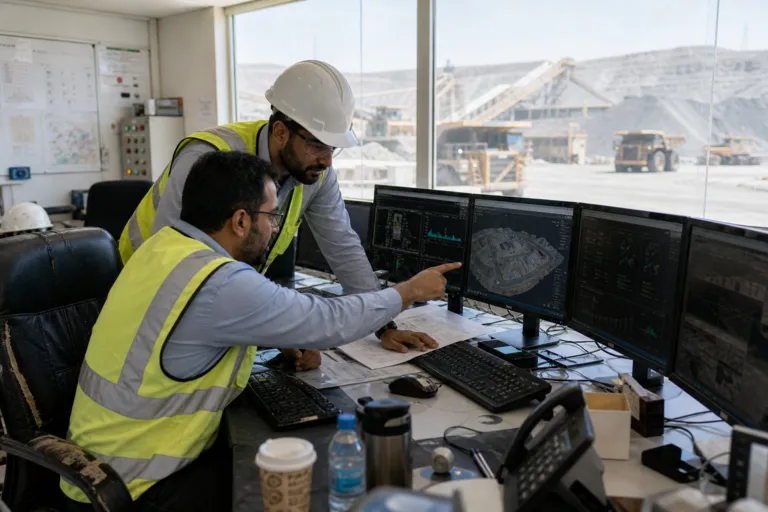
Digital twin mining Saudi Arabia is moving from a concept to a practical operating model. A digital twin is a dynamic virtual replica of physical assets, processes, and even entire mine sites. It is constantly updated from Internet of Things (IoT) sensors on physical infrastructure, plus data from automated and digital systems. That combination supports remote monitoring, simulation of hazardous scenarios, and predictive maintenance of safety-critical equipment. On Saudi mine sites, those capabilities map directly to two priorities operators care about every day: cutting downtime and improving recovery performance through faster, more informed decisions.
Saudi mining is also leaning into broader digital innovation. Industry commentary notes integration of digital twins, IoT sensors, and drone-based surveys as part of a shift that has transformed operations, improving efficiency and predictive asset management. Satellite monitoring and AI-driven advisory are also highlighted as tools that improve productivity and safety outcomes, while fleet management is positioned to optimise vehicle usage, reduce downtime, and improve on-site safety. In parallel, remote monitoring systems, automated field equipment, and sensors are described as enablers of operational efficiency and proactive maintenance of mines and equipment.
How Digital Twins Reduce Downtime on Saudi Mine Sites
Downtime reductions come from shifting maintenance and operations from reactive to predictive. AI-supported predictive maintenance is described as valuable because avoiding a single day of unplanned shutdowns can justify the entire initiative. Digital twins strengthen this approach by letting teams see the asset state remotely, then simulate what could happen next before making a field change. Where electrical monitoring uses continuous waveform capture and electrical signature analysis, it can translate electrical waveforms into harmonic spectrums to detect early signs of mechanical wear, such as broken teeth on cutting heads, loose or catching conveyor belts, or failing drive components. In practice, this supports earlier interventions that help reduce unplanned downtime.
Safety and uptime are tightly linked, and digital twins are presented as tools that improve decision-making around critical processes and infrastructure. A key warning from industry voices is that missing data can cost lives, illustrated by an incident where two people drove into a ditch because their information said the road was safe when it was not. Digital twins help by keeping a single, current operational view fed by sensors and systems, which can reduce gaps between what the site team believes is true and what conditions actually are. That matters in Saudi Arabia, where safety standards, real-time emissions tracking, and advanced environmental monitoring are becoming benchmarks for evaluation and investor approval.
Improving recovery rates is a broader data problem, and Saudi operators are explicitly pushing toward more integrated, AI-driven operations. Reporting on Ma’aden’s direction describes real-time monitoring systems deployed across the entire value chain to provide unprecedented visibility and enable rapid response to changing conditions, alongside advanced mineral processing technologies to improve recovery rates and extract maximum value. While the sources do not publish Ma’aden recovery numbers, a separate mining case study shows what disciplined data work can achieve: recovery rates increased from 47% to more than 68% within 30 days, and over time improvements pushed recovery beyond 80%, alongside more than $12 million in annual benefits through increased production and reduced reagent use. Digital twins fit this mindset by unifying operational data, planning models, and predictive scenarios into a single decision environment.
Execution depends on tooling and talent. Mine planning platforms are adding digital twin operational intelligence that establishes a continuously updated replica of the operation, integrating real-time data, planning models, and predictive scenarios into a unified decision environment, and unifying workflows to increase productivity and minimise unplanned work. In Saudi Arabia, Hexagon and Ma’aden are building on an agreement to create the region’s first digital mine at Mansourah-Massarah, while also deepening workforce development via collaboration with King Abdulaziz University to modernise curricula and integrate advanced digital technologies. For digital twin mining Saudi Arabia, these moves connect the model, the data, and the people who must run it safely and consistently.
What is a digital twin in mining?
How does digital twin mining Saudi Arabia help reduce downtime?
What mine-site issues can predictive monitoring detect early?
How can digital twins support better recovery performance?
What is happening in Saudi Arabia around digital mines and skills?