Saudi Arabia sits at a key intersection of oilfield demand and mineral supply strategy for barite, the weighting agent used to increase drilling-mud density and control well pressure. Grand View Research estimates the Saudi Arabia barite market generated USD 173.4 million in revenue in 2023 and is expected to reach USD 225.3 million by 2030. The same source states oil & gas was the largest segment, with an 86.45% revenue share in 2023. That mix matters because drilling customers tend to require consistent, controlled material—often referenced as API-grade—along with reliable delivery and tight impurity control.
The case for localizing supply is also visible in trade patterns. IndexBox reports Saudi Arabia held the second position among importers at USD 83 million, representing a 9.7% share, and notes that such patterns underscore reliance on global supply chains. Ken Research also flags “limited local production capacity” as a challenge in the Kingdom, alongside fluctuating prices. Put together, these signals frame a practical goal for barite mining in Saudi Arabia: reduce supply risk for drilling fluids while building the quality and logistics capabilities that customers expect from long-term supply agreements common in oilfield markets.
From Drilling-Fluid Barite to a Broader Industrial Play
Even when drilling dominates consumption, the market story is not only about rigs. Future Market Insights links global growth to sustained oil and gas drilling demand and emphasizes that barite is an established mineral with long use across upstream and industrial applications. Verified Market Research describes barite’s role beyond drilling as a filler and extender in paints and coatings and as an input for plastics and rubber, and highlights a niche in healthcare and radiation shielding where high-purity barium sulfate is used as a radiocontrast agent and in high-density concrete. In Saudi Arabia, Ken Research segments demand across drilling fluids, paints, and plastics, which supports a localization approach that serves both oilfield needs and non-drilling customers.
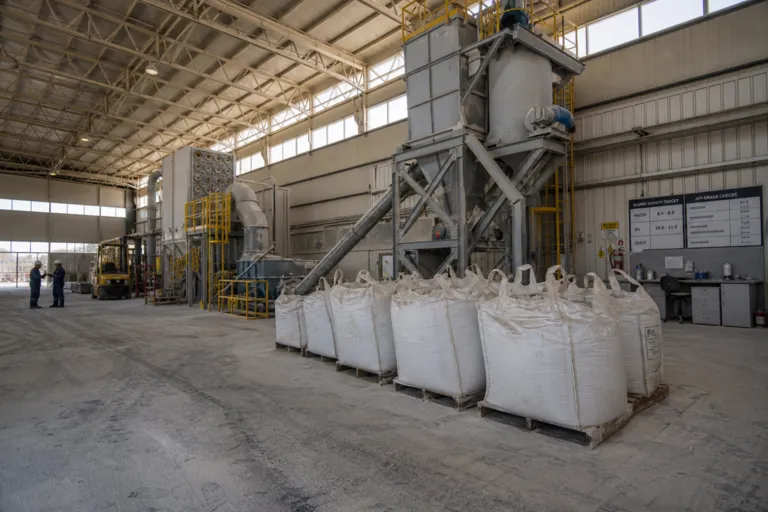
Quality and form factor shape competitiveness in both domestic and export markets. Future Market Insights notes API-grade leads demand because drilling-mud users need controlled density and low impurities, and it also points to powdered barite gaining wider use because it blends smoothly into drilling mud and industrial formulations. IndexBox adds that pricing varies by grade, packaging, point of delivery, and contract duration, and that oilfield-grade barytes typically commands a premium over filler-grade material. This pushes Saudi-focused suppliers toward processing steps—such as grinding to powder and controlling impurities—that align with drilling-fluid specifications and broader industrial uses.
Saudi Arabia’s market position also looks significant in global context, but the comparison needs careful scope. Grand View Research states Saudi Arabia accounted for 11.8% of the global barite market in 2023 and projects the Kingdom will lead the Middle East & Africa regional market in revenue in 2030. Meanwhile, global forecasts differ by source: Future Market Insights projects growth from USD 1.66 billion in 2026 to USD 2.44 billion by 2036 at a 3.9% CAGR, while Verified Market Research values the global market at USD 2.13 billion in 2024 and projects USD 2.92 billion by 2032 with 4% CAGR. For operators and investors tracking barite mining Saudi Arabia, the takeaway is consistent: oilfield demand anchors volumes, but resilient growth and export credibility depend on API-grade capability, stable ore access, and dependable delivery.
How large is Saudi Arabia’s barite market, and what is the outlook?
Which end-use segment leads barite demand in Saudi Arabia?
What do import figures suggest about Saudi Arabia’s supply strategy for barite?
Beyond drilling fluids, where else is barite used?
What does the topic of barite mining in Saudi Arabia imply for oilfield and export markets?