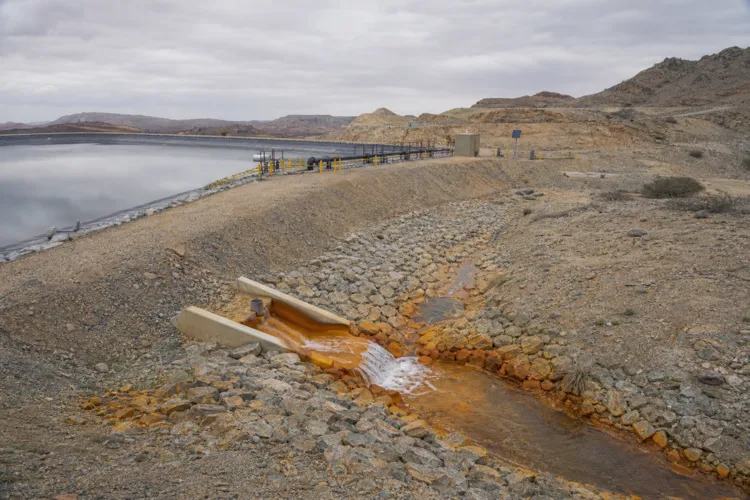

Saudi lithium extraction technologies are reshaping how the world thinks about battery metals, showing that a quiet breakthrough is underway. Lithium and magnesium are now being extracted from brine, the salty waste water produced by oil wells and desalination plants. What was once an environmental burden, is now becoming a strategic resource for the electric vehicle industry.
This shift marks a new chapter in energy and minerals. Saudi Arabia is piloting advanced systems that turn waste water into high-value materials. The goal is simple. Recover critical minerals without traditional mining.
Why Brine Is the New White Oil
Brine and seawater hold enormous mineral value. Together, they contain more than 10,000 times the lithium found in conventional hard-rock reserves. This expands estimated global lithium availability from 22 million tons to 230 billion tons.
For decades, this lithium remained unreachable. Concentrations were too low. Disposal costs were too high. Now that equation has changed. Direct Lithium Extraction, or DLE, allows recovery even at 20 parts per million.
Saudi Arabia’s approach is unique. It uses brine already produced by oilfields and desalination plants. This avoids new environmental damage. It also solves the costly problem of brine disposal.
Saudi Lithium Extraction Technologies at Work
At the center of this effort is KAUST. Its DLE technology can extract lithium from brine with concentrations as low as 20 ppm. The system has scaled from lab size to industrial pilots 100,000 times larger, without adding pollutants.
Saudi firms are already moving forward. Pilot projects led by Lihytech, Ma’aden, and Aramco aim for full production by 2028. These initiatives could shift Saudi Arabia from a lithium importer to a global producer.
Aramco’s oilfield brine is especially promising. It contains lithium concentrations of around 400 ppm. By 2030, this resource alone could supply enough lithium for 500,000 electric vehicle batteries.
Read Also: Saudi Battery Minerals & Mining Boom: Powering the EV Future
Turning Environmental Risk Into Strategic Value with Saudi Lithium Extraction Technologies
The key insight behind this movement is simple but powerful. Brine disposal has always been an environmental liability. Managing it costs money and creates regulatory risk.
Saudi lithium extraction technologies flip that problem into an advantage. The same waste stream now becomes a source of battery metals. Emissions and water use are lower than traditional mining. Recovery rates are two to three times higher.
This model also fits global EV demand. As battery production grows, secure and cleaner lithium supply becomes critical. Brine-based extraction offers scale without disruption.
Read Also: Saudi Mineral Supply Chain: Driving Vision 2030 with $2.5 Trillion Wealth
A Strategic Shift With Global Impact
These pilots represent more than technical success. They signal a strategic shift in how energy nations create value. Oilfields and desalination plants become mineral assets. Waste becomes revenue.
The estimated opportunity tied to lithium and magnesium recovery from brine reaches $2.5 trillion in critical minerals potential. Saudi Arabia’s early move gives it a strong position in this new supply chain.
In this fast-changing landscape, understanding technology, regulation, and market timing is essential. Companies seeking deeper insight into Saudi lithium extraction technologies and the region’s evolving resource strategy are encouraged to explore services from Saudi Arabia Mining by Eurogroup Consulting. With 40 years of distinguished experience, Eurogroup Consulting excels in strategic consulting and market research across Saudi Arabia and the wider region, providing unmatched insight for success in rapidly evolving markets.