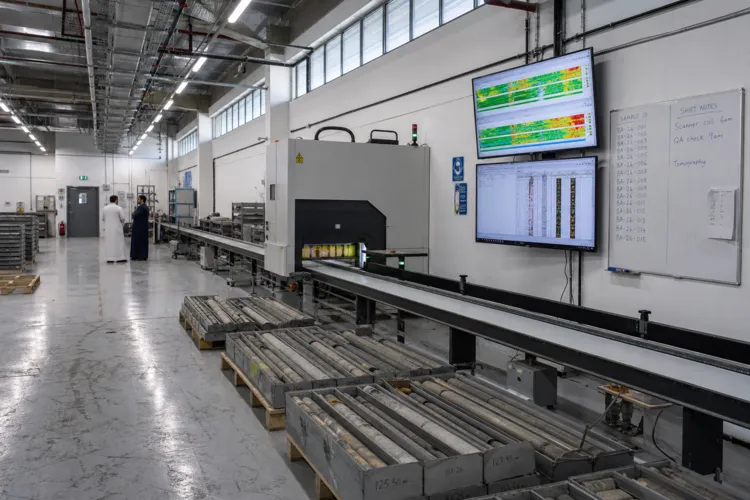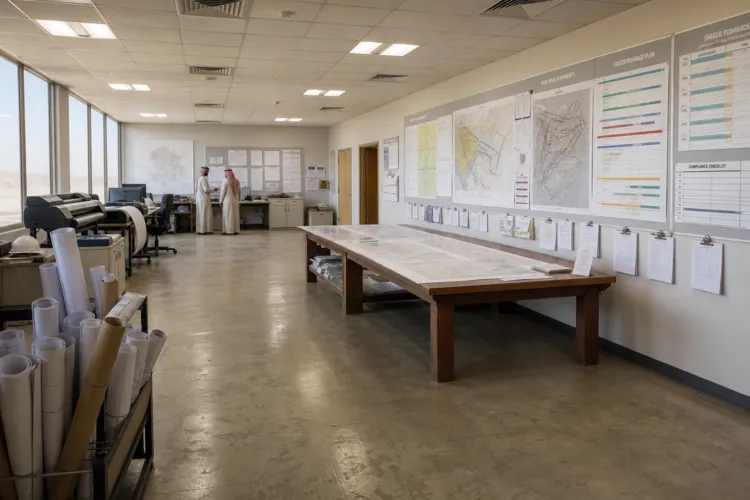
Saudi Arabia’s mining expansion is tied to long-term investment confidence and operational security. One source frames political stability as a critical factor for long-term mining investments, because international partners want confidence in regulatory consistency and operational security. At the same time, mine operators are under pressure to run modern environmental management systems and community engagement programmes from the outset, not as retrofits. These requirements raise the bar for how sites capture data, prove compliance, and share information across functions. That is a key reason mining ERP modernization Saudi Arabia discussions have moved from “IT upgrade” to core operating strategy.
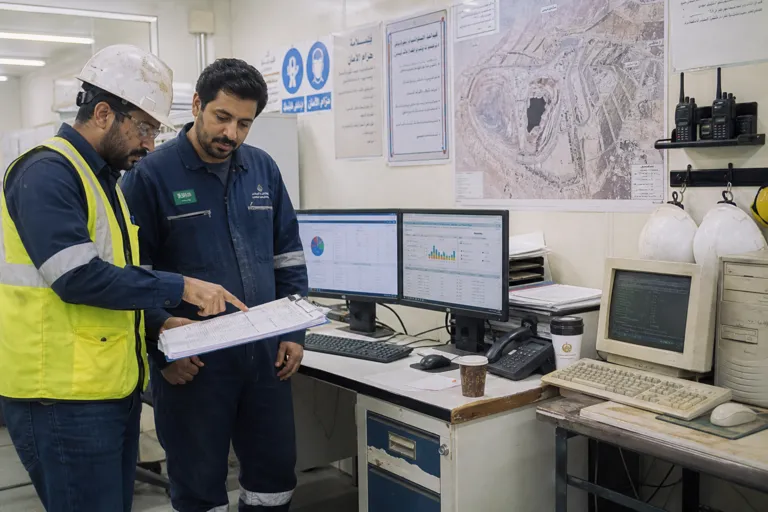
Legacy platforms struggle in this environment because many mines still use fragmented systems, spreadsheets, and manual processes to connect finance, maintenance, procurement, and site operations. Deloitte notes that separate department systems can create gaps between what is happening in the field and what is recorded in corporate systems. Mining.com also emphasizes that what was manageable in steadier cycles now creates exposure, because investors expect transparency and regulators require traceability. Boards also want real-time insight into cost drivers, capital allocation, and operational performance. That shifts ERP from back-office infrastructure to an operational backbone.
What’s Changing in Saudi Mining Makes Legacy Riskier
Regulatory modernization is one driver. Mining.com.au reports the Saudi Mining Investment Law was implemented in 2021, aiming for a clear and transparent framework for issuing mining licences and securing investor confidence, with sustainability and environmental protections emphasized. The same source links reforms to digitalisation through electronic platforms for licence applications and approvals, reducing bureaucracy and uncertainty. On the operations side, Discovery Alert highlights water management as a particular challenge in the Kingdom’s arid climate, pushing efficient water use systems and recycling technologies. When sustainability, licensing, and reporting all accelerate, disconnected tools and manual reconciliations become harder to defend.
Saudi operators are also scaling into more connected mining technology. Sources describe automation and robotics expanding from extraction through processing and transportation, improving safety, efficiency, and cost management while reducing environmental impacts. Data analytics and machine learning are highlighted for predictive maintenance, resource planning, and quality control, becoming more important as operations scale and complexity increases. Farmonaut describes remote monitoring and IoT using automated field equipment, sensors, and remote monitoring systems for operational efficiency and proactive maintenance. It also describes satellite imagery and AI analytics for surveying deposits, mapping reserves, and predicting environmental impact to minimize downtime and support sustainability targets.
These tools increase the need for standardisation and integration, which is where modern ERP architectures fit. Mining.com argues cloud ERP lets mining organizations deploy what they need, when they need it, without massive IT teams and infrastructure, while supporting standardization to keep a “clean core” and offering extensibility, faster implementation cycles, and lower project costs. Deloitte describes a broader shift away from highly customized systems towards standardized platforms that can be updated more easily, especially as companies integrate automation and AI. A separate Discovery Alert piece lists integration challenges like compatibility across domains, standardisation of measurement protocols and data formats, real-time processing, data quality assurance, and security frameworks.
In practice, replacement decisions often come down to credibility and speed. Traceability is repeatedly framed as an investor and regulator expectation, and Farmonaut notes blockchain traceability platforms can improve transparency from ore extraction to export. Farmonaut also promotes satellite-enabled fleet and resource management platforms to optimize logistics, reduce operational costs, enhance equipment utilization, and improve safety. Where one-size-fits-all software does not fit, Australian Mining Review notes teams work around it in spreadsheets, which slows decision making and creates disconnected information over time. Modernizing mine management systems is therefore not only about new features; it is about getting the right information to the right person at the right time, while staying audit-ready as Saudi mining scales.
What is driving mining ERP modernization Saudi Arabia right now?
What problems do legacy mine management platforms create?
How does cloud ERP change mining technology roadmaps?
Which digital tools are being adopted alongside ERP in Saudi mining?