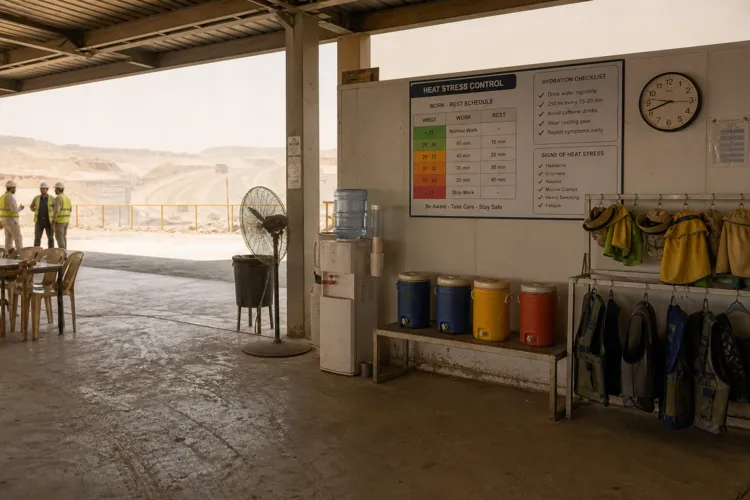
Saudi Arabia is a water-scarce country. It is 90 percent desert. Average rainfall is about 59 mm per year, and temperatures can reach 55 degrees Celsius, with high evaporation rates. In this setting, water management in mining is not a side project. It is a core operating risk that affects cost, permits, and long-term growth under Vision 2030.
The pressure is also rising because demand is rising. The Saudi National Water Strategy 2030 predicts that demand for water from the mining and industrial sector will grow from 1.4 billion cubic meters in 2016 to nearly 2 billion cubic meters by 2030. Another source notes that mining and industrial sectors represent 15% of national water consumption. At the same time, water costs have increased 200% over the past decade, pushing operators to look for smarter reuse.
Key figures show why recycling is becoming the default option: demand rises from 1.4 billion cubic meters (2016) to nearly 2 billion cubic meters (2030), while mining and industry represent 15% of national water consumption.
Recycling can also change project economics. One industrial water recycling source says companies can reduce water-related costs by 30-50% with comprehensive reuse strategies. It also describes a major gold mining operation in the Arabian Shield that invested SAR 18 million and reported SAR 6.2 million in annual operational savings, a 2.9-year payback period, and a 65% water consumption reduction. These results show why closed-loop thinking is moving from “nice to have” to “must have.”
Practical Water Strategies for Desert-Sited Mines
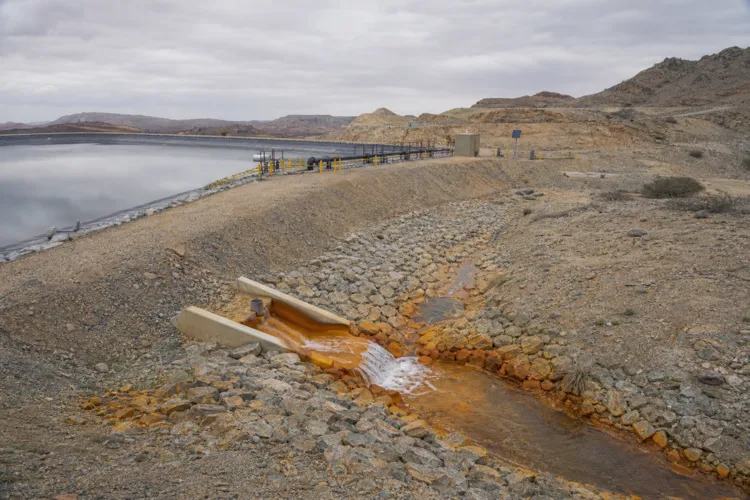
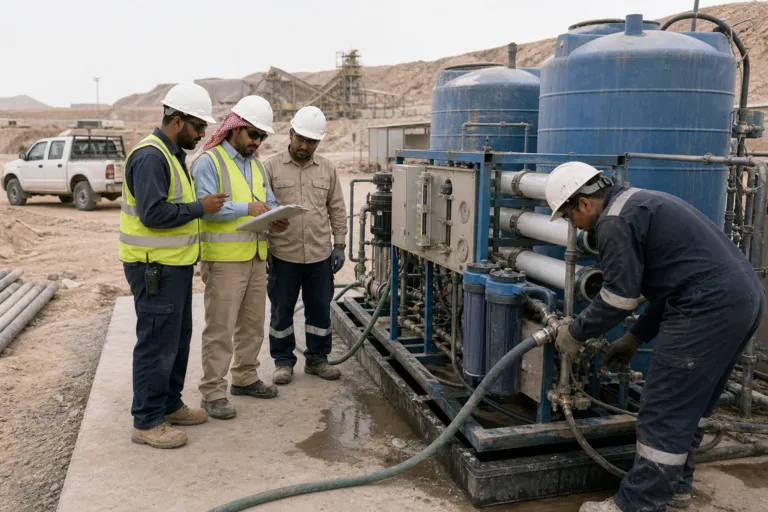
Start with the water loop inside the site. Traditional mining operations in the Kingdom heavily depend on groundwater, especially in desert areas with scarce renewable water sources. That is why on-site recycling and better treatment matter. KAUST developed an innovative wastewater treatment technology using the AquaCycle system that recycles up to 90% of water used in mining operations, while reducing energy consumption and operational costs. The technology is undergoing testing for the Kingdom’s harsh climatic conditions.
When mines aim for maximum recovery, Zero Liquid Discharge (ZLD) is positioned as the top end of efficiency. One source describes ZLD systems as recovering virtually 100% of wastewater for reuse while turning contaminants into solid waste for disposal. It also lists common treatment building blocks used in modern systems, including membrane bioreactors, reverse osmosis, and ultrafiltration. In parallel, researchers in the Kingdom are piloting solar-powered reverse-osmosis plants that treat both industrial effluent and seawater, to cut the energy-water footprint for future Ma’aden projects.
Policy is moving in the same direction. The Saudi National Water Strategy is pursuing water recycling, desalination, and tailings and waste management to manage risks to scarce water resources. The Ministry of Industry and Mineral Resources also highlights conserving water resources as part of its sustainability agenda. Separately, SWCC signed several agreements during the 2024 International Mining Conference to invest in desalination by-products and extract minerals, supporting the circular economy and enhancing local content.
Why is water management in mining so critical in Saudi Arabia?
What water-demand trend is expected for Saudi mining and industry?
How much water can KAUST’s AquaCycle recycle for mining operations?
What results did the Arabian Shield gold mine report after adding water reuse?
What approaches does the Saudi National Water Strategy emphasize for mining risks?