Saudi Arabia wants mining to be a major growth engine under Vision 2030. The Vision 2030 mining strategy positions mining as the third pillar of national industrial growth alongside oil and petrochemicals. In parallel, one 2026 industry analysis says the Kingdom aims to increase mining sector GDP contribution from $17 billion to $64 billion by 2026, and targets 90,000 mining jobs by 2026. A mining feasibility study helps support these ambitions by turning uncertainty into structured decisions before major spending begins.
Exploration momentum is also clear in licensing activity. In late 2024, Saudi Arabia issued 11 new exploration permits covering around 850km² across regions including Riyadh, Makkah, and Asir. In March 2025, authorities awarded exploration licences covering 4 788km², including to Vedanta and a consortium including China’s Zijin Mining. These figures show why feasibility work matters: more ground is being tested, but not every target should become a mine.
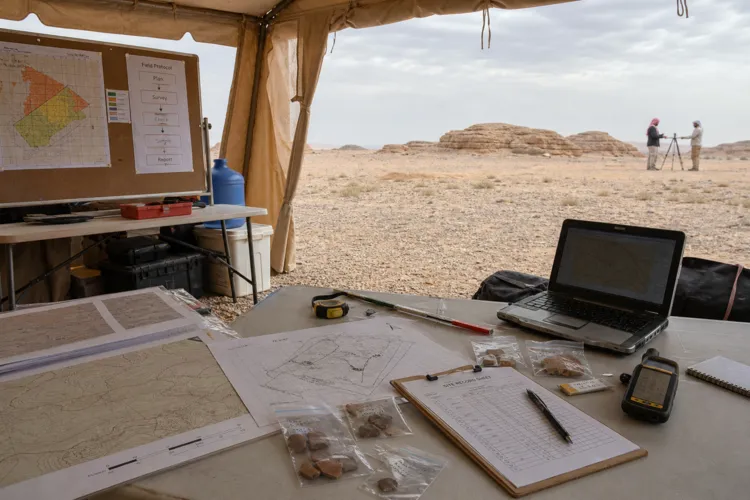
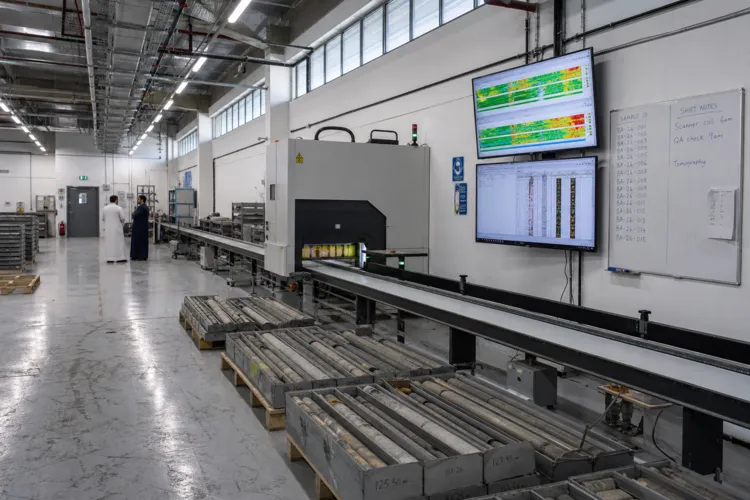
A strong mining feasibility study starts with strong exploration inputs. Darkstone Arabia describes “Comprehensive Exploration Program Management” as the master blueprint that aligns exploration goals with investment objectives, secures permits, manages logistics, and integrates data into an actionable geological model. It also highlights RC drilling for fast, cost-effective initial sampling and diamond drilling for continuous core that helps define structure, mineralogy, and grade. This kind of disciplined exploration reduces the chance that later mine planning is built on weak assumptions.
Turning Data Into Decisions: What De-Risking Looks Like
Saudi sources also point to digitization as a practical risk reducer. A 2026 guide notes the sector focus on providing open geological data to investors through a “mining platform,” with the goal of reducing exploration risks and accelerating work on new projects. The same guide describes “digital twin” technology that lets engineers simulate mine operations in a virtual environment to test scenarios before applying them on the ground, helping minimize risks and costs. These tools support feasibility work by improving planning quality and scenario testing.
Feasibility also has to reflect real operating constraints. African Mining Online warns that exploring in difficult terrain, such as the Arabian Shield, brings geological and logistical challenges. It adds that scaling downstream operations like rare earths refining or lithium production needs not only capital, but also technical skill, regulatory clarity, and long-term offtake. A feasibility study should therefore cover permitting readiness, execution logistics, and the commercial path, not only geology.
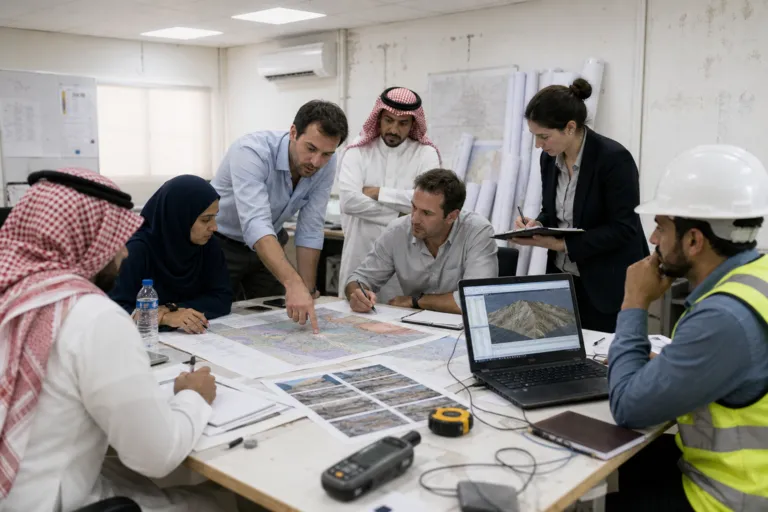
Innovation partnerships can further reduce early-stage risk. Newlab’s Mining Innovation Studio is backed by partners including NIDLP, MIM, Ma’aden, ESNAD, and SGS, and is designed to accelerate and de-risk critical technology commercialization across the mining value chain. The same program page says Saudi mineral resources are estimated to be valued at $2.5 trillion (USD), with over 48 minerals identified. For project teams, a mining feasibility study is where these big ambitions meet clear go/no-go decisions that protect capital and timelines.
What is a mining feasibility study meant to do in Saudi projects?
What exploration activity signals rising project flow in Saudi Arabia?
How do drilling and resource modelling support feasibility work?
Which tools can reduce risk before construction starts?