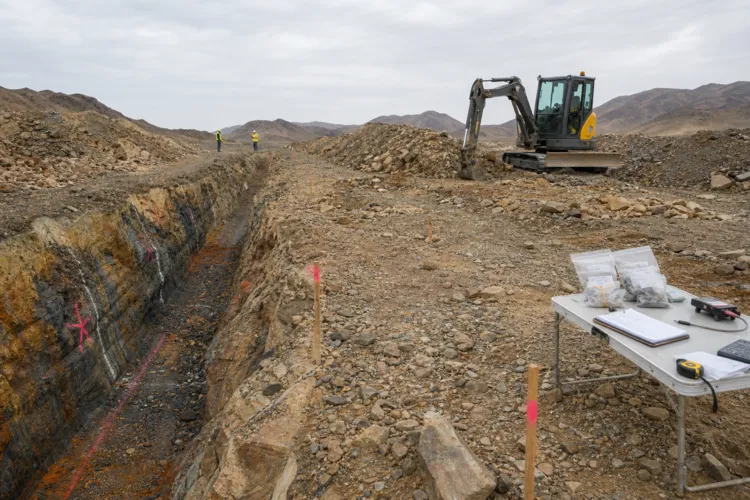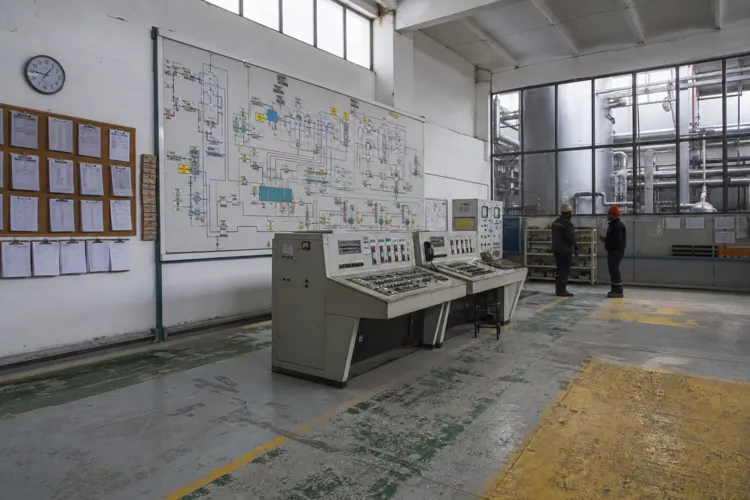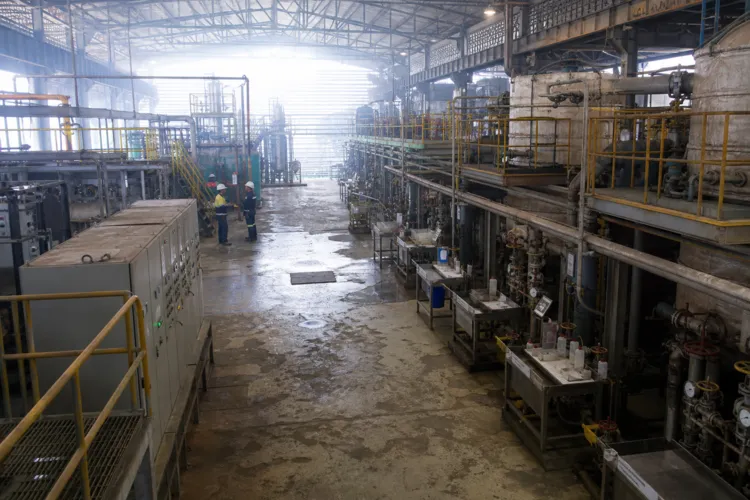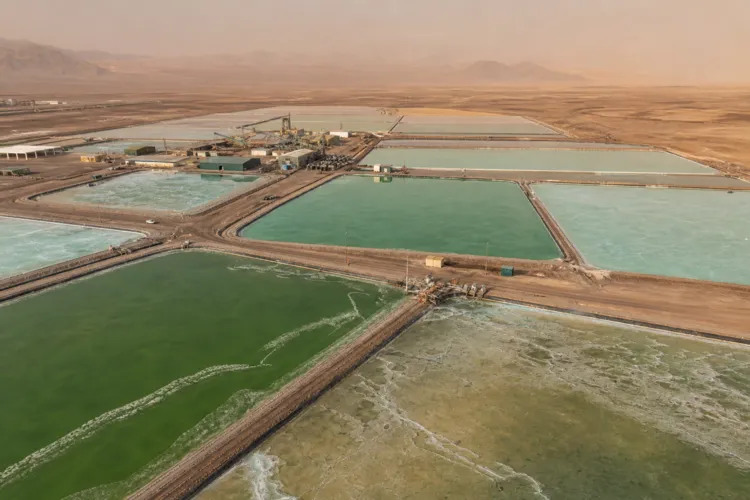
Structuring a mining joint venture in Saudi Arabia starts with regulatory sequencing, not term-sheet wording. Saudi Arabia’s mining push is moving from policy ambition into formal licensing, investment, and project activity, and foreign explorers and investors are expected to address licensing, corporate structuring, regulatory approvals, and partner arrangements early. The lead regulator is the Ministry of Industry and Mineral Resources, which administers the Mining Investment Law and its Implementing Regulations. That law came into force in January 2021 and modernised the framework, giving the Ministry broad powers over licensing, mineral areas, competitive bidding, supervision, reporting, and enforcement.
For a mining venture, the legal vehicle must align with licensing constraints. Saudi mining licences generally require an onshore Saudi applicant or licence holder, so foreign partners often need a Saudi subsidiary, a joint venture company, a consortium, or a project-specific bidding vehicle. Unincorporated joint ventures are not common because business in the Kingdom typically must be undertaken through a Saudi-registered legal entity that is properly licensed. At the investor level, foreign participation is governed by the Foreign Investment Law administered by the Ministry of Investment of Saudi Arabia (MISA), and any foreign investor wishing to do business in Saudi Arabia must have a MISA registration certificate before conducting commercial activities.
Ownership and Governance: Choose the Right JV Entity
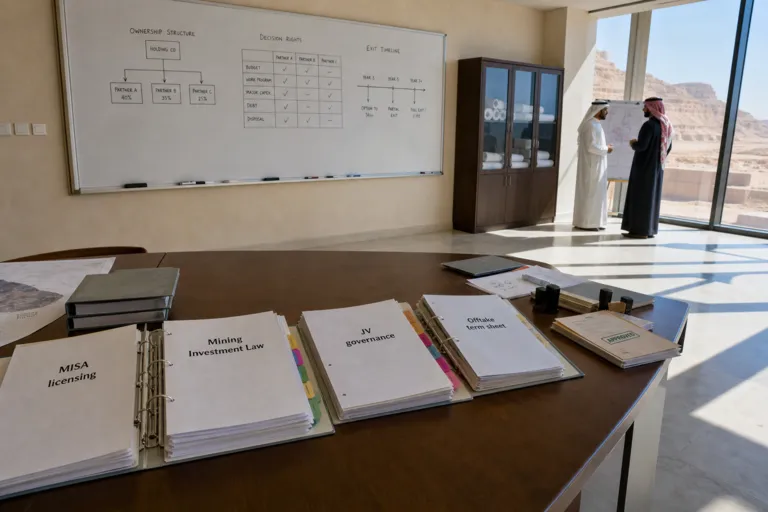
Ownership and governance should be drafted around the entity’s statutory flexibility and the project’s control needs. Common JV entities include the limited liability company (LLC) and the closed joint-stock company (CJSC). The Saudi Companies Law that came into force in January 2023 also introduced the simplified joint stock company (SJSC), which is increasingly popular and generally gives shareholders more flexibility in shareholding and management structure. LLCs remain the most common form, described as low-maintenance with flexible management and limited liability for shareholders to the extent of their fully paid share capital, subject to personal liability where a shareholder incorrectly values an in-kind contribution.
Foreign ownership structuring is now less about mandatory local equity and more about commercial fit. Saudi Arabia permits up to 100% foreign ownership in most sectors, which means a Saudi partner can be chosen for operational, regulatory, and market reasons rather than pure compliance. In practice, the “mining joint venture Saudi Arabia foreign ownership” question becomes: who holds or controls the licence, who appoints managers, and how do internal controls sit alongside third-party reliance on the articles of association. Governance documents should define decision rights, profit distribution, and dispute resolution, and joint venture agreements in Saudi Arabia are typically written, compliant with the Companies Law, and registered with the relevant authorities, with notarisation in Arabic when required.
Offtake and exit routes should be designed together, because they shape funding and liquidity. Partnership models can use Saudi offtake agreements to provide supply security while trading partners manage global distribution and price optimisation, and offtake frameworks can provide supply security comparable to equity ownership while requiring lower capital commitments. Financing also affects exit: conventional interest-bearing loans are not permissible under Saudi law, so JV financing needs Sharia-compliant instruments. For exit, well-drafted joint ventures commonly include tag-along and drag-along rights, pre-emptive rights on share transfers, and fair market value determination mechanisms for buyouts, with lock-in periods of three to five years often used to ensure commitment from both parties.
How should foreign partners approach mining JV ownership in Saudi Arabia?
Which Saudi authorities matter most when setting up a mining joint venture?
How does offtake fit into a Saudi mining partnership structure?
What exit terms are commonly used in Saudi joint ventures?
How prevalent are joint ventures among foreign investment structures in Saudi Arabia?