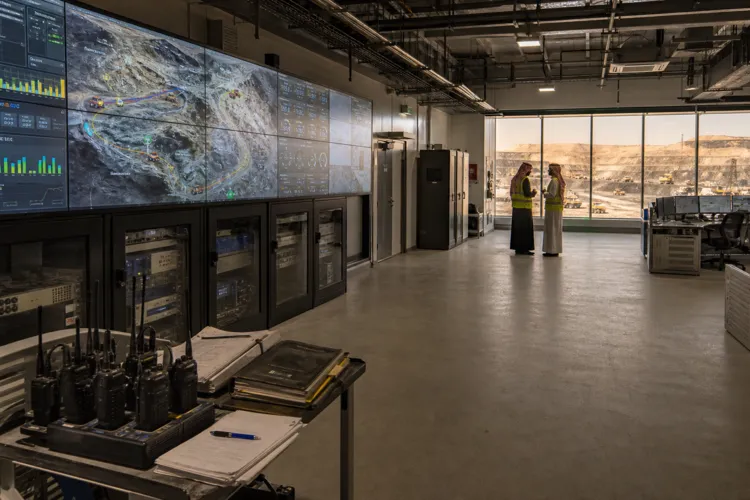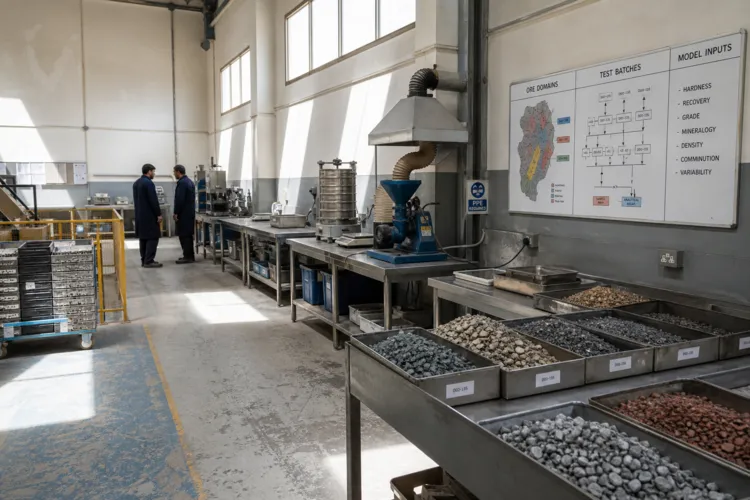
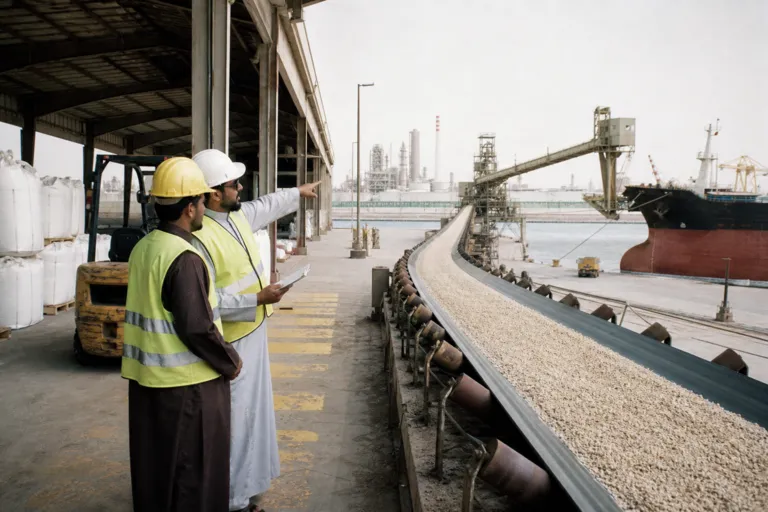
The Saudi Arabia phosphate industry is built on scale, patience, and tight integration. Saudi phosphate ore was first discovered in 1983 at Hazm al-Jalamid, with more deposits later identified at Umm Wu’al and al-Khabra. Yet Saudi Arabia exported its first shipment of phosphate only in 2017. Today, exports reach 16 countries, including India, Bangladesh, Brazil, Australia, and several East African nations.
The foundation is the Kingdom’s resource base. Saudi phosphate reserves are estimated at 2.7 billion tons, concentrated largely in the Northern Borders Province, especially around Turayf’s Wa’ad al-Shamal City. These deposits represent about 7% of global phosphate reserves. Annual production is described as around 3 million tons of phosphate ore, and another figure in official planning discussions puts current production at around 6 million tons a year.
Measured growth has been strong. According to the General Authority for Statistics, phosphate exploitation rose from 1.9 million tons in 2014 to 5.7 million tons in 2019, a surge of 199.11%. Saudi leaders now link this growth to a push to expand non-oil exports and build mining into a key economic pillar.
From Northern Mines to Ras Al-Khair: A Linked Value Chain
Saudi Arabia’s value chain connects remote mines to downstream processing and then to ports. A 1,200-kilometre railway links Hazm al Jalamid to Ras Al-Khair on the Arabian Gulf. At Ras Al-Khair, phosphate concentrate is converted into higher-value outputs, including phosphoric acid and sulphuric acid, and fertilizer products such as diammonium phosphate (DAP). This mine-to-port setup supports scale and repeatable exports.
Industrial clustering is a key part of the strategy. Wa’ad al-Shamal Industrial City, inaugurated in 2018, spans 440 square kilometers and has attracted investments exceeding SAR 80 billion. Around 150 square kilometers are dedicated to Ma’aden’s phosphate projects. The same hub includes ammonia plants with 1.1 million tons annual capacity, ore concentration facilities, and acid plants, supported by integrated logistics infrastructure.
Ma’aden is the central operator across mining, processing, and exports. By 2020, Ma’aden had become the second-largest exporter of phosphate fertilizers globally, producing diammonium phosphate, monoammonium phosphate, ammonia, sulfuric acid, phosphoric acid, and composite fertilizers. Joint ventures, including Ma’aden Phosphate Company (with SABIC) and Ma’aden Wa’ad al-Shamal Phosphate Company (with SABIC and Mosaic), support vertical integration across the chain.
Expansion is now the next story. Saudi officials said tripling phosphate production could cost around $15 billion on top of existing investments. Ma’aden is also embarking on a $7.5 billion capacity expansion to 9 million tons a year by 2027, with an ultimate target of 18 million tons a year by 2040. Another projection also states that by 2027, Saudi phosphate output is expected to reach 9 million metric tonnes, placing the Kingdom among the top three suppliers alongside Morocco and China.
What makes the Saudi Arabia phosphate industry strategically important?
How fast did Saudi phosphate exploitation grow in recent years?
How does phosphate move from Hazm al Jalamid to export processing?
What are Saudi Arabia’s phosphate production targets?