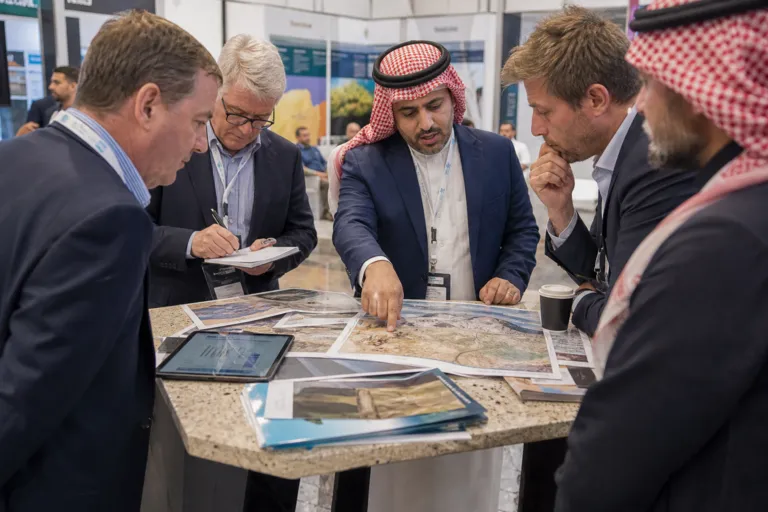
Future Minerals Forum 2026 (FMF) in Riyadh looked less like a normal conference and more like a working platform for policy and capital. Blink Capital described it as a place where governments, operators, investors, and multilaterals pressure-test what it will take to build mineral supply chains in the Kingdom. Standard Chartered also said the forum is gaining a “Davos of Metals and Mining” reputation, with supply concerns rising across the sector.
The scale was a signal on its own. Organizers flagged 20,000+ registrations, and Standard Chartered reported more than 20,000 attendees. Standard Chartered said representatives from more than 100 countries attended, alongside 59 multilateral organisations. Blink Capital also cited participation from 100 governments and 59 multilateral organizations, and described the Ministerial Roundtable as one of the largest minerals-focused ministerial gatherings globally.
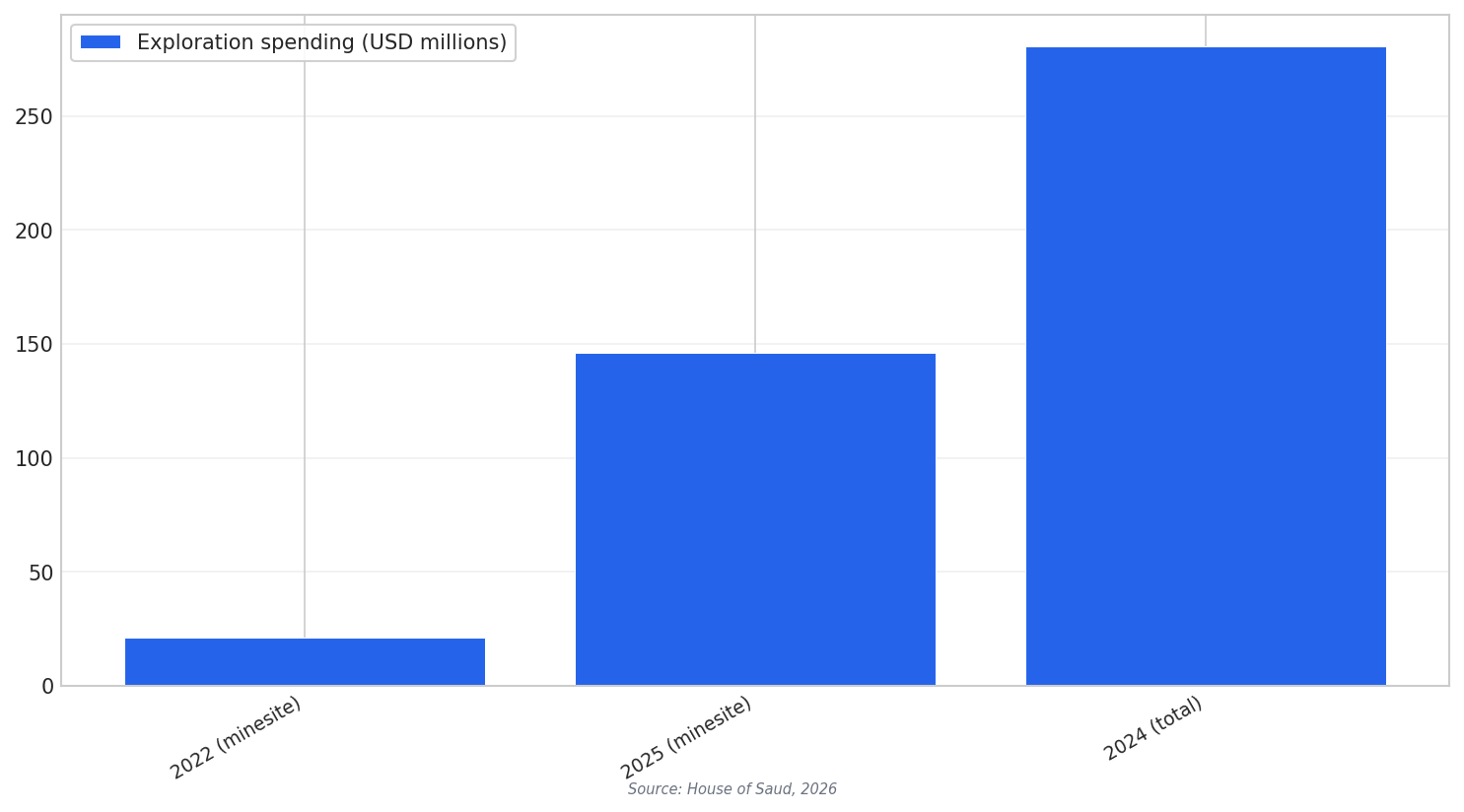
Exploration spending is one of the clearest “execution” indicators discussed around FMF 2026. Sources cited spending of more than US$280 million in 2024. House of Saud also stated total exploration spending hit SAR 1.05 billion (US$280.5 million) in 2024, and said the minesite exploration budget reached US$146 million in 2025, up from US$21 million in 2022.
Key Investment Signals Emerging From FMF 2026
For investors, FMF 2026 repeatedly returned to alignment. Blink Capital framed it as the point where upstream ambition meets downstream underwriting, and where policy, permitting, infrastructure, and financing need to line up before private capital steps in. The forum message was practical: it is not a “minerals awareness” problem, it is an execution problem.
Several capital announcements and deal cues landed during the event. Standard Chartered highlighted a partnership between Orion Resource Partners and SNB Capital focused on investment in Saudi Arabia’s mining and metals industry. It also cited a USD 300 million private equity fund launched by Energy Capital Group, targeting integrated industrial and mining services in the Kingdom. Separately, Geopolitical Mining pointed to an emerging midstream agenda, including a planned battery anode materials facility between Northern Graphite and Obeikan Investment Group.
Government-to-government positioning also strengthened. Geopolitical Mining reported MoUs between Saudi Arabia and Chile, Canada, and Brazil on cooperation in mineral resources and critical minerals value chains. It also noted FMF 2026 introduced the Future Minerals Barometer, a standing ministerial steering group, and a corridor agenda with the World Bank—signals that governance, data, and standards are being treated as investable infrastructure.
Saudi project pipeline talk was backed by concrete corporate ambition. House of Saud said Ma’aden announced a US$110 billion investment plan at FMF in January 2026, targeting tripling gold and phosphate production, doubling aluminium output, and developing eight megaprojects over the next decade. It also reported Ma’aden added 7.8 million ounces of new gold resources across four sites. Another source warned that global players are present, but much of the cash invested so far appears to come from Saudi Arabia’s own pockets—an important risk signal for external capital timing.
What made Future Minerals Forum 2026 different from a typical mining conference?
How big was Future Minerals Forum 2026?
What exploration spending signals were highlighted around FMF 2026?
What deal and fund announcements were tied to the forum discussions?
What should investors watch next after FMF 2026?